🐠 Light Requirements For Your Variegated Goldfish Plant
Columnea hirta 'Variegata'
By the Greg Editorial Team
Mar 31, 2024•4 min read
This article was created with the help of AI so we can cover more plants for you. May contain errors. See one? Report it here.
- 🌞 East-facing windows are best for gentle morning light.
- 💡 Full-spectrum LEDs ideal for low-light or bloom boost.
- 🔄 Rotate regularly for even growth; adjust light for plant cues.
Finding the Sweet Spot: Indoor Light Perfection
🌅 East or West? Best Window Directions for Your Leafy Buddy
East-facing windows are the sweethearts of indoor gardening, offering your Variegated Goldfish Plant a gentle morning glow. If your compass points elsewhere, don't despair. A few feet from a south- or west-facing window can also be prime real estate, just keep those direct rays at bay with sheer curtains or a strategic plant shuffle.
🔄 The Balancing Act: Rotating Your Plant for Even Sun-Kisses
Rotate your plant like it's on a lazy Susan, ensuring each side gets its fair share of light. This isn't just about fairness; it's about avoiding the lopsided, reaching-for-the-sun growth that screams "I need a turn!" Regular rotation is the unsung hero of symmetrical plant beauty.
🌑 When the Sun's a No-Show: Making the Most of Low Light
No sun? No problem. If your living space is more cave than conservatory, consider a full-spectrum grow light. It's like a personal sun for your plant, minus the risk of sunburn. Remember, patience is key; those flowers will bloom, but they won't be rushed.
The Flower Power Connection
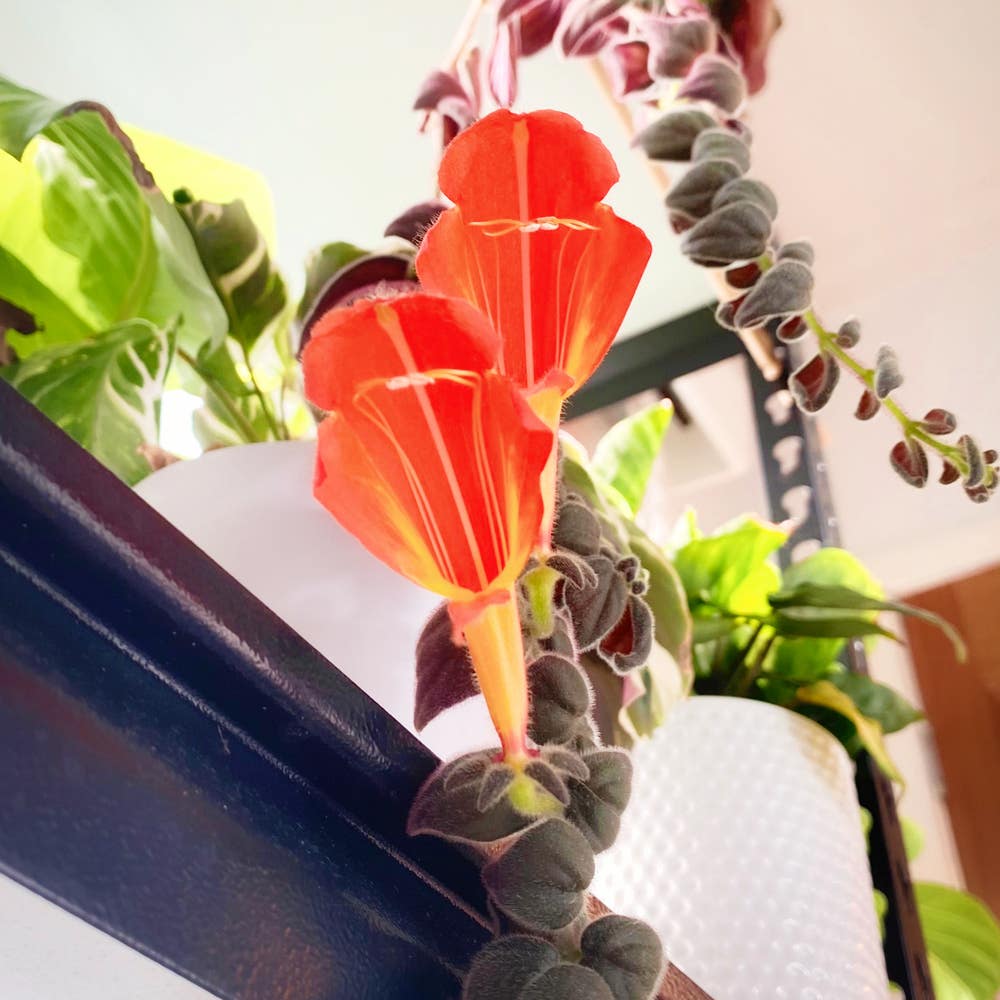
Light is your plant's VIP ticket to the flowering show. Without it, you're just attending a leafy concert. Bright, indirect light is the backstage pass your Goldfish Plant needs to strut its stuff in the bloom department. Keep the light consistent, and you'll be rewarded with a floral display that's worth the wait.
Setting Up Camp Outdoors
🌅 Picking the Ideal Outdoor Lounge Spot for Your Plant
Your Variegated Goldfish Plant craves that morning glow but could do without the afternoon roast. Partial shade is your friend here, offering a cozy spot that's bright in the AM and cool post-noon. Think of it as the plant's personal chill-out zone, away from the sun's peak fury.
🏖 Sunscreen for Plants: Avoiding the Harsh Sunburn
No need to slather SPF on your leafy pals, but a bit of shade cloth can act as a perfect parasol. It's like a beach umbrella for your plant, ensuring it doesn't turn into a crispy critter. And remember, this isn't a set-it-and-forget-it deal; be ready to play musical chairs with your plant's location to dodge that harsh midday sun.
Shine On: The Lowdown on Grow Lights
💡 When to Consider an Artificial Sun: Grow Lights 101
Grow lights step in when sunlight is more of a guest appearance than a main cast member in your home. Full-spectrum LEDs are the VIPs, offering a sun-like range that keeps your green buddy thriving. Think of them as a caffeine shot for your plant's photosynthesis—minus the jitters.
💡 Matching Your Grow Light to Your Plant's Needs
Selecting the right grow light is less about wattage and more about fit. A small plant might get by with a single bulb, while a larger one could need an LED panel. Adjustable intensity is crucial; you're aiming for a light dance, not a spotlight. Positioning is a game of inches—too close and you risk a crispy leaf situation, too far and you're just teasing your plant with light it can't use.
Timing is Everything
Set a curfew for your grow lights—12-14 hours usually mimics a day well, with a timer to prevent you from playing sun god. Keep an eye on your plant's performance; if it starts to look more like a weeping willow than a vibrant green, it's time to tweak the light show. Adjust the intensity, play with the distance, and shuffle the schedule as needed. Remember, even plants appreciate a little variety in their life.
Troubleshooting Tips: Light Edition
💡 Too Much or Too Little? Reading the Signs from Your Plant
Leggy stems and pale leaves are your Variegated Goldfish Plant's way of waving a white flag for more light. Conversely, leaves that mimic a sunburnt tourist signal an excess. If your plant's leaves are turning as yellow as a school bus, it's time to rethink its sunbathing habits.
💡 Quick Fixes for Common Light-Related Hiccups
Rotate your plant regularly to prevent a lopsided solar dance. Think of it as sharing a pie evenly at a party—every side deserves a slice of light. If your indoor lighting is more 'mood' than 'grow', consider a grow light to mimic the sun's embrace. And remember, a light meter isn't just a gadget—it's your secret weapon against the guesswork of gauging glow.
Observation is key. Keep an eye on your green companion like a hawk, ready to swoop in with adjustments. If your plant's growth is as lackluster as a flat soda, move it closer to a light source. When the sun plays hide-and-seek, use timers on grow lights to maintain a consistent day-night cycle. Remember, your plant's vibe will tell you if the light's just right.
⚠️ Safety First
This content is for general information and may contain errors, omissions, or outdated details. It is not medical, veterinary advice, or an endorsement of therapeutic claims.
Always consult a qualified healthcare professional before using any plant as food, medicine, or supplement.
Never eat any plant (or feed one to pets) without confirming its identity with at least two trusted sources.
If you suspect poisoning, call Poison Control (800) 222-1222, the Pet Poison Helpline (800) 213-6680, or your local emergency service immediately.
Spotted an error? Please report it here.
Ensure your variegated goldfish plant flourishes in just the right light by letting Greg auto-magically measure 🌟 your home's lumens for the most accurate care plan.