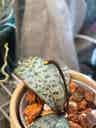
Musa coccinea
Taxonomy

Musa coccinea
Musa
Musaceae
Zingiberales

How to care for Musa coccinea
How often to water your Musa coccinea

every 9
Musa coccinea needs 0.5 cups of water every 9 when it doesn’t get direct sunlight and is potted in a 5" pot.
Use our water calculator to personalize watering recommendations to your environment or download Greg for more advanced recommendations for all of your plants.
Water 0.5 cups every
9
Finding light for Musa coccinea in your home

a window
Musa coccinea love being close to bright, sunny windows 😎.
Place it less than 1ft from a south-facing window to maximize the potential for growth.
Musa coccinea does not tolerate low-light 🚫.
Select your region to see how the current weather in your area affects the placement of Musa coccinea in your home 🏡.
How to fertilize Musa coccinea

Most potting soils come with ample nutrients which plants use to produce new growth.
By the time your plant has depleted the nutrients in its soil it’s likely grown enough to need a larger pot anyway.
To replenish this plant's nutrients, repot your Musa coccinea after it doubles in size or once a year—whichever comes first.
-
What could be wrong with my Banana plant 🪴 the leaves are floppy all of a sudden #Banana
-
The leaves are floppy #Banana
-
Any tips to revive this guy post shipping? Ain’t doin so hot :( thank you! #Banana
-
Got a dwarf banana few months ago. Repotted from greenhouse 3" pot to an 8". It was growing very fast & healthy. Suddenly it's growth slowed; now lost several leaves, w/ remaining ones starting to yellow & brown. It's pup is growing well tho. Any tips? #Banana
-
Hi! This is my dwarf banana plant! And a leaf I found that fell to the dirt! What’s happening with it?
-
I leave this plant outside in my patio. When I bought it it had these yellow leaves. Can I cut it off? #Banana
-
This is Duke my nanas banana plant, fun facts he (or she IDK) will grow bananas then die like seriously 😒.
-
The other day I made a Banana Tree forest 🍌 I hope this will work🤞🏽
-
Brownish leaves Hello! The leaves of my plant are growing quite quickly, but somehow they turn brownish right after they grow. I don't know what I'm doing wrong :((
-
Can someone tell me what’s wrong with my banana plant it has broken stems I did recently repot it 2 times in 2 days because I had to get proper soil, the soil is peat moss, perlite, cow manure, and potting soil, will it get better by itself? #Banana


Care Summary for Musa coccinea
Musa coccinea
 Greg recommends:
 Water
Water
0.5 cups every 9 days
 Placement
< 1ft from a window
 Nutrients
Repot after 2x growth
Based on the 4” pot your plant is in, and that it doesn’t get direct sunlight.
 Trending in your area











 Similar to Musa coccinea


✨ Discover rare plants

Scindapsus pictus 'Si…

Electric Fern

Radiator Plant

Orange Lipstick Plant

Ceropegia simoneae

Black Monkey Thorn Tr…

Pine Cone Plant

Lithops

Cleistocactus icosago…

Blue Moon Wisteria
Philodendron 'Silver …

Begonia lubbersii
Crassula 'Calico Kitt…

Raphionacme flanaganii

Starfish Snake Plant
Linnaei Kunth