Why Are My Rebutia perplexa Leaves Curling?
Rebutia pulvinosa subsp. perplexa
By the Greg Editorial Team
Mar 07, 2024•4 min read
This article was created with the help of AI so we can cover more plants for you. May contain errors. See one? Report it here.
Unravel the mystery behind your Rebutia perplexa's leaf curl 🌀 and learn to keep it thriving.
- 🌿 Curling leaves signal distress; look for discoloration and texture changes.
- 💧 Water like a wrung-out sponge to prevent over or under-watering.
- 🛡️ Regular checks and stable environment keep leaves straight and healthy.
Spot the Curl: Identifying the Culprit Behind Leaf Curling
👀 Visual Inspection: What to Look For
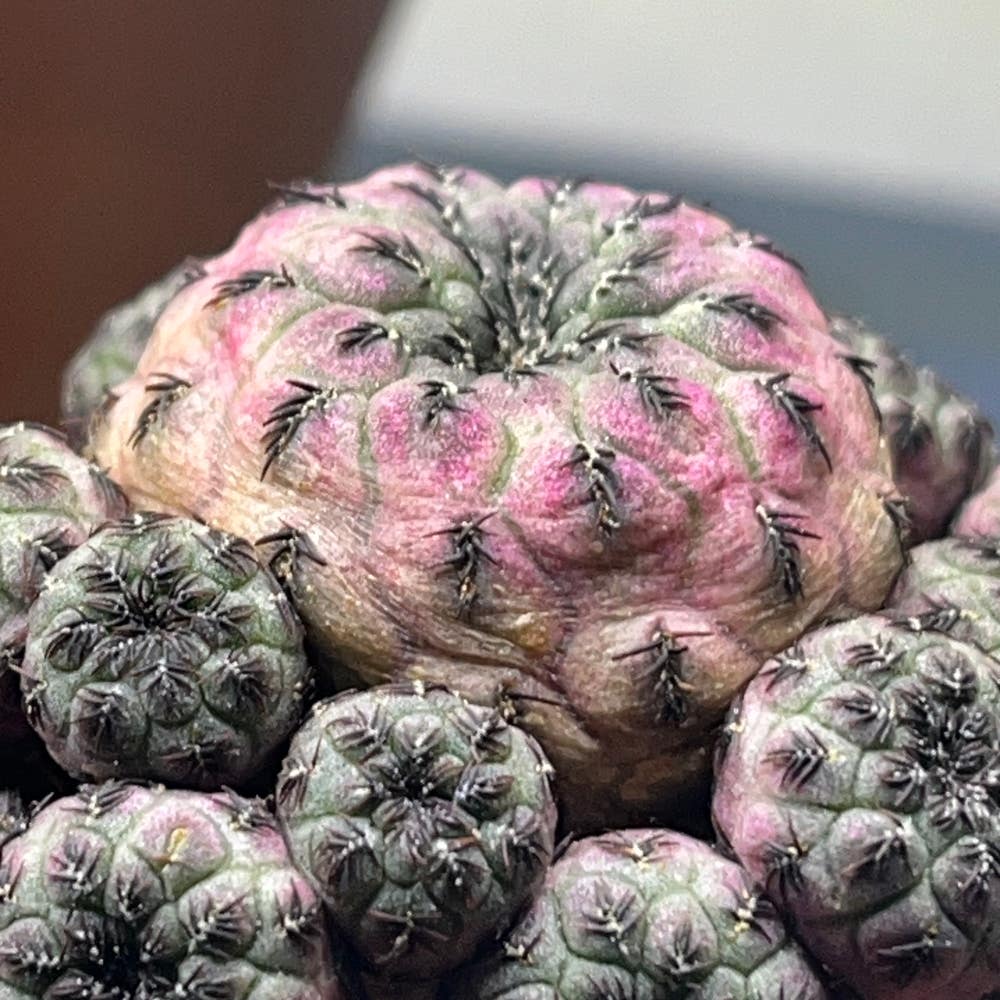
Curling leaves on your Rebutia perplexa can be alarm bells for distress. Look for leaves twisting or rolling inward, a stark contrast to their usual flat form. Discoloration or changes in texture are your visual cues that something's off. If the green has faded to yellow or brown, or if the plant's spines seem less spirited, take note.
🌍 Environmental Check-Up: Light, Temperature, and Soil
Your Rebutia perplexa isn't asking for a tropical rainforest, nor does it want a desert. It's all about balance. Ensure it's not shivering in a draft or baking next to a heater. Steady temperatures and consistent light are what it craves. Check the soil too—it should be well-draining and never swampy.
💦 Thirsty or Drowning? Assessing Watering Habits
Watering is a delicate dance. Leaves curling like a scroll may signal dehydration, while a spongy leaf could mean you've been overzealous with the watering can. Before you water, feel the soil—it should be moist, like a wrung-out sponge, not a drenched towel. Remember, your Rebutia perplexa's roots should be firm and white, not a mushy brown mess.
Unraveling the Curl: Fixing the Twist
💡 Adjusting the Environment: Light and Temperature Tweaks
Your Rebutia perplexa is a bit of a Goldilocks when it comes to light and temperature—not too much, not too little, just right. Rotate your plant periodically to ensure even light exposure. This prevents one side from going on a light binge while the other starves.
Thermometers are your undercover agents here, helping you avoid those sneaky temperature swings that can make your plant's leaves curl up in protest. Keep the climate consistent; your plant's not looking for a rollercoaster ride.
🚰 Watering Wisdom: Quenching Thirst Without the Flood
Watering your Rebutia perplexa is less about sticking to a rigid schedule and more about understanding its needs. The goal is soil moisture that's comparable to a wrung-out sponge—moist but not drenched.
Room temperature water is like comfort food for your plant's roots. And remember, the seasons change the game. Less water in the winter, a touch more during the growth season. It's about being attentive and ready to tweak your approach as needed.
Defending Against Invaders: Pests and Diseases
🐜 Pest Patrol: Keeping the Bugs at Bay
Pests can turn your Rebutia perplexa's leaves into their personal all-you-can-eat buffet. Regular inspections are your first line of defense. Look for telltale signs like chewed foliage or sticky residue. These are red flags that scream, "Bugs are here!"
Isolation is key for any new plants. Think of it as a mandatory quarantine to prevent a pest pandemic in your plant paradise. If you do find critters, consider insecticidal soap or neem oil. They're like bouncers at a club, showing pests the exit.
🦠 Disease Detective: Spotting and Stopping Sickness
Diseases can be stealthy, but they're not ninja-level. Yellowing leaves and black spots are the SOS signals of plant distress. Act fast—remove affected leaves and improve air circulation to give your plant a fighting chance.
If you're dealing with a fungal fiasco, fungicides can be your ally. But remember, the eco-friendly options are like choosing a salad over fast food for your plant's health. And always, consistency in care is better than any cure. Keep that environment stable to avoid giving diseases a foothold.
Curl Prevention: Keeping Leaves Straight and Narrow
💉 Routine Check-Ups: Regular Monitoring for Early Signs
Regular check-ups are the pulse checks for your Rebutia perplexa. Like a morning ritual, inspect your plant for early signs of distress. Discoloration, unusual spots, or the beginnings of a curl should set off your plant-parent instincts. It's less about being a helicopter parent and more about knowing the state of your green child.
🌟 The Perfect Environment: Consistency is Key
Creating a stable environment for your Rebutia perplexa is like setting the stage for a star performer. Temperature, lighting, and humidity need to be just right—not too hot, not too cold, but plant-perfect. Think of it as crafting a microclimate that's a slice of the plant's natural habitat. Stability in these conditions means your Rebutia perplexa won't throw a tantrum in the form of curled leaves.
⚠️ Safety First
This content is for general information and may contain errors, omissions, or outdated details. It is not medical, veterinary advice, or an endorsement of therapeutic claims.
Always consult a qualified healthcare professional before using any plant as food, medicine, or supplement.
Never eat any plant (or feed one to pets) without confirming its identity with at least two trusted sources.
If you suspect poisoning, call Poison Control (800) 222-1222, the Pet Poison Helpline (800) 213-6680, or your local emergency service immediately.
Spotted an error? Please report it here.
Ensure your Rebutia perplexa thrives by quickly addressing curling leaves with Greg's custom care reminders 🌵.