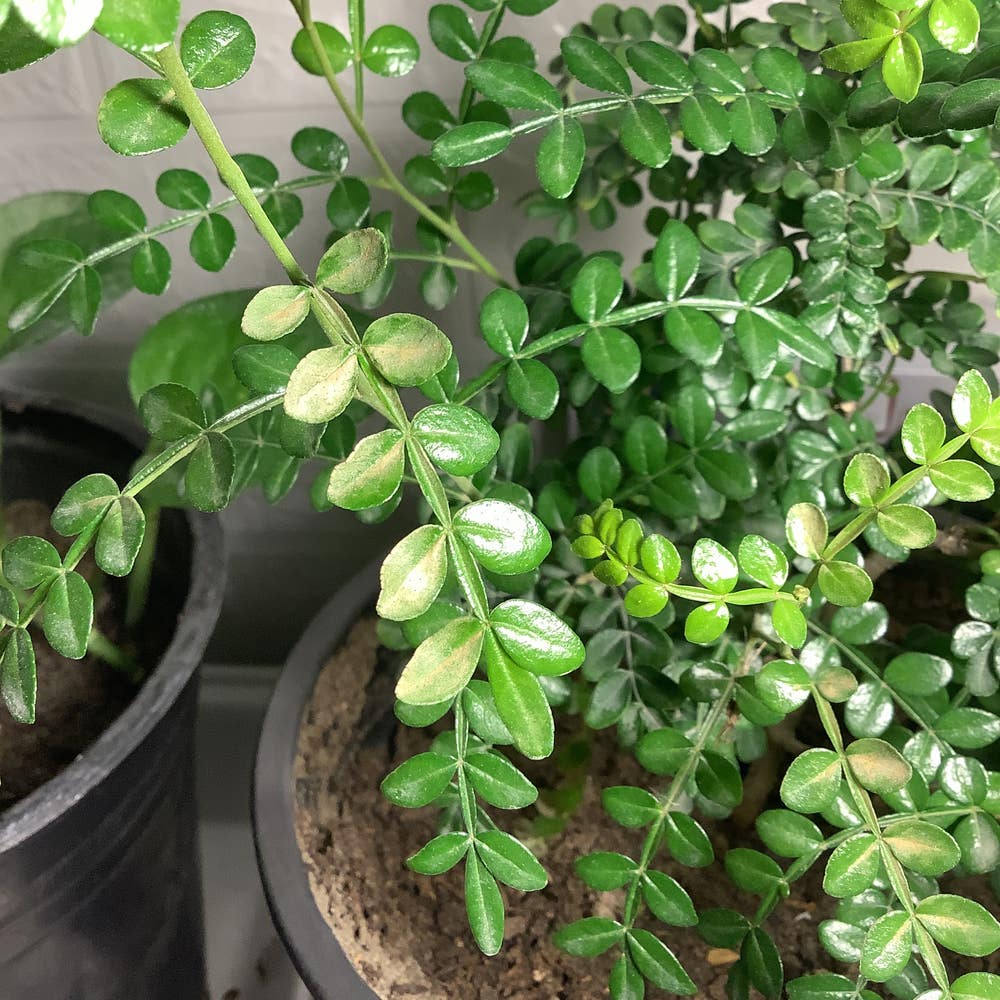
🌞 How to Cure Yellow Leaves on Your Prickly Ash
Zanthoxylum spp.
By the Greg Editorial Team
Nov 06, 2024•7 min read
This article was created with the help of AI so we can cover more plants for you. May contain errors. See one? Report it here.
Transform your Prickly Ash's yellow leaves back to vibrant green with these essential care tips! 🌿
- 🌱 Yellow leaves indicate nutrient deficiencies, especially nitrogen and iron.
- 💧 Overwatering leads to root rot, causing yellowing; check soil moisture regularly.
- 🐛 Pests like aphids cause yellowing; early detection is key for plant health.
Causes of Yellow Leaves
🌱 Nutrient Deficiencies
Nitrogen Deficiency
Nitrogen deficiency is a common issue that manifests as general yellowing of older leaves and stunted growth. This nutrient is vital for chlorophyll production, which is essential for photosynthesis and overall plant vigor.
Iron Deficiency
Iron deficiency presents differently, showing yellowing between leaf veins, known as interveinal chlorosis, especially in younger leaves. Iron plays a crucial role in photosynthesis and enzyme function, making its presence essential for healthy growth.
💧 Overwatering and Poor Drainage
Overwatering can lead to yellowing leaves, wilting, and even root rot. Excess water reduces oxygen availability in the soil, which is detrimental to root health, as Prickly Ash thrives in well-drained soils.
🐛 Pests and Diseases
Common Pests
Aphids are small, green insects that suck sap from leaves, resulting in yellowing. Scale insects, with their hard, shell-like bodies, can also cause leaf discoloration and stress, making early detection crucial.
Diseases
Root rot, often a consequence of overwatering, leads to yellowing and wilting of leaves. Identifying pests and diseases early is vital for effective treatment, ensuring your Prickly Ash remains healthy.
🌡️ Environmental Stress
Temperature Extremes
Extreme temperatures can cause leaf drop and yellowing due to heat stress or frost damage. Prickly Ash prefers moderate temperatures; exposure to extremes can significantly stress the plant.
Humidity Levels
Low humidity can lead to leaf curling and yellowing. Maintaining appropriate humidity levels is essential for the overall health of your Prickly Ash, as it thrives in a balanced environment.
Understanding these causes is the first step in addressing yellow leaves on your Prickly Ash. Next, we’ll explore how to diagnose the specific issues affecting your plant.
Diagnosing Yellow Leaves
🌱 Identifying Symptoms of Nutrient Deficiency
To diagnose nutrient deficiencies in your Prickly Ash, start by checking the leaf color and pattern. Yellowing of older leaves typically indicates a nitrogen deficiency, while younger leaves turning yellow suggests an iron deficiency.
Soil testing is also crucial. Conduct tests to determine the nutrient levels in your soil, which can guide your fertilization strategy.
🚰 Recognizing Signs of Overwatering
Overwatering can lead to serious problems, so it's essential to recognize the signs early. Use a moisture meter or your finger to check the soil's dampness; if it's consistently wet, you may be overwatering.
Additionally, inspect the roots. Black, mushy roots are a clear indicator of root rot, which can be detrimental to your plant's health.
🐛 Checking for Pest Infestations
Pests can wreak havoc on your Prickly Ash, so regular visual inspections are vital. Look closely at the leaves and stems for any visible pests that could be causing stress.
Also, check for sticky residue on the leaves. Honeydew or sooty mold can signal the presence of aphids, which need to be addressed promptly.
🌡️ Assessing Environmental Conditions
Environmental factors play a significant role in plant health. Monitor the temperature around your Prickly Ash to ensure it’s not exposed to extreme heat or cold, which can lead to yellowing leaves.
Humidity levels are equally important. Use a hygrometer to measure the humidity around the plant, as low humidity can cause leaf curling and yellowing.
By diagnosing these issues early, you can take the necessary steps to restore your Prickly Ash to its vibrant self. Next, let’s explore effective treatments for yellow leaves.
Treating Yellow Leaves
Adjusting Watering Practices 🌊
Assess Current Watering Schedule: If you suspect overwatering, it’s time to cut back. Prickly Ash prefers a drier environment, so allow the soil to dry out between waterings.
Watering Technique: Aim for deep, infrequent watering. This encourages roots to grow deeper, making your plant more resilient.
Soil Drainage Improvement: Enhance drainage by mixing in perlite or sand. This will help prevent water from pooling around the roots, reducing the risk of yellow leaves.
Fertilizing for Nutrient Deficiencies 🌱
Select Appropriate Fertilizer: Choose a balanced fertilizer that targets nitrogen or iron. This will help replenish any missing nutrients that could be causing yellowing.
Application Timing: Fertilize during the growing season for optimal results. This is when your Prickly Ash is actively taking up nutrients.
Method: Always follow the package instructions for application rates. This ensures you’re not over-fertilizing, which can lead to further issues.
Pest Control Methods 🐛
Organic Options
Neem Oil: This natural solution works wonders as a foliar spray against aphids and scale. It’s effective and safe for your plant.
Insecticidal Soap: Use this to suffocate pests on contact. It’s a straightforward method that can yield quick results.
Chemical Options
- Systemic Insecticides: For severe infestations, these can be effective. Just be sure to follow the label instructions carefully to avoid harming your plant.
Improving Soil Drainage 💧
Techniques: Incorporate organic matter into your soil. This not only improves drainage but also enriches the soil.
Container Planting: If your Prickly Ash is in a pot, ensure it has adequate drainage holes. This simple step can prevent waterlogging and promote healthier roots.
By addressing these key areas, you can effectively treat yellow leaves on your Prickly Ash. With the right care, your plant will bounce back, showcasing vibrant green foliage once again. Next, let’s explore how to prevent yellow leaves from becoming a recurring issue.
Preventing Yellow Leaves
🌱 Best Practices for Care
To keep your Prickly Ash thriving, establish a regular watering schedule. Allow the soil to dry out between waterings to prevent over-saturation.
Fertilization is equally important. Opt for slow-release fertilizers to maintain consistent nutrient levels throughout the growing season.
🌼 Seasonal Care Tips
In spring, it's time to fertilize and check for pests as new growth emerges. This proactive approach helps ensure your plant starts the season strong.
As fall approaches, prepare your Prickly Ash for winter by reducing watering and applying mulch. This will protect the roots and help retain moisture.
🐛 Regular Monitoring for Pests and Diseases
Make it a habit to conduct weekly inspections of your plant. Look for any signs of pests or diseases that could threaten its health.
Early intervention is key. If you spot any issues, treat them promptly to prevent escalation and ensure your plant remains robust.
🌍 Soil Health and Amendments
Regular soil testing is essential for maintaining optimal health. Check nutrient levels and pH to ensure your Prickly Ash has what it needs to flourish.
Amend the soil as needed. Incorporate compost or organic fertilizers to boost soil health and provide essential nutrients.
By following these preventive measures, you can significantly reduce the risk of yellow leaves on your Prickly Ash. This proactive care will set the stage for a healthy, vibrant plant.
Next, let’s explore how to monitor the recovery of leaves after treatment.
Post-Treatment Care
Monitoring Recovery of Leaves 🌿
After treatment, keep a close eye on your Prickly Ash's leaves. Look for signs of green returning to previously yellow leaves, indicating recovery.
Adjust your care based on how the plant responds. If you notice improvement, continue with your current watering and fertilization practices.
Adjusting Care Based on Plant Response 🔄
Be flexible with your watering routine. Increase or decrease the frequency based on the soil moisture levels you observe.
If nutrient deficiencies seem to persist, modify your fertilization schedule accordingly. This ensures your plant gets the nutrients it needs to thrive.
Long-Term Maintenance Strategies 🛠️
Establish a regular care routine to keep your Prickly Ash healthy. Regularly check soil moisture, nutrient levels, and watch for any signs of pests.
Document any changes you make in care practices and note how your plant responds. This log will be invaluable for future reference and help you become a more effective caretaker.
By staying attentive and proactive, you can ensure your Prickly Ash remains vibrant and healthy for years to come.
⚠️ Safety First
This content is for general information and may contain errors, omissions, or outdated details. It is not medical, veterinary advice, or an endorsement of therapeutic claims.
Always consult a qualified healthcare professional before using any plant as food, medicine, or supplement.
Never eat any plant (or feed one to pets) without confirming its identity with at least two trusted sources.
If you suspect poisoning, call Poison Control (800) 222-1222, the Pet Poison Helpline (800) 213-6680, or your local emergency service immediately.
Spotted an error? Please report it here.
Keep your Prickly Ash vibrant and healthy 🌱 by using Greg's tailored care reminders to tackle nutrient needs, watering habits, and pest control effectively!