


Peperomia caperata 'Steve's Leaves Chameleon'
Taxonomy

Peperomia caperata 'Steve's Leaves Chameleon'
Peperomia
Piperaceae
Piperales

How to care for Peperomia caperata 'Steve's Leaves Chameleon'
How often to water your Peperomia caperata 'Steve's Leaves Chameleon'

every 9
Peperomia caperata 'Steve's Leaves Chameleon' needs 0.5 cups of water every 9 when it doesn’t get direct sunlight and is potted in a 5" pot.
Use our water calculator to personalize watering recommendations to your environment or download Greg for more advanced recommendations for all of your plants.

Water 0.5 cups every
9
Finding light for Peperomia caperata 'Steve's Leaves Chameleon' in your home

a window
Peperomia caperata 'Steve's Leaves Chameleon' may have difficulty thriving, and will drop leaves 🍃, without ample sunlight.
Place it less than 3 feet from a south-facing window to maximize the potential for growth.
Select your region to see how the current weather in your area affects the placement of Peperomia caperata 'Steve's Leaves Chameleon' in your home 🏡.
How to fertilize Peperomia caperata 'Steve's Leaves Chameleon'

Most potting soils come with ample nutrients which plants use to produce new growth.
By the time your plant has depleted the nutrients in its soil it’s likely grown enough to need a larger pot anyway.
To replenish this plant's nutrients, repot your Peperomia caperata 'Steve's Leaves Chameleon' after it doubles in size or once a year—whichever comes first.
-
I'm not sure what's going on with my Peperomia, it was doing great, I went on vacation for a week and came home to it looking like this.... to me it looks like it was over watered, but I make sure to only water it when the soil is completely dry 🤨
-
I understand String of Turtles is some kind of succulent. Does it require the same amount of water care, or more? (once a month? once every 2 weeks?) #Peperomia
-
Hi I recently bought a small string of turtles and wondering if it prefers to drape out of the pot when it grows, or to have the long strands curled back into the pot like a bowl of noodles. Thanks! #Peperomia
-
Is this a bug? My ruby recently started closing off its leaves and I noticed a tiny white speck on one if the leaves. Is this a bug? It looks like a bug but what kind of? Not sure if the rest of the white specks are bugs but posting the photo just in case. #succulentsquad #succulentlove #succulents
-
Does anyone know how to care of this new plant? #Peperomia
-
Got a new plant anyone know how to take care of it?
-
How do I know when to repot? #Peperomia
-
Can I prune these two and make them fuller ? These two cuties are growing like mad. Can I prune them and make them any fuller instead of tall or would you just leave them be? How do I prune if I can? Im a new plant mom in case you can't tell! #propagationstation #happyplants
-
Help! What is happening to my Hope? 😩 My Hope #Peperomia has been struggling for quite awhile and I cannot figure out how to help her. She’s been losing leaves, seemingly both drying out and getting too soggy. She’s getting leggy, but adjusting her light doesn’t seem to help either. I gave her a soil refresh, tried adjusting her watering… nothing is working. I’m at a total loss!
-
Quito peperomia care I bought my peperomia Quito on June 24th, I placed it in bright indirect light, east facing window, and watered it July 1. We’re in a heat wave in nyc so I close all the windows and keep the fans on but it’s still pretty hot in my apartment - between 85 and 90 degrees. Yesterday the baby leaves had turned black and I thought it was from overwatering but today almost all the leaves were laying down. Is it from the heat? Or overwatering? How do I treat it, or do I just leave it and hope it survives? Tagged photo is from June 24th, and attached photo is from today, July 4th. Thanks everyone!


Care Summary for Peperomia caperata 'Steve's Leaves Chameleon'

Peperomia caperata 'Steve's Leaves Chameleon'
 Greg recommends:
 Water
Water
0.5 cups every 9 days
 Placement
< 3ft from a window
 Nutrients
Repot after 2x growth
Based on the 4” pot your plant is in, and that it doesn’t get direct sunlight.
 Trending in your area









 Similar to Peperomia caperata 'Steve's Leaves Chameleon'


✨ Discover rare plants

Pink Ruby Sedevaria

Echeveria Esther

Hoya 'Millie'

Ace of Spades
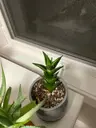
Astroloba congesta
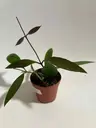
Hoya 'Memoria'
Anthurium papillilami…

Orange Lipstick Plant

Betel

Picasso's Paintbrush

Bonsai Crassula

Aglaonema Spitfire
Phalaenopsis schiller…
Chinese Evergreen 'Ga…

Caladium

Electric Fern
Philodendron 'Rio'
