


False Cypress

5.0 out of 5 (1 experiences)
About False Cypress
Atlantic White Cedar is a native evergreen tree in the cypress family. It is found in swampy areas and streambanks in the peaty-soils of eastern U.S.A from NJ to FL. The leaves are evergreen and scale-like with the branches growing in a fan-like shape.
Taxonomy

Chamaecyparis thyoides
Chamaecyparis
Cupressaceae
Pinales
Also known as
Atlantic White Cedar, Atlantic White Cedar, Atlantic white cedar, Atlantic white cypress, southern white cedar, whitecedar, false-cypress and false cypress

How to care for False Cypress
How often to water your False Cypress

every 9
False Cypress needs 0.5 cups of water every 9 when it doesn’t get direct sunlight and is potted in a 5" pot.
Use our water calculator to personalize watering recommendations to your environment or download Greg for more advanced recommendations for all of your plants.

Water 0.5 cups every
9
Finding light for Atlantic White Cedar in your home

a window
False Cypress love being close to bright, sunny windows 😎.
Place it less than 1ft from a south-facing window to maximize the potential for growth.
False Cypress does not tolerate low-light 🚫.
Select your region to see how the current weather in your area affects the placement of False Cypress in your home 🏡.
How to fertilize False Cypress

Most potting soils come with ample nutrients which plants use to produce new growth.
By the time your plant has depleted the nutrients in its soil it’s likely grown enough to need a larger pot anyway.
To replenish this plant's nutrients, repot your False Cypress after it doubles in size or once a year—whichever comes first.
-
Indoor care? Got it from Walgreens had roots at bottom been chillin in house nicely for past few days. Put it in a slightly larger pot with some of my regular soil cause who knows what kind of soil is from the chain stores. Anyone else growing these ?
-
How to take care of a European Cypress? Hello, my mother gave me a European Cypress (Ellwoodii) today, and I have no experience with plants other than Marimo moss balls. I am currently living in a hotel, so it's hard for him to get direct sunlight, and I don't know how often and how much I need to water him. I am going to re-pot him with some new dirt and a better pot soon, but I don't want to hurt him, and I want him to thrive the best he can. So if anyone can give me advice I would be very much appreciative #happyplants #beginnerplantparent #plantsmakepeoplehappy #planttherapy
-
What have I done? This was a slow burn but I couldn't stop these needles from browning and now I think I'm past the point of no return. I want to try again but how do I avoid this?
-
My cypress is still green but very "crunchy" with pieces easily coming off when touched. I live in WI where it's been quite cold lately (and unfortunately very dry in my house right now. The pot has drainage and it's getting watered as it should.
-
How to save my plant ? My pine tree leaves are dry and very brittle. They break as soon as I touch them. I guess it is dehydrated and I have been watering it thoroughly every day but it has not improved much. Please help me save it. Thank you so much.
-
Chamaecyparis ellwoodii Hello! I just recently got this beautiful cypress but I am a little confused with the light requirements. I've read that likes full bright direct sunlight but I also read that likes bright indirect sunlight. Which one is it? Please help #chamaecyparis #ellwoodii #chamaecyparisellwoodii #cypress #light #lightrequirements #help
-
Is it possible to add a plant variety that's not in the database? #plantid
-
dry, needles breaking off, not very green. watering every 2 weeks with 3/4 cup of water. just gave it a whole cup on monday. Miracle Gro pellet Fertilizer used two weeks ago. No pesticide used but no evidence of infestation. what am I doing wrong? #LawsonCypress
-
Uh so I just got this plant. It is my very first plant I have ever had so I'm very new and I didn't pay too much attention to it for the past three days but now it's a pale green and the pines break off whenever I touch them... Is it sick? #LawsonCypress
-
Hello. I was wondering, how many hours should my dwarf Hinoki cypress have direct sunlight? #DwarfHinokiCypress


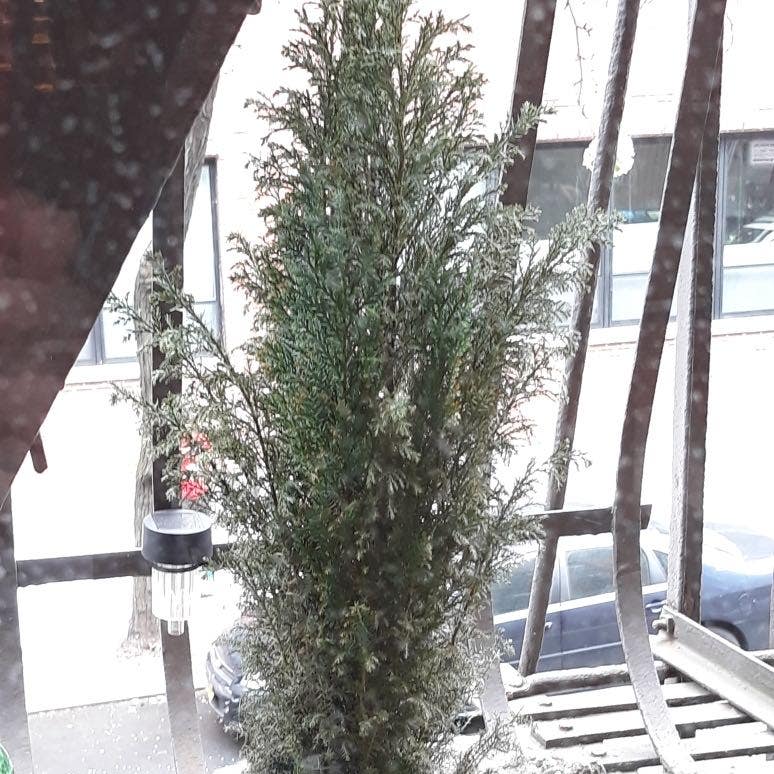
Care Summary for False Cypress

False Cypress
 Greg recommends:
 Water
Water
0.5 cups every 9 days
 Placement
< 1ft from a window
 Nutrients
Repot after 2x growth
Based on the 4” pot your plant is in, and that it doesn’t get direct sunlight.
What other plant parents say


 01/15/2022
Never had his plant before, bought three on reduced after Christmas, starting to grow better now :))
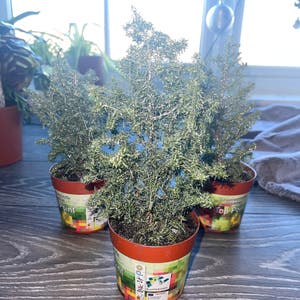
 Trending in your area









 Similar to False Cypress


✨ Discover rare plants

Croton Nervia
Philodendron 'Silver …

Fagraea ceilanica

Bonsai Crassula

Christmas Candle

Dinteranthus microspe…

Kudu Lily

Picasso's Paintbrush
Hoya 'Memoria'

Carolina Reaper

Pine Cone Plant

Vatricania guentheri
Hoya crassipetiolata

Large Leaf Elephant B…
Phalaenopsis schiller…

Scindapsus pictus 'Si…

Pink Ruby Sedevaria
