Why Is My Papyrus Dropping Leaves?
Cyperus papyrus
By the Greg Editorial Team
Jun 18, 2024•3 min read
This article was created with the help of AI so we can cover more plants for you. May contain errors. See one? Report it here.
- Water wisely to prevent over/underwatering-induced leaf drop.
- Stable light and temperature keep papyrus leaves healthy.
- Inspect roots and adjust nutrients to address leaf health issues.
Pinpointing the Culprits: Common Causes of Leaf Dropping
💧 Water Woes
Overwatering turns roots to mush, signaling distress through droopy, discolored leaves. Conversely, underwatering leaves plants parched, with leaves as crisp as autumn foliage.
To prevent water-induced leaf drop, let the top inch of soil dry before watering. Think of it as the plant's way of saying, "I'm good for now."
🌞 Light and Temperature Troubles
Insufficient light leaves papyrus plants languishing in the shadows, with growth as stunted as a bonsai. Too much direct light, and leaves burn faster than toast forgotten in the toaster.
Temperature fluctuations make papyrus plants as uncomfortable as a polar bear in the desert. Aim for a steady, warm environment, free from drafts and sudden chills.
🍽️ The Nutrient Connection
Nitrogen deficiency turns leaves a sickly yellow, as if they've lost their summer tan. Potassium shortage has leaves browning at the edges, like a book well-thumbed and aged.
To keep nutrients balanced, fertilize sparingly, as overdoing it can lead to more drama than a soap opera. Use soil amendments to address specific deficiencies, ensuring your papyrus plant doesn't go hungry.

The Tell-Tale Signs: Recognizing Leaf Drop Symptoms
🍃 Visual Clues
Healthy papyrus leaves stand tall and proud, sporting a vibrant green hue. When they start to look like they've lost a fight—yellowing, browning, or sporting unsightly spots—it's a cry for help. Unhealthy leaves might also show signs of curling or wilting, as if they're too exhausted to hold themselves up anymore. If they're dropping faster than your phone's battery life, it's time to take action.
🕵️ Root Health Check-Up
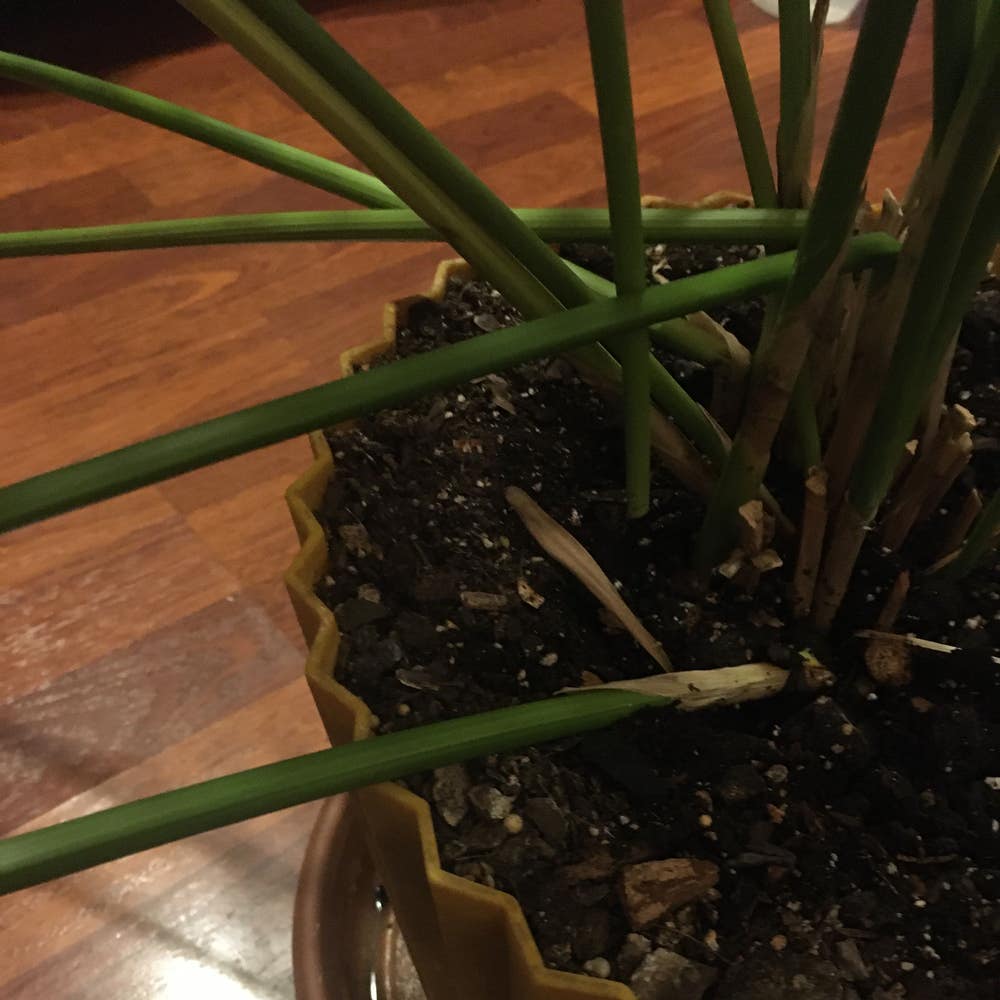
Dive below the surface to inspect the roots—the hidden heroes of your papyrus plant. They should be firm and white, like a fresh pair of sneakers. If they're brown and mushy, think overcooked noodles, that's a red flag for root rot. Root health is crucial; compromised roots can't support the lush life above, leading to a cascade of leaf dropping. If the soil smells like last week's leftovers, it's a sign that something's off. Keep the soil's moisture in the Goldilocks zone—not too wet, not too dry—to avoid root rot.

Turning Over a New Leaf: Remedies and Prevention
💧 Fine-Tuning Watering Habits
Consistency is your plant's best friend when it comes to watering. Use a moisture meter or the trusty finger test to gauge soil dryness; water only when the top inch feels dry. Seasonal changes affect your plant's thirst—less water in winter, more in summer. Tailor your routine, and avoid the extremes of a swamp or desert for your Papyrus.
🌞 Optimizing Light and Temperature
Papyrus plants are like Goldilocks—they want their light just right. Bright, indirect light is the sweet spot, so position them near east or west-facing windows. Avoid direct sunlight to prevent leaf scorch. Maintain a steady temperature—room temperature is ideal. A slight breeze, like from an oscillating fan, can help prevent stagnant air that's no friend to Papyrus.
🍽️ Balancing the Diet: Nutrient Management
Your Papyrus doesn't need a buffet of fertilizers, but a light snack at the start of spring and summer can promote growth. Over-fertilizing is a no-go; it's like giving your plant a stomachache. Stick to a simple schedule and watch your Papyrus respond with gratitude in the form of healthy, vibrant leaves.

⚠️ Safety First
This content is for general information and may contain errors, omissions, or outdated details. It is not medical, veterinary advice, or an endorsement of therapeutic claims.
Always consult a qualified healthcare professional before using any plant as food, medicine, or supplement.
Never eat any plant (or feed one to pets) without confirming its identity with at least two trusted sources.
If you suspect poisoning, call Poison Control (800) 222-1222, the Pet Poison Helpline (800) 213-6680, or your local emergency service immediately.
Spotted an error? Please report it here.
Revive your papyrus's lush greenery with Greg's 🌿 custom care plan, ensuring your leafy friend never misses the mark on water, light, or nutrients.