


Hart's Tongue Fern
About Hart's Tongue Fern
Hart's Tongue Fern is a super popular houseplant 🌿 that is easy to grow and needs lots of water to thrive. They do best in moderate sunlight 🌤 and should be less than 6 feet from a window.
Hart's Tongue Fern likes soil that is good at retaining moisture. Your plant shouldn't need added fertilizers if you repot each time it doubles in size.
Hart's Tongue Fern belongs to the Asplenium genus, and is native to North America, Northern Africa, Western Asia, and Europe.
Taxonomy

Asplenium scolopendrium
Asplenium
Aspleniaceae
Polypodiales
Also known as
Crested Hart's Tongue Fern

How to care for Hart's Tongue Fern
How often to water your Hart's Tongue Fern

every 7
Hart's Tongue Fern needs 0.5 cups of water every 7 when it doesn’t get direct sunlight and is potted in a 5" pot.
Use our water calculator to personalize watering recommendations to your environment or download Greg for more advanced recommendations for all of your plants.

Water 0.5 cups every
7
Finding light for Hart's Tongue Fern in your home

a window
Hart's Tongue Fern can tolerate being far from a window and light source.
Place it less than 6 feet from a south-facing window to ensure it receives enough light to survive 💪.
Select your region to see how the current weather in your area affects the placement of Hart's Tongue Fern in your home 🏡.
How to fertilize Hart's Tongue Fern

Most potting soils come with ample nutrients which plants use to produce new growth.
By the time your plant has depleted the nutrients in its soil it’s likely grown enough to need a larger pot anyway.
To replenish this plant's nutrients, repot your Hart's Tongue Fern after it doubles in size or once a year—whichever comes first.
-
Stuck?? Hello everyone i got this plant around last spring and its been crunchy and turning brown for the past few months, ive watered it kept it out/in sunlight but the leaves just keep falling off, is there anything I can do or is this a lost cause??
-
I have this poor little plant that isn't doing well. What am I doing wrong #help
-
leaves start to changed their colour to yellowish
-
Hi, I’m about to re-pot my Harts tongue Fern, can anyone recommend a good soil to use?
-
How can I fix this? Thriving plant up until a couple months ago. I trimmed off a leaf that was completely browning and ever since my plant has got droopy. I water it every week
-
What’s going on? Any idea why she’s turning brown all the sudden?
-
Brown spots :( Hi there I’ve notice some bad brown spots in crispy wave fern and wondered if anyone had any advice as to what I may be doing wrong?
-
Am I misting too much? Leaves are turning brown 😭 I’ve been bottom watering because the soil was getting white on the top. Not sure what’s going on
-
What can I do to save her?? I did repot her in new coir soil to see if that would help and moved farther away from the windows.
-
Can someone tell me what's going on and how can it be fixed or if it can be?


Care Summary for Hart's Tongue Fern

Hart's Tongue Fern
 Greg recommends:
 Water
Water
0.5 cups every 7 days
 Placement
< 6ft from a window
 Nutrients
Repot after 2x growth
Based on the 4” pot your plant is in, and that it doesn’t get direct sunlight.
 Trending in your area



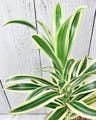




 Similar to Hart's Tongue Fern
✨ Discover rare plants

Stomatium acutifolium

Parrot Pitcher Plant

Hoya sipitangensis

Large Leaf Elephant B…
Astroloba congesta

Electric Blue Gecko

Chandelier Plant

Anthurium 'Fantasy Lo…
Hoya crassipetiolata

Raphionacme flanaganii
Phalaenopsis schiller…

Christmas Candle

Ceropegia simoneae

Chinese Evergreen 'Go…

Munstead Lavender

Euphorbia
