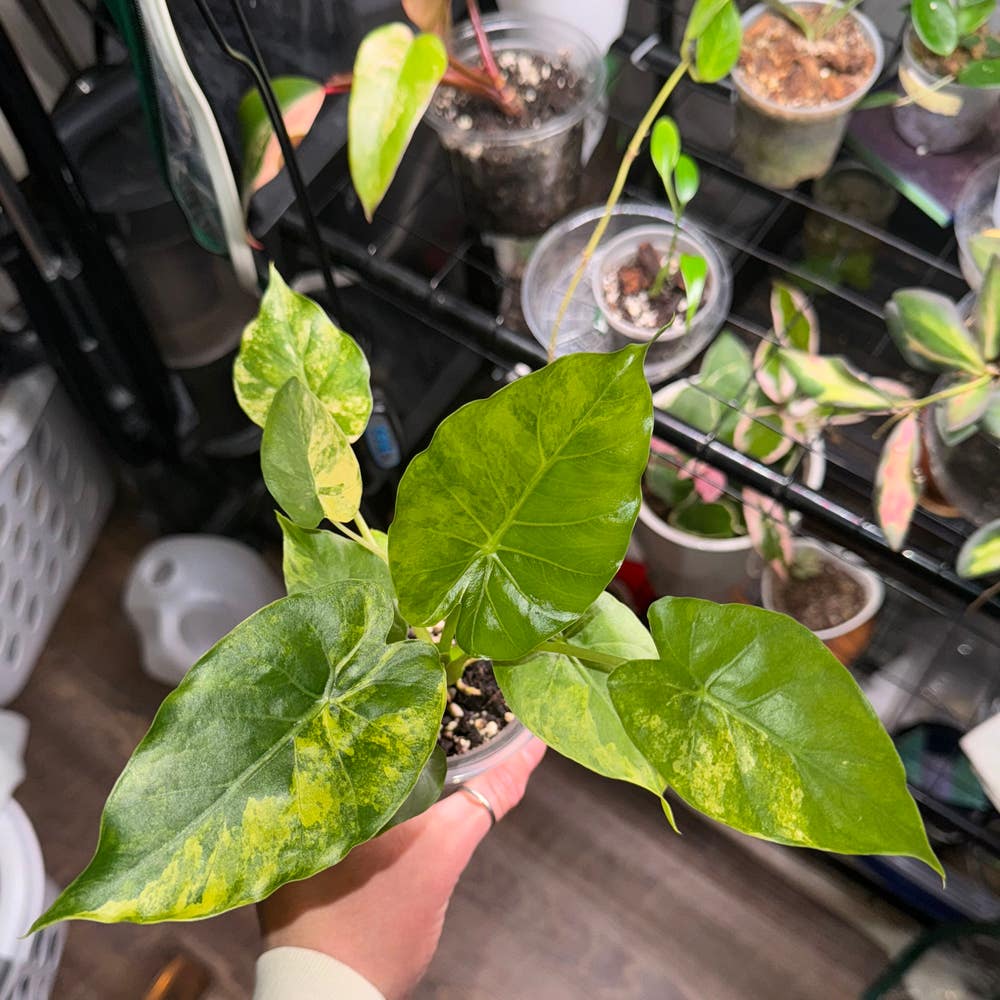
Why Are There Brown Spots on My Hoya Rangsan?
Hoya sp. 'Rangsan'
By the Greg Editorial Team
Feb 13, 2024•3 min read
This article was created with the help of AI so we can cover more plants for you. May contain errors. See one? Report it here.
- Brown spots may signal disease, especially with yellow or black halos.
- Over/underwatering, sunburn, pests—all potential causes of brown spots.
- Adjust water, light, and nutrients to prevent and treat brown spots.
Spotting the Trouble: Identifying Brown Spots
🕵️ Spot Appearance and Location
Brown spots on Hoya Rangsan leaves are like red flags waving at you, begging for attention. They can be tiny specks or large, unsightly blotches, with edges that might be sharp or blurred. The texture is a tell-tale sign too—spots could be brittle, suggesting dryness, or slimy, hinting at a possible infection. You'll typically find these troublemakers on the leaf surface, but they're sneaky and might also appear along the edges or near the veins.
🍂 Spot vs. Other Leaf Issues
Not all leaf discolorations are a cause for concern. Some might be harmless quirks or the result of a past injury. To tell brown spots apart from other issues, look for patterns or repetition. A yellow or black halo around a spot is a warning sign for disease, not to be confused with the plant's natural aging process, which tends to cause uniform color changes. If spots are spreading or changing, it's time to play plant detective—inspect the leaf tips, bases, and especially the undersides for clues.
The Usual Suspects: Common Causes of Brown Spots
💧 Water Woes
Overwatering is like a helicopter parent for your Hoya Rangsan—it means well but ends up smothering. Roots can't breathe, leading to those telltale brown spots. They're soft, dark, and spread like gossip. On the flip side, underwatering turns your plant into a desert wanderer, with crispy, lighter spots crying out for hydration.
🌞 Too Much Sun
Think of your Hoya Rangsan as a beachgoer without sunscreen—too much sun leads to sunburn. The result? Brown spots that are the botanical equivalent of a peeling sunburn, often found on leaves that catch the most rays.
🐜 Unwanted Guests
Pests are like that one friend who shows up uninvited and eats all your snacks. Spider mites and thrips leave behind brown spots as evidence of their feast. Sticky residue or visible critters? Time to show these freeloaders the door.
🤒 Illness in Leaves
Fungal and bacterial diseases are the party poopers of the plant world. They love moist environments and poor air circulation, leaving brown spots with yellow or red halos as their calling card. If your Hoya Rangsan's leaves look like they've been in a brawl, it might be time to look for these microscopic bullies.
Fixing the Spots: Effective Remedies
💧 Watering the Right Way
Adjusting your watering habits can be the game-changer your Hoya Rangsan needs. Overwatering is often the culprit, so ensure the top inch of soil is dry before giving it another drink. Consistency is key—water when needed, not on a rigid schedule.
🌞 Light and Environment Adjustments
Your Hoya Rangsan doesn't need a tan. Find that bright, indirect light spot to prevent sunburn spots. Keep the humidity in check—think comfortable sweater, not steam room.
🐜 Pest Control Tactics
Pests are tiny terrors for your Hoya Rangsan. Spot them early and show no mercy with insecticidal soap or neem oil. Apply with precision—like a sniper, not a stormtrooper.
🍂 Battling Leaf Diseases
Fungal and bacterial foes love moisture. Improve air circulation and say goodbye to soggy soil. If you spot disease, remove affected foliage and consider a fungicide—follow the label like it's a treasure map.
🍽️ Nutrient Know-How
Yellowing leaves? Might be a nutrient deficiency. A balanced fertilizer is your plant's multivitamin—administer with a light touch. Remember, more isn't always better.
⚠️ Safety First
This content is for general information and may contain errors, omissions, or outdated details. It is not medical, veterinary advice, or an endorsement of therapeutic claims.
Always consult a qualified healthcare professional before using any plant as food, medicine, or supplement.
Never eat any plant (or feed one to pets) without confirming its identity with at least two trusted sources.
If you suspect poisoning, call Poison Control (800) 222-1222, the Pet Poison Helpline (800) 213-6680, or your local emergency service immediately.
Spotted an error? Please report it here.
Banish brown spots 🍂 on your Hoya Rangsan with Greg's personalized care plans, ensuring your plant thrives with the right water, light, and love!