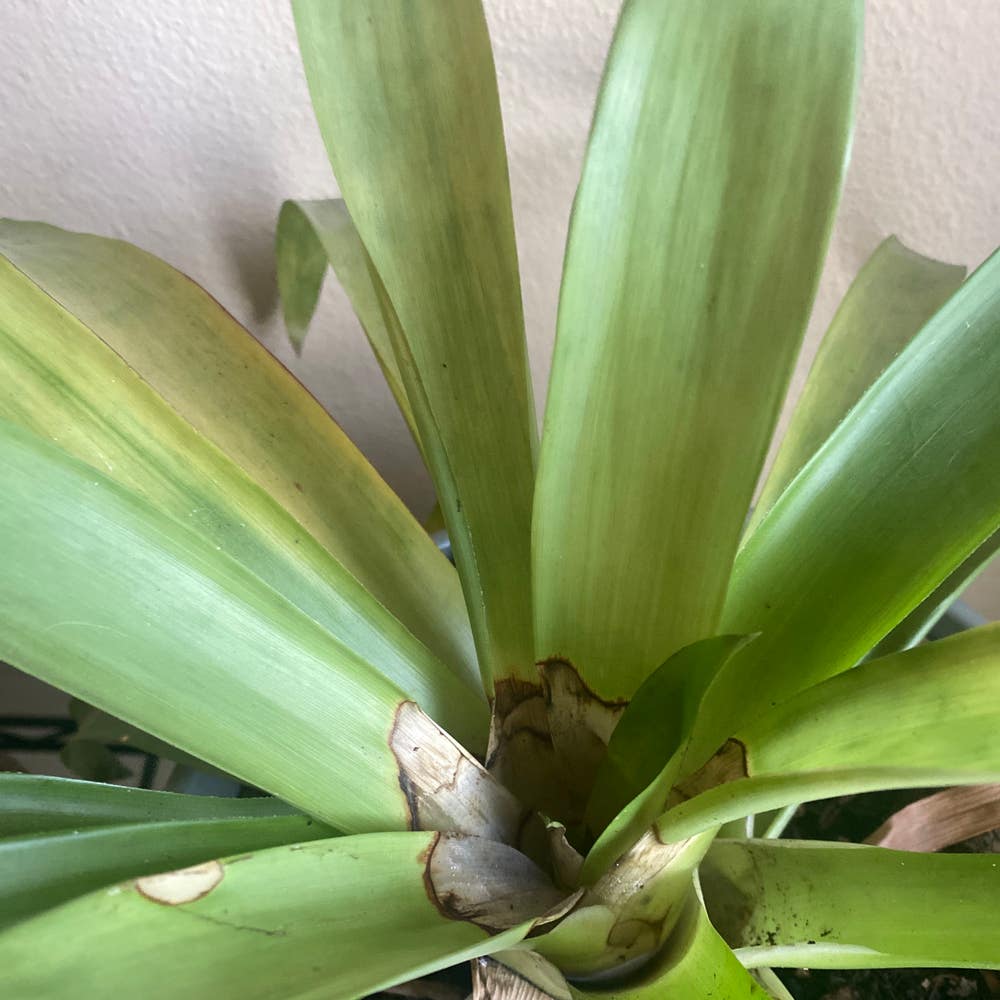
Black Spots on My Neoregelia 'Pink Sensation' Leaves
Neoregelia 'Pink Sensation'
By the Greg Editorial Team
Mar 26, 2024•4 min read
This article was created with the help of AI so we can cover more plants for you. May contain errors. See one? Report it here.
- Black spots signal distress, often due to fungi, bacteria, or environmental stress.
- Early detection is key; inspect leaves for circular, water-soaked, or foul-smelling spots.
- Prevent with care: Adjust watering, air circulation, and inspect regularly.
Spotting the Culprits: Identifying and Diagnosing Black Spots
🕵️ What Do Black Spots Look Like?
Visual cues are essential when inspecting your Neoregelia 'Pink Sensation' for black spots. These blemishes may appear as dark brown to black marks, initially water-soaked before becoming necrotic. They're not just a cosmetic issue; they're a distress signal from your plant.
📈 Common Progression Patterns
Black spots can start as isolated incidents but without intervention, expect a full-blown invasion. They don't discriminate, attacking new growth and established leaves alike. Keeping a vigilant eye on your plant's foliage is key to early detection and control.
🔍 Investigating the Underlying Causes
To crack the case of black spots, start with a thorough inspection. Look for circular or angular spots with a purple-red border for fungal suspects. Bacterial culprits often leave water-soaked lesions with a purple-brown tinge. Don't forget to consider environmental stressors; improper watering or lighting can also be to blame. If you're stumped, consulting a plant pathologist is like calling in the big guns. They'll help you pinpoint the problem and suggest a course of action to clear up those unsightly spots.
The Usual Suspects: Understanding Specific Causes
🍄 Fungal Foes
Fungi are the uninvited guests at the Neoregelia 'Pink Sensation' party. Cercospora and Anthracnose are the main culprits, thriving in moist conditions. They leave behind black spots, often with a bull's-eye pattern, as their calling card. These spots start small but can grow rapidly if not addressed.
🦠 Bacterial Baddies
Bacteria are the stealthy ninjas, attacking with less obvious symptoms. They produce water-soaked spots, sometimes encircled by a yellow halo. The presence of a foul odor or a slimy texture is a dead giveaway of bacterial involvement. Quick action is necessary, as bacteria can be sneakily destructive.
🌿 Environmental Stressors
Environmental factors are often the stage setters for black spot drama. Overwatering, high humidity, and poor air circulation are like rolling out the red carpet for fungi and bacteria. Additionally, too much sun or extreme temperatures can cause the plant to signal distress with black spots. It's crucial to differentiate these from disease symptoms to address the root cause.
The Rescue Mission: Treating Black Spots
🍄 Fungicide to the Rescue
When black spots mar your Neoregelia 'Pink Sensation', fungicides are your go-to. Opt for a targeted approach; this isn't a spray-and-pray situation. Neem oil or a baking soda mixture can be your first line of defense for a milder touch. For more aggressive fungi, systemic fungicides like tebuconazole work from the inside out. Apply to every leaf, top and bottom, and stick to the schedule—consistency is key.
💥 Battling Bacteria
If bacteria are the culprits, copper-based bactericides are your plant's bouncers. They'll show those microscopic party crashers the exit. Apply with precision—think of it as a surgical strike on the bacteria. And cleanliness is your sidekick here; sterilize your tools to prevent spreading the infection.
🌬️ Adjusting the Environment
Sometimes, it's not just about what you apply but also about the environment. Increase air circulation around your Neoregelia to discourage fungal growth. If overwatering is the issue, dial it back. Remember, your plant's comfort zone is not a sauna. Adjust the humidity and watch your plant perk up.
Keeping Spots at Bay: Prevention Strategies
💧 Watering Wisdom
Overzealous watering is a no-go. Let the soil dry before you douse again, and always water at the base. Early morning is the golden hour for hydration, letting the plant bask in moisture without becoming a fungal nightclub by evening.
🌬 Circulation and Humidity Control
Air circulation is like social distancing for plants; it keeps the pathogens away. A gentle breeze, natural or fan-assisted, is your plant's best friend. Humidity should be just right – use a hygrometer to avoid turning your plant's home into a tropical storm or a desert.
🔍 Regular Check-ups
Be the Sherlock Holmes of plant care. Inspect your Neoregelia 'Pink Sensation' regularly for any signs of distress. Cleanliness is next to godliness – keep your tools sterilized and quarantine new plants as if they're ticking time bombs of infection.
⚠️ Safety First
This content is for general information and may contain errors, omissions, or outdated details. It is not medical, veterinary advice, or an endorsement of therapeutic claims.
Always consult a qualified healthcare professional before using any plant as food, medicine, or supplement.
Never eat any plant (or feed one to pets) without confirming its identity with at least two trusted sources.
If you suspect poisoning, call Poison Control (800) 222-1222, the Pet Poison Helpline (800) 213-6680, or your local emergency service immediately.
Spotted an error? Please report it here.
Prevent black spots on your Neoregelia 'Pink Sensation' by monitoring 🕵️♂️ your plant's environment with Greg's custom care tips for a healthier, happier bromeliad!