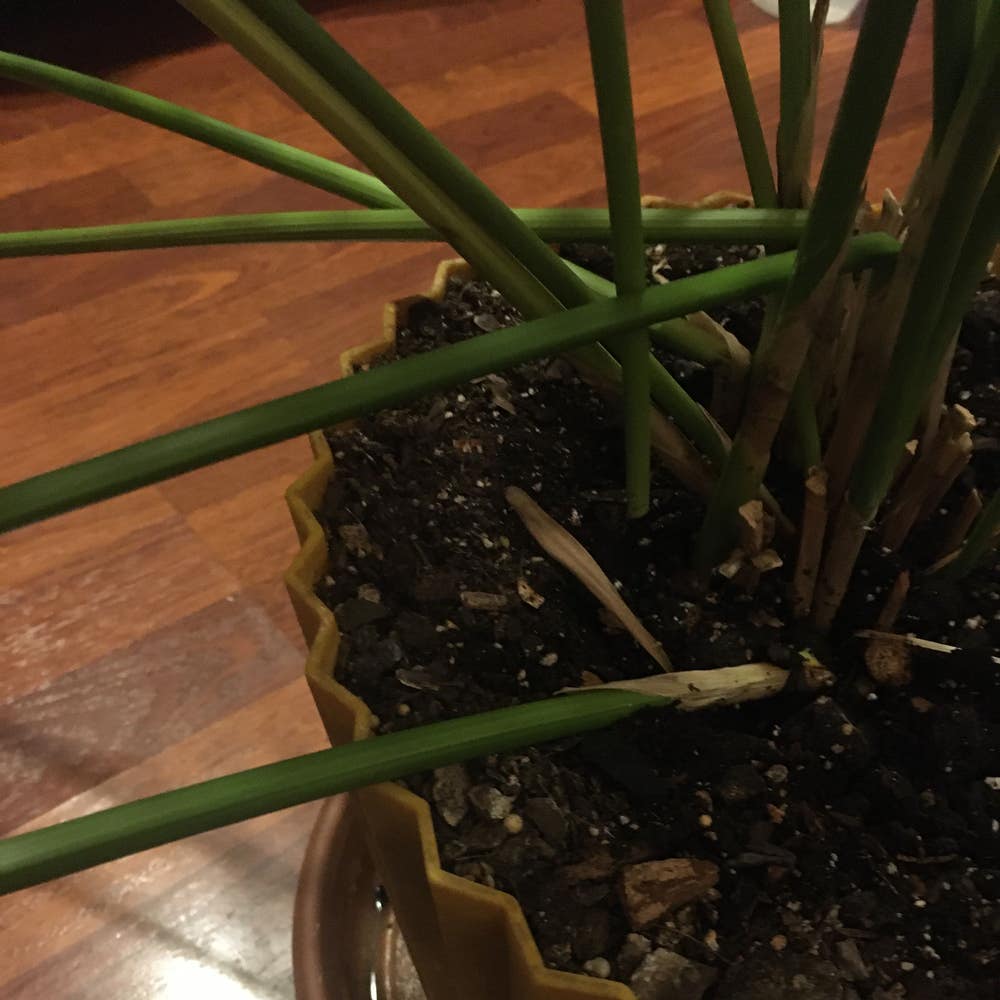
How Do I Fix zumula cat grass root rot?
Cyperus alternifolius 'Zumula'
By the Greg Editorial Team
Mar 13, 2024•3 min read
This article was created with the help of AI so we can cover more plants for you. May contain errors. See one? Report it here.
Save your cat's favorite greens 🌱 from root rot with this essential recovery guide.
- 🚩 Yellow leaves and mushy roots signal root rot in Zumula Cat Grass.
- ✂️ Trim rotten roots, repot with sterile shears and well-draining soil.
- 💧 Water when topsoil is dry to prevent future root rot.
Spotting the Trouble: Symptoms of Root Rot in Zumula Cat Grass
🚨 Yellowing Leaves and Wilting: A Warning Sign
Yellowing leaves and wilting in Zumula Cat Grass are red flags, not just signs of a bad day. When the vibrant green fades to a sickly yellow, especially in new growth, it's an SOS from your plant.
🕵️♂️ Root Check: Unearthing the Issue
Root health is crucial. Healthy roots are firm and white, but root rot turns them soft, dark, and mushy. If your plant's roots resemble overcooked pasta, it's time for action.
👃 Sniff Test: The Smell of Distress
Trust your nose—if the soil smells like last week's forgotten leftovers, it's a clear distress signal. A foul odor is a telltale sign that root rot is setting in.
👀 Visual Symptoms: More Than Meets the Eye
Look for leaves that have given up their ghost, turning from a lively green to a pale yellow. This isn't a natural transition; it's a cry for help.
✋ Tactile Clues: Feeling for Symptoms
Mushy stems are a no-go. They should be resilient and firm, not squishy like a stress ball. If the stems feel wrong, root rot could be the culprit.
🌱 The Bigger Picture: Assessing Overall Plant Health
Stunted growth and black or white blemishes on leaves are also symptoms of distress. If your Zumula Cat Grass looks more like a wilting wallflower than a perky plant, it's time to investigate.
The Rescue Mission: Treating Root Rot in Zumula Cat Grass
🚑 Immediate First Aid
Uprooting the problem: It's time to play plant doctor. Gently remove your Zumula Cat Grass from its pot to assess the damage. If you're greeted by brown, mushy roots, you've got a case of root rot.
Surgical precision: With sterilized shears, trim away the rotten roots. Be thorough but gentle—your plant is counting on you. Let the healthy roots breathe before moving on to the next step.
🏥 Post-Op Care
Fresh start: Choose a new pot with proper drainage holes and fill it with a well-draining soil mix. Your plant's life depends on it.
Watering wisdom: After repotting, water sparingly. Your goal is to find the Goldilocks zone—not too wet, not too dry. Keep an eye on the moisture level to ensure a smooth recovery.
Keeping It Healthy: Preventing Root Rot in Zumula Cat Grass
💪 The Right Home
Picking the perfect pot for your Zumula Cat Grass isn't just about aesthetics; it's about survival. Breathability and drainage are the dynamic duo in this story. Opt for pots with drainage holes—they're non-negotiable.
When it comes to soil selection, think of a mattress that's firm yet comfy. A well-draining, sterile potting mix is your go-to. Mix in some perlite or sand to prevent compaction. Remember, dense garden soil is a no-go—it's a root rot rave waiting to happen.
🚰 Watering Without Worry
Timing is everything when watering your Zumula Cat Grass. Stick to a schedule—water when the top inch of soil feels dry. Over-watering is like throwing a pool party for root rot, so let's not.
For monitoring moisture, get tactile or techy. Use your finger to check the soil's moisture or bring in a moisture meter for precision. It's like having a hydration coach for your plant. Keep the soil moist but not soggy, and never let your plant sit in water—it's not a fan of wet feet.
⚠️ Safety First
This content is for general information and may contain errors, omissions, or outdated details. It is not medical, veterinary advice, or an endorsement of therapeutic claims.
Always consult a qualified healthcare professional before using any plant as food, medicine, or supplement.
Never eat any plant (or feed one to pets) without confirming its identity with at least two trusted sources.
If you suspect poisoning, call Poison Control (800) 222-1222, the Pet Poison Helpline (800) 213-6680, or your local emergency service immediately.
Spotted an error? Please report it here.
Avoid the distress of root rot and keep your Zumula Cat Grass thriving 🚫🌿 with Greg's tailored watering reminders and expert care tips.