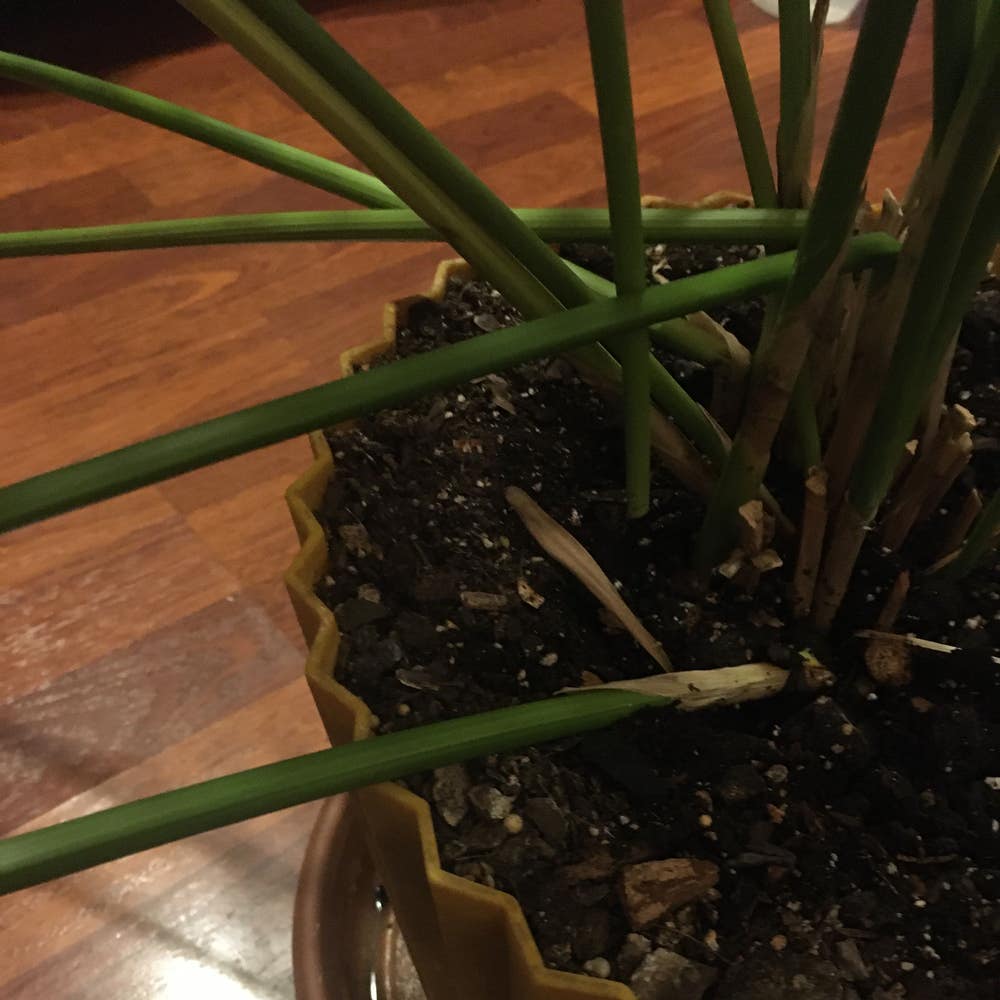
Why Is My Zumula Cat Grass Not Doing Well? 🐈
Cyperus alternifolius 'Zumula'
By the Greg Editorial Team
Mar 13, 2024•4 min read
This article was created with the help of AI so we can cover more plants for you. May contain errors. See one? Report it here.
Revive your wilting Zumula Cat Grass 🌾 by pinpointing and fixing common growth issues!
- Yellow leaves? Over-watering. Crispy tips? Under-watering.
- Bright, indirect light is the sweet spot for Zumula Cat Grass.
- Consistent temperature and pest control are key to plant health.
Water Woes: Too Much or Too Little
🚰 Spotting the Signs
Yellow leaves are the red flags of over-watering, while under-watered plants sport crispy tips and droopy leaves. If the soil clings to your fingers like a needy pet, it's too wet.
🌱 Finding the Balance
Watering is less calendar, more context. Observe your plant's mood swings and adjust your watering habits accordingly. If it perks up after a drink, you've found the sweet spot.
💧 Drainage and Soil Moisture
Drainage holes are your plant's lifeline. No one likes wet feet for too long, not even plants. Use the touch test: if the top inch of soil is dry, it's time for a drink; if not, back off.
Light and Shade: Striking the Right Amount
🚦 Symptoms of Light Issues
If your Zumula Cat Grass is looking more like a wilted salad than a lush mini-jungle, it's time to assess its light diet. Yellowing leaves are the plant's way of saying it's overdosed on sunlight, while a lean towards the nearest light source screams for more. A quick shadow test can tell you a lot: strong shadows are good, while faint ones are a red flag.
🌞 Adjusting the Light
The sweet spot for your Cat Grass's light needs is bright but indirect light—think of the kind of light that would make a sunbather happy without the burn. If your plant is getting a tan in the form of faded colors, it's time to move it away from direct sunlight. Use a light meter or the shadow test with your hand to gauge the light quality. A soft, defined shadow is what you're aiming for. If the shadow resembles a ghost, it's time to find a sunnier spot. If it's too sharp, diffuse the light with a sheer curtain or relocate the plant to avoid the harsh rays. Remember, your Cat Grass isn't trying to get a beach tan; it's more of an indoor yoga session kind of plant.
Temperature Tantrums: Keeping It Consistent
🌡️ Spotting Temperature Stress
Zumula Cat Grass, like any plant, has its comfort zone. When it's too hot or too cold, it will let you know. Crispy leaves may indicate too much heat, while mushy spots suggest a chill has taken its toll. Leaves curling inward could be your plant's silent cry for help, signaling distress caused by temperature fluctuations.
🏠 Creating a Stable Environment
To prevent temperature-induced drama, think of your plant's environment as a climate bubble. Avoid placing your Zumula Cat Grass near drafty windows or heat sources like radiators. Thermometers are your best friends here, allowing you to monitor the ambient temperature with precision. If the air gets too dry, consider a humidifier or a pebble tray to maintain steady humidity levels. Remember, though, that moderation is key; you're aiming for consistency, not recreating the Amazon rainforest. When the seasons change, be proactive—use shades or heaters to keep the temperature steady. Your goal is to avoid sudden shifts that can shock your plant, keeping the temperature as even as your mood on a good day.
Uninvited Guests: Dealing with Pests
🐛 Identifying Pests
Pests can turn your Zumula Cat Grass from a feline paradise to a battleground. Aphids and spider mites are the usual suspects, leaving behind telltale signs like a sticky residue or fine webs. Look out for speckled leaves or outright leaf damage, which can indicate an infestation.
🌿 Natural Remedies
Combat these critters with neem oil, an eco-friendly insecticide that's safe for pets. For a full-blown invasion, insecticidal soap is your ally, targeting pests without harming your plant. Introducing natural predators, such as ladybugs, can help maintain balance and keep future pests at bay. Regular monitoring and a clean environment are your best defenses against these unwelcome guests.
When the Roots Rot: Tackling Below-the-Surface Issues
🍄 Recognizing Root Rot
Yellowing leaves and stunted growth are your first red flags for root rot in Zumula Cat Grass. A foul smell from the soil is another giveaway, as healthy roots should be firm and white, not mushy or dark. If your plant's leaves droop like they've lost all hope, it's time to play detective with the dirt.
🏥 The Road to Recovery
- Unpot your plant carefully to inspect the roots. The rotten ones will be soft, dark, and possibly smelly.
- Trim the damaged roots with sterile scissors. It's like giving your plant a life-saving surgery.
- Repot in fresh, well-draining soil to give your plant a clean slate.
- Water judiciously post-op. Remember, overwatering got you into this mess.
- Reduce the foliage to balance the reduced root system. It's a tough love approach, but it's necessary.
- Monitor closely for signs of recovery or further decline. This isn't a set-it-and-forget-it situation.
- If the rot's advanced, consider a fungicide—but only as a last resort and according to the label's instructions.
⚠️ Safety First
This content is for general information and may contain errors, omissions, or outdated details. It is not medical, veterinary advice, or an endorsement of therapeutic claims.
Always consult a qualified healthcare professional before using any plant as food, medicine, or supplement.
Never eat any plant (or feed one to pets) without confirming its identity with at least two trusted sources.
If you suspect poisoning, call Poison Control (800) 222-1222, the Pet Poison Helpline (800) 213-6680, or your local emergency service immediately.
Spotted an error? Please report it here.
Turn your Zumula Cat Grass from fading 🍂 to flourishing with Greg's pinpoint watering schedules and real-time community support for every twist and turn in your plant's health journey.