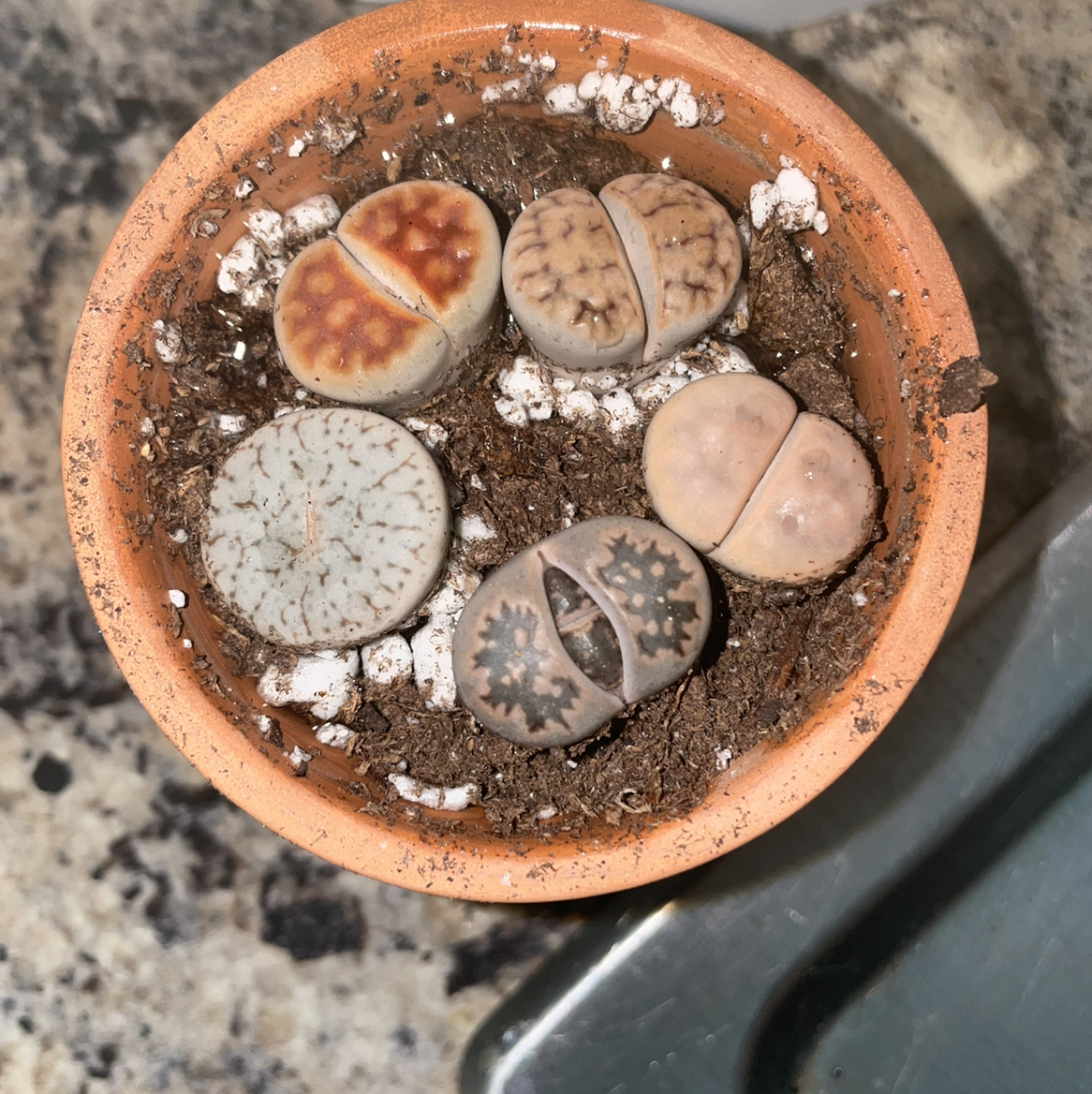
Best Soil for Lithops
What Soil Do Lithops Need?
Lithops evolved in some of the most extreme dry environments on Earth — rocky, almost barren desert soils in southern Africa where rain is scarce and drainage is instant. They store all the water they need inside their succulent leaf-pairs. Any mix that retains moisture around their shallow roots will kill them quickly.
Standard potting soil is one of the worst things you can put Lithops in. It holds far too much moisture and will cause the roots and base to rot within weeks during any growing pause or when watering is even slightly misjudged. Even cactus mixes sold at garden centers often contain too much peat or bark for Lithops.
The ideal Lithops mix is mostly mineral: coarse sand, pumice, perlite, or fine gravel makes up at least 70–80% of the blend. The tiny amount of organic material (fine potting soil or coir) is there purely to provide trace nutrients — not to hold water. The mix should feel almost like loose gravel when you squeeze it, draining completely within seconds of watering.
Deep pots are not necessary — Lithops have shallow roots and do well in wide, shallow containers. The key is that there is never any standing water anywhere in the pot, ever. In their native habitat, a rainstorm soaks the rocky ground and it is dry again within an hour.
What Soil Mix Should I Use for My Lithops?

What pH Do My Lithops Need?
Lithops prefer a neutral to slightly alkaline soil pH in the range of 6.5–7.5, reflecting the mineral-rich, low-organic desert soils they come from. You can check with an inexpensive pH meter or test strips, though the near-soilless nature of a good Lithops mix makes pH less critical than in organic potting mixes. A meter or strip test in the liquid runoff after watering gives a usable reading.
If pH drifts notably acidic (below 5.5), the mineral-heavy mix can start releasing elements at levels that stress the plant, showing as browning leaf edges or collapse. Overly alkaline soils (above 8.0) are also possible if tap water is very hard — plain rainwater or distilled water helps avoid alkalinity creep over time.
When Should I Replace My Lithops' Soil?
A mineral-heavy Lithops mix breaks down very slowly compared to organic potting mixes — you may get 3–4 years from a good batch before it needs replacing. The inorganic components (sand, perlite, pumice) do not decompose. What degrades is the small organic fraction, which eventually compacts into fine particles that begin to hold moisture.
The clearest sign the mix needs refreshing is a change in drainage behavior: if water that used to run straight through now lingers on the surface for more than a few seconds, the mix has compacted enough to be a problem. Repot in late summer or early fall, before the plant's main autumn growth cycle begins.
How Do I Prepare Garden Soil for Lithops?
Lithops are desert succulents that grow in almost pure mineral soil in the wild. Their tiny taproots will rot within days in soil that holds moisture, so drainage must be extreme.
Clay soil is essentially unsuitable unless you replace it entirely in the planting area with a mix of coarse sand, gravel, perlite, and just a pinch of compost. Sandy soil is a better starting point, but even then, mixing in extra gravel and grit ensures water passes through almost instantly. Plant in full sun on a raised bed or slope where water cannot collect around these small, stone-like plants.
Got More Questions?
About This Article
