


Mouse Tail Cactus
Also known as
Rhipsalis baccifera horrida and Rhipsalis horrida
Taxonomy

Rhipsalis baccifera subsp. horrida
Rhipsalis
Cactaceae
Caryophyllales

How to care for Mouse Tail Cactus
How often to water your Mouse Tail Cactus

every 12
Mouse Tail Cactus needs 0.5 cups of water every 12 when it doesn’t get direct sunlight and is potted in a 5" pot.
Use our water calculator to personalize watering recommendations to your environment or download Greg for more advanced recommendations for all of your plants.

Water 0.5 cups every
12
Finding light for Mouse Tail Cactus in your home

a window
Mouse Tail Cactus may have difficulty thriving, and will drop leaves 🍃, without ample sunlight.
Place it less than 3 feet from a south-facing window to maximize the potential for growth.
Select your region to see how the current weather in your area affects the placement of Mouse Tail Cactus in your home 🏡.
How to fertilize Mouse Tail Cactus

Most potting soils come with ample nutrients which plants use to produce new growth.
By the time your plant has depleted the nutrients in its soil it’s likely grown enough to need a larger pot anyway.
To replenish this plant's nutrients, repot your Mouse Tail Cactus after it doubles in size or once a year—whichever comes first.
-
Is it ok to mist this plant once in a while? #Rhipsalis
-
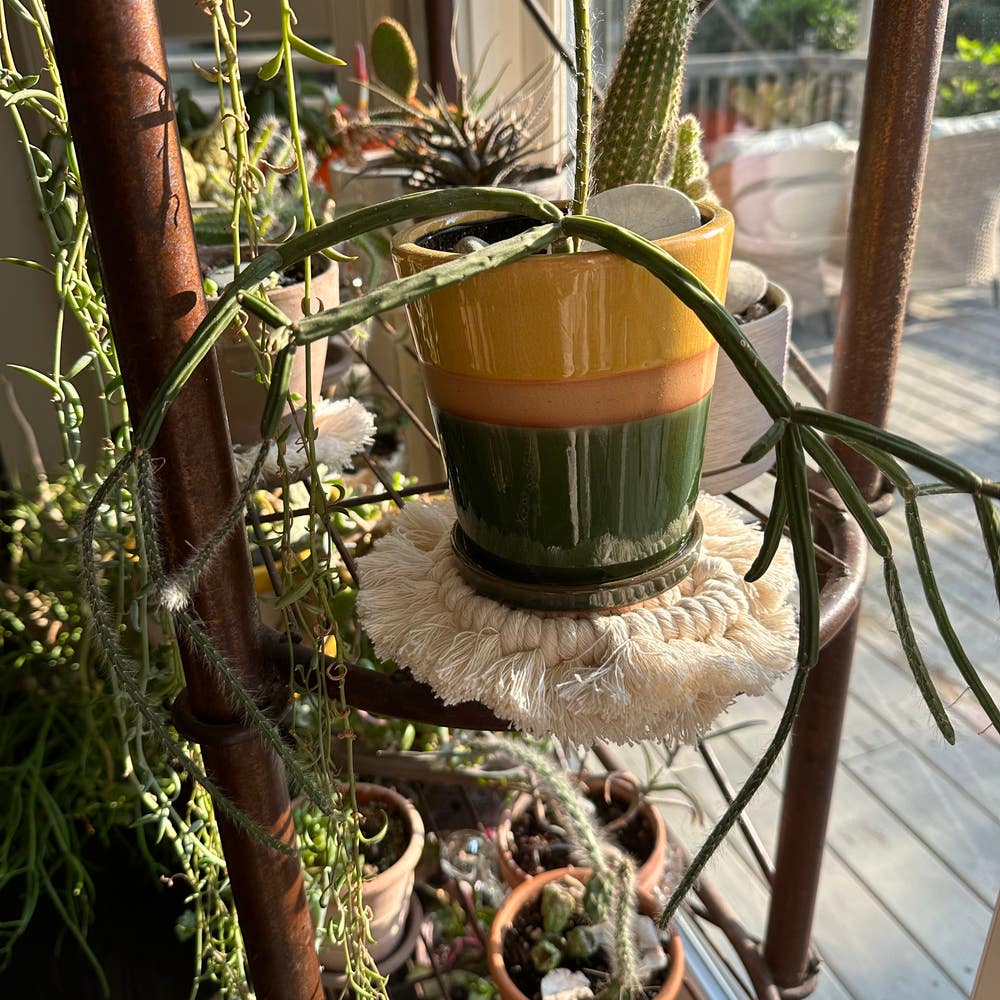
It’s Saturday afternoon here on west coast! How’s everyone at #TheWateringHole today? 😊 Had a great morning catching up on plant projects. 1️⃣ on my list was to make a succulent arrangement with this darling bird planter. I planned on putting 2 lithops in it but it’s too shallow for the 2” pots. So baby succulents instead!! Kinda inspired by Barbara @BEsucculent 🎉 thank you for your recent posts!!🙌 👶 🌱. As they grow I can transplant to deeper pots. Or just let this one overflow 🌱🌱🌱🌱🌱🌱🌱 😊 Also on to-do list was 👀 an outside Hoya compacta. It’s been a bit sad looking. Discovered sooty mold in his little twists & turns 😳. So he got a good scrubbing 🧼 🧽 🚿 as did the Goldfish plant and the planter they were on. The rhipsalis on the planter seems fine 👍. The 3 are drying off, catching some afternoon rays 🌞 with the donkey tail, Maxillaria and RicRac cactus!🥰🫠💚. How’s your Saturday going?? #HappyPlants #PlantsMakePeopleHappy #HoyaHangout #GoldfishPlant #Rhipsalis #SucculentSquad #OrchidLovers #CactusClique
-
Slowly dying Rhipsalis :( I’ve tried to grow this guy in a pot a few times and every time it slowly goes brown. Does anyone know why or have any tips? #Rhipsalis
-
Here is Mochi (Rhipsalis Pentaptera) Is this the correct name? #rhipsalis #cactusclique #cactus #cacti #cacti #cacticollect #succulentlove #plantid
-
What's this? I admit, i'm a #proplifter. But what's this plant i proplifted from? I was thinking Rhipsalis, but the leaf arrangement and stem colour didn't seem right. Or is it one of those pencil-leaved Hoyas? Someone help #identify this. #HappyPlants #PlantsMakePeopleHappy #PlantAddict #NewPlants #Propagation #PlantID #Rhipsalis #Hoya #HoyaHangout #HoyaHeads
-
#Post #1 #boymomplantmom Hahaha so I got a memory from 3 years ago where I just watered Mr Wilson for the first time! Babe moving fast 😂❤️❤️ #HappyPlants #PlantsMakePeopleHappy #PlantAddict #GregGang #Rhipsalis #SucculentSquad
-
Rhipsalis Pilocarpa #Rhipsalis @everyone I received this as a gift Internet states it's a Rhipsalis Pilocarpa It's flowering I have to wipe it off to remove the web My question is Greg says it's a Hairy Stemmed but my research just shows Rhipsalis Pilocarpa and the pic in the search shows mine. How can I change it on the app?
-
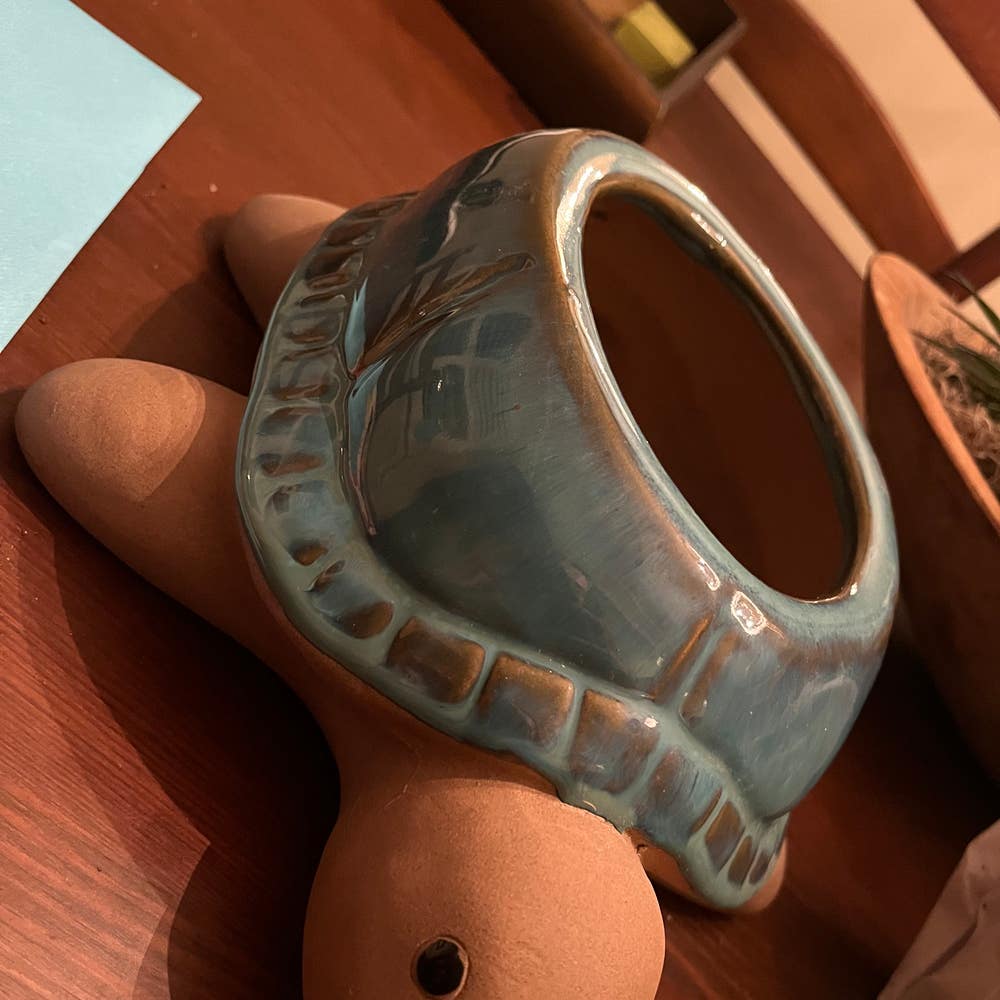
My birthday is tomorrow and my boyfriend wanted me to open my gifts early 🥰 I love the turtle planter I can’t wait to use it for an arrangement. He also got me a variegated ‘string of hearts’, an airplant, ‘gold tip Rhipsalis’ and a bunch of new terracotta pots! I can’t wait to use the turtle planter 🐢 he knows me pretty well I would say 🤭 #SucculentLove #StringOfHearts #SucculentSquad #HappyPlants #Rhipsalis
-
Look at my beautiful Rhipsalis (rare) and how well she is growing~ A tall shoot that is now sprouting lil fingers. I love her. . . . #Rhipsalis #mikihasadecor #plantlovers
-
Repotting my Rhipsalis~ it’s been growing so well, I thought it would enjoy a new pot. . . . #Rhipsalis . . #mikihasadecor . https://



Care Summary for Mouse Tail Cactus

Mouse Tail Cactus
 Greg recommends:
 Water
Water
0.5 cups every 12 days
 Placement
< 3ft from a window
 Nutrients
Repot after 2x growth
Based on the 4” pot your plant is in, and that it doesn’t get direct sunlight.
 Trending in your area
















 Similar to Mouse Tail Cactus
✨ Discover rare plants

Blue Moon Wisteria

Scindapsus pictus 'Si…

Ruby Ball

Picasso's Paintbrush

Miss All-American Bea…

Tillandsia caerulea A…

Graptoveria 'Douglas …

Anthurium Fingers

Bonsai Crassula

Begonia hydrocotylifo…

Sarcochilus fitzgeral…

Treasure Flower

Parrot Pitcher Plant

Anastasia Weeping Fig

Kudu Lily

Croton Nervia

Anthurium 'Fantasy Lo…
