
Divaricating Pittosporum
Taxonomy

Pittosporum divaricatum
Pittosporum
Pittosporaceae
Apiales

How to care for Divaricating Pittosporum
How often to water your Divaricating Pittosporum

every 9
Divaricating Pittosporum needs 0.5 cups of water every 9 when it doesn’t get direct sunlight and is potted in a 5" pot.
Use our water calculator to personalize watering recommendations to your environment or download Greg for more advanced recommendations for all of your plants.
Water 0.5 cups every
9
Finding light for Divaricating Pittosporum in your home

a window
Divaricating Pittosporum love being close to bright, sunny windows 😎.
Place it less than 1ft from a south-facing window to maximize the potential for growth.
Divaricating Pittosporum does not tolerate low-light 🚫.
Select your region to see how the current weather in your area affects the placement of Divaricating Pittosporum in your home 🏡.
How to fertilize Divaricating Pittosporum

Most potting soils come with ample nutrients which plants use to produce new growth.
By the time your plant has depleted the nutrients in its soil it’s likely grown enough to need a larger pot anyway.
To replenish this plant's nutrients, repot your Divaricating Pittosporum after it doubles in size or once a year—whichever comes first.
-
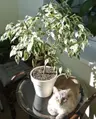
My wife's plant isn't looking so green as you can see. Per the advice of our local nursery I cut a branch to determine if it was still green and alive. It is. Does anyone have experience with the entire plant browning out and then getting it green again? #Kōhūhū
-
How I take care of it to bloom ? #blooming #flowers
Care Summary for Divaricating Pittosporum
Divaricating Pittosporum
 Greg recommends:
 Water
Water
0.5 cups every 9 days
 Placement
< 1ft from a window
 Nutrients
Repot after 2x growth
Based on the 4” pot your plant is in, and that it doesn’t get direct sunlight.
 Trending in your area










 Similar to Divaricating Pittosporum


✨ Discover rare plants

Pink Ruby Sedevaria

Picasso's Paintbrush

Treasure Flower

Large Leaf Elephant B…

Scotch Moss

Hoya sipitangensis

White Apple Moth Orch…

Echeveria Esther
Rosularia platyphylla
Skeleton Key Pothos

Parrot Pitcher Plant

Red Mistletoe Cactus

Black Monkey Thorn Tr…

Kudu Lily
Philodendron 'Silver …

Euphorbia baioensis
Graptopetalum 'Marqui…
