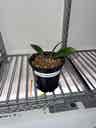
Lilium 'Black Bird'
Taxonomy

Lilium 'Black Bird'
Lilium
Liliaceae
Liliales

How to care for Lilium 'Black Bird'
How often to water your Lilium 'Black Bird'

every 9
Lilium 'Black Bird' needs 0.5 cups of water every 9 when it doesn’t get direct sunlight and is potted in a 5" pot.
Use our water calculator to personalize watering recommendations to your environment or download Greg for more advanced recommendations for all of your plants.
Water 0.5 cups every
9
Finding light for Lilium 'Black Bird' in your home

a window
Lilium 'Black Bird' love being close to bright, sunny windows 😎.
Place it less than 1ft from a south-facing window to maximize the potential for growth.
Lilium 'Black Bird' does not tolerate low-light 🚫.
Select your region to see how the current weather in your area affects the placement of Lilium 'Black Bird' in your home 🏡.
How to fertilize Lilium 'Black Bird'

Most potting soils come with ample nutrients which plants use to produce new growth.
By the time your plant has depleted the nutrients in its soil it’s likely grown enough to need a larger pot anyway.
To replenish this plant's nutrients, repot your Lilium 'Black Bird' after it doubles in size or once a year—whichever comes first.
-
Is anyone else getting impatient with the app for telling us to keep watering as our plants are going into hibernation?
-
Good morning Since I've had my lily she has not bloomed. What could be the problem. She looks healthy. Thank you #EasterLily
-
Seems like the plants have stop growing watered fertilized and acid soil #StargazerLily
-
👋 Checking out communities to learn more about my plants!
-
Why would the leaves be this droopy? #EasterLily
-
Grew fast but now stopped for 2 weeks ?why normal for stargazers Florida? #StargazerLily #
-
Might be dying? I’m a new plant mom who desperately wants a ton of plants and lacks the geeen thumb, lol! The label on these says to water when dry below surface. I’m just wondering if too much sunlight can harm them also? I have since brought the flowers in to hopefully start looking lively again! I’ll take any advice I can get. :)
-
I just got a stargazer lily since its my favorite flower! Some of the flowers have wilted is there anything I can do to make it better? Also what type of watering can is best? #StargazerLily
-
Is it okay for my Easter lily to have a yellow bulb My Easter lily has a yellow bulb, but still looks healthy. She had some rot, but it was promptly removed. Do you think she will survive?
-
Hello, the bottom leaves of my lily are yellowing my grandma said to just peel them off but its like its spreading to the top. im not over watering i know that, maybe it has too little water then? hel please it was a gift and i dont want it to die 😔 #HappyPlants #lily


Care Summary for Lilium 'Black Bird'
Lilium 'Black Bird'
 Greg recommends:
 Water
Water
0.5 cups every 9 days
 Placement
< 1ft from a window
 Nutrients
Repot after 2x growth
Based on the 4” pot your plant is in, and that it doesn’t get direct sunlight.
 Trending in your area
















 Similar to Lilium 'Black Bird'

✨ Discover rare plants

Philodendron 'Glorius'

Vatricania guentheri

Aglaonema Spitfire

Chinese Evergreen 'Go…

Echeveria Esther

Hoya kalimantan

Crassula 'Calico Kitt…

Euphorbia baioensis
Rosularia platyphylla

Rainbow Echeveria

Variegated Arrowhead …

Sedum 'White Diamond'

Hoya fitchii

Red Mistletoe Cactus
White Apple Moth Orch…

Scotch Moss

Munstead Lavender