
Flaky Juniper 'Blue Spider'
Taxonomy

Juniperus squamata 'Blue Spider'
Juniperus
Cupressaceae
Pinales

How to care for Flaky Juniper 'Blue Spider'
How often to water your Flaky Juniper 'Blue Spider'

every 9
Flaky Juniper 'Blue Spider' needs 0.5 cups of water every 9 when it doesn’t get direct sunlight and is potted in a 5" pot.
Use our water calculator to personalize watering recommendations to your environment or download Greg for more advanced recommendations for all of your plants.
Water 0.5 cups every
9
Finding light for Flaky Juniper 'Blue Spider' in your home

a window
Flaky Juniper 'Blue Spider' love being close to bright, sunny windows 😎.
Place it less than 1ft from a south-facing window to maximize the potential for growth.
Flaky Juniper 'Blue Spider' does not tolerate low-light 🚫.
Select your region to see how the current weather in your area affects the placement of Flaky Juniper 'Blue Spider' in your home 🏡.
How to fertilize Flaky Juniper 'Blue Spider'

Most potting soils come with ample nutrients which plants use to produce new growth.
By the time your plant has depleted the nutrients in its soil it’s likely grown enough to need a larger pot anyway.
To replenish this plant's nutrients, repot your Flaky Juniper 'Blue Spider' after it doubles in size or once a year—whichever comes first.
-
Can anybody tell me how to make these knobs on my bonsai tree go away or if they will kill it? 
-
The foliage has turned light brown and hard to the touch. Has our Sargent Juniper died? #SargentJuniper
-
So let’s say I put 100x the amount fertilizer needed should I replace the soil so my bonsai doesn’t get sick or anything, it’s becoming brittle. #SargentJuniper
-
This pot is outside on my porch, I put it in another dish and insulted with soil to keep the clay pot from freezing the roots. Should I still be watering once a week in the colder months? #SargentJuniper
-
Bonsai I can’t help the plant. How do it do it? I got different apps calling it different things. I bought it from Little Tokyo in California from a lady that only told me 30$ and water daily. I don’t believe that because this thing is drying out even with daily water. It moved from California to Texas. 
-
Is this bug or something else Is this a bug or disease?
-
Here’s an update on my new #Bonsai journey. I did a bit more pruning and refined the wire work. I’m happy with the progress, which is quite slow but steady… my #Juniper has handled it like a champ, still strong and growing! Any bonsai tips are very welcome 🙂 Ps: also as you can see I’m also working on a Jade Bonsai
-
Heyyy! So i recently bought this #AmericanJuniper as a Pre-Bonsai😁 Its my first time attempting this, I’ve done my research on the topic, but well you know, it’s still a first time. As you can see in the pictures I have part of the wire-work done, also did some trimming (although not so drastic). We’ll see how it turns out! Patiences I guess. I’ll be posting updates along the way🙂 #Bonsai
-
Losing some needle bunches when shaken. Is this a sign I’m under watering it? Does it need nutrients? What nutrient mix should I obtain and use if yes? Please help! #BlueStarJuniper
-
Is my plant dying? #AmericanJuniper hello this is my first bonsai plant and I’m afraid my plant is dying, some of the leaves or soft and some become super hard, to the point where if I touch them they break off. I water my plant every two weeks and mist leave when I see they look dry. I’m not sure if I’m doing this right. Any words of advise or am I just being a worry wort😁


Care Summary for Flaky Juniper 'Blue Spider'
Flaky Juniper 'Blue Spider'
 Greg recommends:
 Water
Water
0.5 cups every 9 days
 Placement
< 1ft from a window
 Nutrients
Repot after 2x growth
Based on the 4” pot your plant is in, and that it doesn’t get direct sunlight.
 Trending in your area







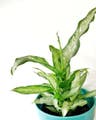



 Similar to Flaky Juniper 'Blue Spider'


✨ Discover rare plants

Graptoveria 'Douglas …

Kilimanjaro Plant

Echeveria Esther
Linnaei Kunth

Hoya sipitangensis

Echeveria Arrow

Pine Cone Plant

Bonsai Crassula

Variegated Arrowhead …

Royal Flush Split Rock
Anthurium papillilami…

Peperomia 'Harmony's …

Ruby Ball

Ceropegia simoneae
White Apple Moth Orch…
