
Hydrocotyle dichondroides
Taxonomy

Hydrocotyle dichondroides
Hydrocotyle
Apiaceae
Apiales

How to care for Hydrocotyle dichondroides
How often to water your Hydrocotyle dichondroides

every 7
Hydrocotyle dichondroides needs 0.5 cups of water every 7 when it doesn’t get direct sunlight and is potted in a 5" pot.
Use our water calculator to personalize watering recommendations to your environment or download Greg for more advanced recommendations for all of your plants.
Water 0.5 cups every
7
Finding light for Hydrocotyle dichondroides in your home

a window
Hydrocotyle dichondroides love being close to bright, sunny windows 😎.
Place it less than 1ft from a south-facing window to maximize the potential for growth.
Hydrocotyle dichondroides does not tolerate low-light 🚫.
Select your region to see how the current weather in your area affects the placement of Hydrocotyle dichondroides in your home 🏡.
How to fertilize Hydrocotyle dichondroides

Most potting soils come with ample nutrients which plants use to produce new growth.
By the time your plant has depleted the nutrients in its soil it’s likely grown enough to need a larger pot anyway.
To replenish this plant's nutrients, repot your Hydrocotyle dichondroides after it doubles in size or once a year—whichever comes first.
-
My one of the favorites.. I use to sit besides it and talk to it. So peaceful and happy plant. I want a balcony full of pennywort. ✳️
-
Unfortunately, Walt the manyflower marshpennywort has passed away. We will always remember his single leaf and teacup pot. 😭 #PlantGraveyard #ManyflowerMarshpennywort #DeadPlant #Remember #DIYPlanter
-
Why does it only have one leaf? My manyflower marshpennywort can only have one leaf at a time? It used to have 5 and 3 died then it grew 2 more then 4 died leaving it with one. It seems to be able to only have one leaf. Anyone know how to deal with this? The poor plant looks depressed. 😔 #ManyflowerMarshpennywort #WeirdPlants #PlantAddict #BeforeAndAfter
-
Do Pennyworts thrive in water only environment? #ManyflowerMarshpennywort


Care Summary for Hydrocotyle dichondroides
Hydrocotyle dichondroides
 Greg recommends:
 Water
Water
0.5 cups every 7 days
 Placement
< 1ft from a window
 Nutrients
Repot after 2x growth
Based on the 4” pot your plant is in, and that it doesn’t get direct sunlight.
 Trending in your area








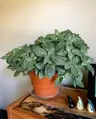





 Similar to Hydrocotyle dichondroides


✨ Discover rare plants

Betel

Picasso's Paintbrush

Orange Lipstick Plant

Hoya kalimantan
White Apple Moth Orch…

Aeonium 'Blushing Bea…

Crassula 'Purple Drag…

Haworthia emelyae com…
Carolina Reaper

Large Leaf Elephant B…

Philodendron 'Glorius'

Stomatium acutifolium

Raphionacme flanaganii

Electric Blue Gecko

Hoya sipitangensis

Fernleaf Lavendar
