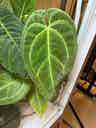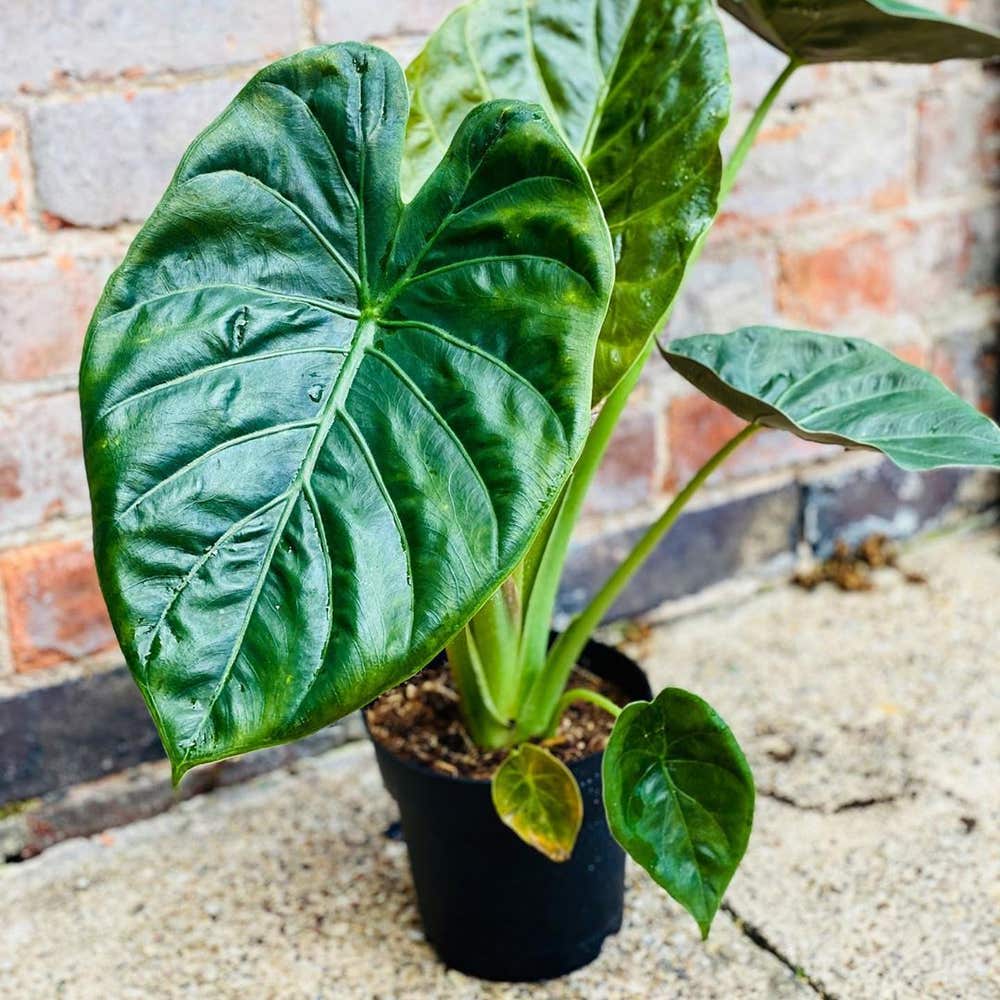


Hardy Elephant Ears

4.6 out of 5 (5 experiences)
 Large, lush leaves
 Fast grower
About Hardy Elephant Ears
Alocasias, commonly known as Elephant Ears, are some of the most common houseplants although their leaves can reach enormous sizes when grown outdoors! 🐘 They typically only support a few leaves at a time (more, when they get more sun!) so don't be concerned if you see an old leaf begin to retire after a new one emerges. They grow out of underground corms which are similar to bulbs, so next time you repot keep an eye out for baby Alocasias! They contain calcium oxalate crystals so be sure to keep them out of reach if you have children or pets! ⚠️
Taxonomy

Alocasia wentii
Alocasia
Araceae
Alismatales
Also known as
New Guinea Shield, New Guinea Shield, Went's Hardy Elephant Ears, Giant Elephant Ear, Dwarf Elephant's Ear and Elephants Ear

How to care for Hardy Elephant Ears
How often to water your Hardy Elephant Ears

every 9
Hardy Elephant Ears needs 0.5 cups of water every 9 when it doesn’t get direct sunlight and is potted in a 5" pot.
Use our water calculator to personalize watering recommendations to your environment or download Greg for more advanced recommendations for all of your plants.

Water 0.5 cups every
9
Finding light for New Guinea Shield in your home

a window
Hardy Elephant Ears may have difficulty thriving, and will drop leaves 🍃, without ample sunlight.
Place it less than 3 feet from a south-facing window to maximize the potential for growth.
Select your region to see how the current weather in your area affects the placement of Hardy Elephant Ears in your home 🏡.
How to fertilize Hardy Elephant Ears

Most potting soils come with ample nutrients which plants use to produce new growth.
By the time your plant has depleted the nutrients in its soil it’s likely grown enough to need a larger pot anyway.
To replenish this plant's nutrients, repot your Hardy Elephant Ears after it doubles in size or once a year—whichever comes first.
-
Help! She had Mites and was in a sponge, and she didn't take it very well, she lost her leaf and I cut it off, and then her new growth started to die as well she has a new growth point.What should I do to try to save her. She no longer has mites and I removed her from her sponge she's been might free and without a sponge for a bad week delete that she had yellowed and I decided to cut it off, because she had new growth coming in already that was fully out, just had it unraveled yet and then that went brown there's a new growth node point #happyplants #growlights #rareplants #plantaddict #plantcorner
-
India’s Glamor Shots! 💋💅🏾 she’s such a pretty girl!! #HappyPlants #PlantsMakePeopleHappy #PlantAddict #NewGrowth #PlantTherapy #RarePlants #AlocasiaAddicts #Alocasia #alocasiaredsecret #JewelAlocasia #GregGang #Greggers #PLANTMAFIA
-
Best soil
-
My alocasia black velvet is pushing out a flower! The leaves are still looking green and feeling firm. No leaves have fallen. I’ve had the plant for a month. So I’m assuming the plant is happy and this isn’t a stress response. But the leaves have kind of moved to the sides compared to when I first got it. Should I let it bloom, or should I cut it off just in case? #AlocasiaAddicts #alocasiablackvelvet #Alocasia
-
I bought my wife a Alocasia plant. It was struggling inside , I put it on the front of my house and it sprang to life. Dr. Greenthumb
-
I couldn't find, "Regal Shield" when trying to scan in my plant, is the Regal Shield similar/same care as Dragon Scale?
-
How do I go about propagating this plant? I’ve never done it before so over explaining is welcome! lol
-
My leaves are drying out. I just got this plant a week ago and the leaves are getting worse. I think you can see them in the photo. What should I do?
-
Alocasia I'm not sure what type of alocasia this rescued baby is. Any ideas? I would guess the care and maintenance is the same for all alocasias. Some leaves are browning and I'm wondering should I just let em go...let em go - ohhhh?😂 #plantrescue #alocasiaaddicts #alocasia
-
New frydek albo! I just got this new baby and wanted to share! #VariegatedAlocasiaFrydek


Care Summary for Hardy Elephant Ears

Hardy Elephant Ears
 Greg recommends:
 Water
Water
0.5 cups every 9 days
 Placement
< 3ft from a window
 Nutrients
Repot after 2x growth
Based on the 4” pot your plant is in, and that it doesn’t get direct sunlight.
What other plant parents say
Large, lush leaves 5
Fast grower 3


 12/21/2021
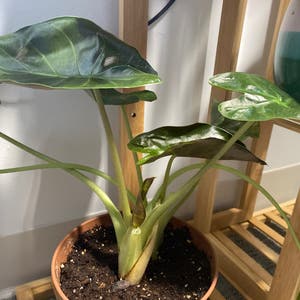
Gorgeous beautiful deep green
Large, lush leaves
 05/04/2021
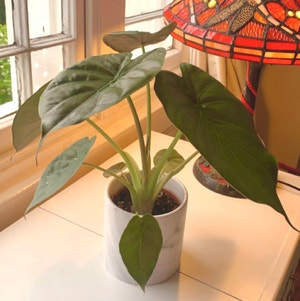
This plant is fairly low maintenance and pretty- great for beginner plant parents! :) Just make sure that you don’t place in it bright direct sunlight for too long or brown spots can start appearing. On average a new leaf grows every 2 weeks in good conditions.
Large, lush leaves
Fast grower
 Trending in your area






 Similar to Hardy Elephant Ears


✨ Discover rare plants
Thelocactus macdowell…

Treasure Flower

Christmas Candle

Aglaonema 'Green Bowl'

Variegated Arrowhead …
Carolina Reaper

Electric Fern
Linnaei Kunth
White Apple Moth Orch…

Vatricania guentheri

Chinese Evergreen 'Go…

Pine Cone Plant

Crassula 'Purple Drag…

Aeonium 'Blushing Bea…

Bonsai Crassula

Betel

Black Monkey Thorn Tr…