
Ceylon Dewflower
Taxonomy

Cyanotis ceylanica
Cyanotis
Commelinaceae
Commelinales

How to care for Ceylon Dewflower
How often to water your Ceylon Dewflower

every 9
Ceylon Dewflower needs 0.5 cups of water every 9 when it doesn’t get direct sunlight and is potted in a 5" pot.
Use our water calculator to personalize watering recommendations to your environment or download Greg for more advanced recommendations for all of your plants.
Water 0.5 cups every
9
Finding light for Ceylon Dewflower in your home

a window
Ceylon Dewflower may have difficulty thriving, and will drop leaves 🍃, without ample sunlight.
Place it less than 3 feet from a south-facing window to maximize the potential for growth.
Select your region to see how the current weather in your area affects the placement of Ceylon Dewflower in your home 🏡.
How to fertilize Ceylon Dewflower

Most potting soils come with ample nutrients which plants use to produce new growth.
By the time your plant has depleted the nutrients in its soil it’s likely grown enough to need a larger pot anyway.
To replenish this plant's nutrients, repot your Ceylon Dewflower after it doubles in size or once a year—whichever comes first.
-
My leaves have been gradually turning light brown and I can’t figure out why! #TeddyBearVine
-
🎶 🎵 PLANT BOOST TUESDAY 🎵 🎶 June 4th 2024 #plantboosttuesday You Can't Stop the Music 🌟❤️Plant Boost Tuesday ❤️🌟 😄A Boost for June the 3rd, 2024😄 Thanks for all the support and for those who have already joined us to boost each other this Tuesday🙏 Why not join us too #plantboosttuesday #plantinginspiration The idea is that we support each other, with our shared love of plants, by adding inspiration and lifting each other's spirits.🤝🫂😄 Life comes with challenges ❤️🩹 and suffering 😢 and yet we can all offer a boost to others 💉, to help the moment ⏱️, the day⌛ and the week 📅. If you find you need a boost, just click and see what others😸😸 can offer with inspirational quotes 🤔, inspiring plant ideas 🌹💐🌸🌱🪻🪴and anything that just adds to your day.👍 Welcome to Plant Boost Tuesday This week I want to focus on music and plants. The inspiration came for a singing in the shower surrounded by plants moment. However there is some scientific evidence that plants can benefit from music. So my question is what is the one song that is your "go to" plant song (and don't just say something sing by Robert Plant!!) It could be classical music (Mozart's Piano Concerto No. 21 second movement) or some rock and roll. Whatever it is why not share it? I can pick the best answer. And be creative so feel free to include a Spotify or Apple Music link 🔗 or what that piece of music means for you. For me the song that comes to mind is blue (no not the I'm blue be ba daba da do song) but sing by a very young Lee Ann Rime# (her break out song) Here's the video and Spotify link https:// https:// And supplement it with ELOs Mr Blue Sky (I am Groot !) https:// https:// HOW TO JOIN A GROUP? If you click on the hash tag eg #plantboosttuesday and it takes you to the group page and then there is a “join” button on the top right hand side, click it until it says “joined” and you will get notified of future posts that used that hashtag #plantboosttuesday #plantinginspiration #seymour #happyplants #plantsmakepeoplehappy #plantaddict #greggang #greggerssupportinggreggers #mentalhealthmatters #newgrowth #propagationstation #succulentlove #planttherapy #theamigos
-
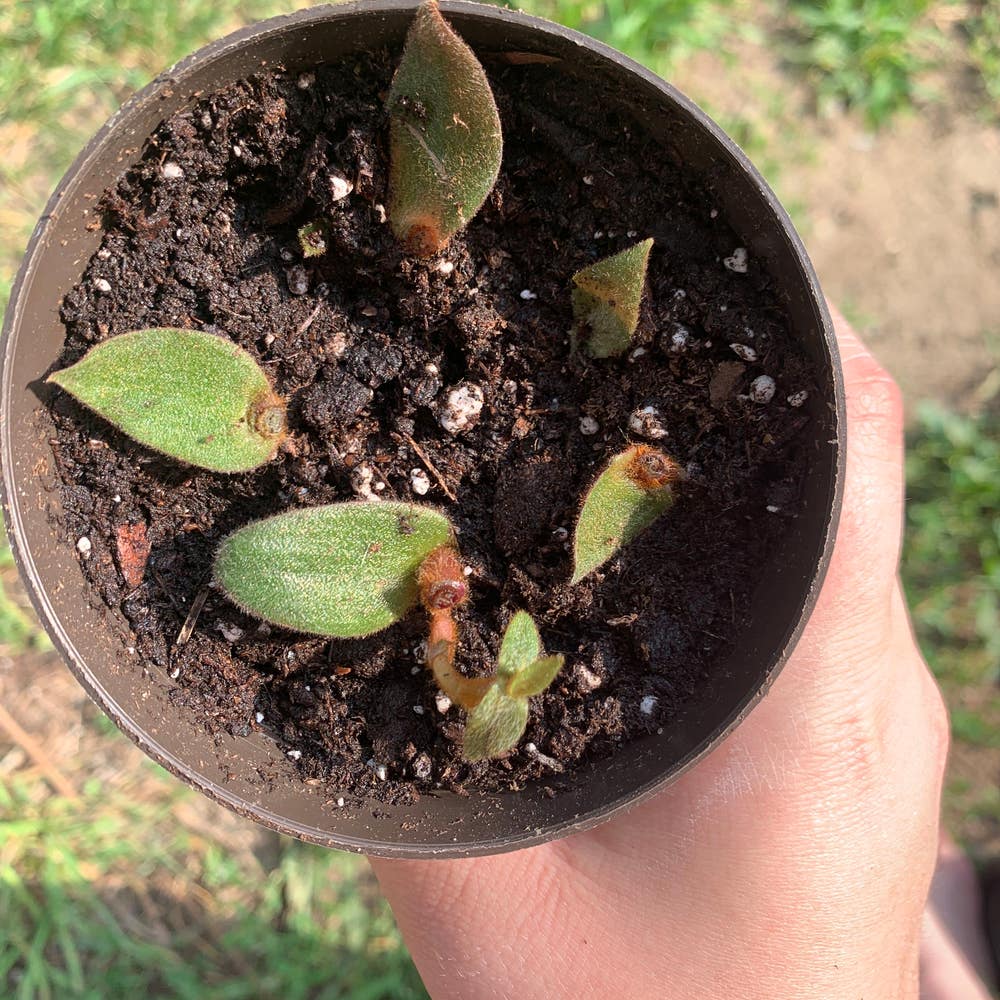
Also had to divide my Teddy Bear vine, she’s been in the same pot since i got her and so crowded i could barely water her as well as she couldn’t get dry! Upon taking her from her pot she was extremely root bound and pretty much split into about 15-20 smaller plants 🤪 so, i put quite a bit in a bigger pot and a few in some smaller ones. Hopefully they all survive? 🤞🏼🤗 #TeddyBearVine #GregFeedback here we have OG Teddy, Teddy 1, Teddy 2, & Teddy 3 😏
-
My plant soil will not dry out! I got this plant around a week ago and had just been watered when I bought him. The soil is still completely wet! #TeddyBearVine
-
just propagated these teddy bear vine cuttings! excited to see new growth! 🤞


Care Summary for Ceylon Dewflower
Ceylon Dewflower
 Greg recommends:
 Water
Water
0.5 cups every 9 days
 Placement
< 3ft from a window
 Nutrients
Repot after 2x growth
Based on the 4” pot your plant is in, and that it doesn’t get direct sunlight.
 Trending in your area
















 Similar to Ceylon Dewflower


✨ Discover rare plants

Variegated Arrowhead …

Blue Moon Wisteria

Hoya pottsii 'Khao Ya…

Aloe 'Lavender Star'

Chandelier Plant

Euphorbia

Red Mistletoe Cactus

Philodendron 'Glorius'
Hoya crassipetiolata

Ace of Spades

Aglaonema Spitfire

Anthurium papillilami…

Scotch Moss

Fagraea ceilanica

Hoya kalimantan

Miss All-American Bea…
