
Codiaeum peltatum
Taxonomy

Codiaeum peltatum
Codiaeum
Euphorbiaceae
Malpighiales

How to care for Codiaeum peltatum
How often to water your Codiaeum peltatum

every 9
Codiaeum peltatum needs 0.5 cups of water every 9 when it doesn’t get direct sunlight and is potted in a 5" pot.
Use our water calculator to personalize watering recommendations to your environment or download Greg for more advanced recommendations for all of your plants.
Water 0.5 cups every
9
Finding light for Codiaeum peltatum in your home

a window
Codiaeum peltatum love being close to bright, sunny windows 😎.
Place it less than 1ft from a south-facing window to maximize the potential for growth.
Codiaeum peltatum does not tolerate low-light 🚫.
Select your region to see how the current weather in your area affects the placement of Codiaeum peltatum in your home 🏡.
How to fertilize Codiaeum peltatum

Most potting soils come with ample nutrients which plants use to produce new growth.
By the time your plant has depleted the nutrients in its soil it’s likely grown enough to need a larger pot anyway.
To replenish this plant's nutrients, repot your Codiaeum peltatum after it doubles in size or once a year—whichever comes first.
-
Is this really a Gold Dust Croton? #Codiaeum
-
Leaves graying/dulling and falling off just a few days after moving outside #Codiaeum Every year, when the temperature gets consistently warm enough with no frost days (usually around Mother's Day in the Mid-Atlantic) I take my petra and put it outside for the summer to get more sun and rain, but this year, just five days in, she started graying and going dull, and today the leaves are falling off significantly
-
Wanted to show off my gold dust!
-
the leaves just keep dropping off. I only have a few leaves left. is it dead? #Codiaeum
-
I have little white spots on my leaves #Codiaeum
-
Tips of leaves are drying out and leaves are turning yellow. Would appreciate any tips as this was a gift from my grandsons. #Codiaeum
-
#CrotonPetra My husband and I went to The Grocery Outlet and I bought this beauty! Any tips? Thanks!! 🦎🌵🏜🪴🦋
-
Why does she keep dropping leaves?! #Codiaeum my poor little plant has been dropping leaves ever since I rescued her from behind a garbage. (Maybe there’s a reason it was tossed…) The branches still seem to be alive and passed the scratch test, but I don’t know how to make the leaf dropping stop. It’s currently next to a south facing window. And I use filtered water. Maybe more light? I welcome insights
-
the leaves are falling off plant? soil is moist. I water only when top soil is dry. it is not in direct light, but there is diffused light in the whole room from many windows. #Codiaeum
-
My plant is losing a lot of leaves and he suggestions


Care Summary for Codiaeum peltatum
Codiaeum peltatum
 Greg recommends:
 Water
Water
0.5 cups every 9 days
 Placement
< 1ft from a window
 Nutrients
Repot after 2x growth
Based on the 4” pot your plant is in, and that it doesn’t get direct sunlight.
 Trending in your area






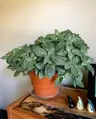
 Similar to Codiaeum peltatum
✨ Discover rare plants
Thelocactus macdowell…
Ace of Spades
Skeleton Key Pothos

Lavandula Pedunculata

Red Mistletoe Cactus

Hoya 'Millie'

Miss All-American Bea…

Ruby Ball

Cereus peruvianus 'Pa…

Black Monkey Thorn Tr…

Anthurium 'Fantasy Lo…

Anastasia Weeping Fig

Hoya pottsii 'Khao Ya…
Phalaenopsis schiller…

Hoya fitchii

Chandelier Plant

Treasure Flower
