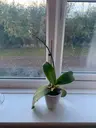
Clematis 'Diamond Ball'
Taxonomy

Clematis 'Diamond Ball'
Clematis
Ranunculaceae
Ranunculales

How to care for Clematis 'Diamond Ball'
How often to water your Clematis 'Diamond Ball'

every 9
Clematis 'Diamond Ball' needs 0.5 cups of water every 9 when it doesn’t get direct sunlight and is potted in a 5" pot.
Use our water calculator to personalize watering recommendations to your environment or download Greg for more advanced recommendations for all of your plants.
Water 0.5 cups every
9
Finding light for Clematis 'Diamond Ball' in your home

a window
Clematis 'Diamond Ball' love being close to bright, sunny windows 😎.
Place it less than 1ft from a south-facing window to maximize the potential for growth.
Clematis 'Diamond Ball' does not tolerate low-light 🚫.
Select your region to see how the current weather in your area affects the placement of Clematis 'Diamond Ball' in your home 🏡.
How to fertilize Clematis 'Diamond Ball'

Most potting soils come with ample nutrients which plants use to produce new growth.
By the time your plant has depleted the nutrients in its soil it’s likely grown enough to need a larger pot anyway.
To replenish this plant's nutrients, repot your Clematis 'Diamond Ball' after it doubles in size or once a year—whichever comes first.
-
Can this be planted outside
-
Hi! I’m Jess. This is my 13 year old Clematis-usually it grows and blooms beautifully! This year, no blooms, severely stunted growth, and leaves this yucky color.. Do you think its life cycle has just finally come to an end? The roots reaching from the ground are all a deadly brown.
-
Will they bloom again if I nip the bud off after they die? #WesternBlueVirginsbower
-
Can I move my clematis? #WesternBlueVirginsbower
-
What soil should i use when i repot my clematis?
-
New growth! This plant is soooo weird... It looks dead but there is growth coming from it. Super weird but super awesome! #newgrowth
-
I live in S. CA and in the high desert 🏜 . It's not in the direct heat of the day on the patio, but it looks like she needs something to bring out her bloom.
-
How do I cancel this app #CrimsonClematis
-
Do I have to cut the branches down every spring or can I let new growth come from last year’s growth thank you
-
Got a tiny bit of new growth!

Care Summary for Clematis 'Diamond Ball'
Clematis 'Diamond Ball'
 Greg recommends:
 Water
Water
0.5 cups every 9 days
 Placement
< 1ft from a window
 Nutrients
Repot after 2x growth
Based on the 4” pot your plant is in, and that it doesn’t get direct sunlight.
 Trending in your area









 Similar to Clematis 'Diamond Ball'
✨ Discover rare plants

Raphionacme flanaganii

Graptoveria 'Douglas …

Betel

Echeveria Esther
Linnaei Kunth

Pseudorphipsalis 'Blu…

Hoya pottsii 'Khao Ya…
Philodendron 'Silver …

Large Leaf Elephant B…

Echeveria Arrow

Maroon Pitcher Plant

Aglaonema Spitfire

Caladium

Anthurium Fingers

Picasso's Paintbrush

Treasure Flower

Haworthia emelyae com…