


Compact Cleistocactus
Taxonomy

Cleistocactus compactus
Cleistocactus
Cactaceae
Caryophyllales

How to care for Compact Cleistocactus
How often to water your Compact Cleistocactus

every 12
Compact Cleistocactus needs 0.5 cups of water every 12 when it doesn’t get direct sunlight and is potted in a 5" pot.
Use our water calculator to personalize watering recommendations to your environment or download Greg for more advanced recommendations for all of your plants.

Water 0.5 cups every
12
Finding light for Compact Cleistocactus in your home

a window
Compact Cleistocactus love being close to bright, sunny windows 😎.
Place it less than 1ft from a south-facing window to maximize the potential for growth.
Compact Cleistocactus does not tolerate low-light 🚫.
Select your region to see how the current weather in your area affects the placement of Compact Cleistocactus in your home 🏡.
How to fertilize Compact Cleistocactus

Most potting soils come with ample nutrients which plants use to produce new growth.
By the time your plant has depleted the nutrients in its soil it’s likely grown enough to need a larger pot anyway.
To replenish this plant's nutrients, repot your Compact Cleistocactus after it doubles in size or once a year—whichever comes first.
-
What causes white spots and how to help plant? #MonkeyTailCactus
-
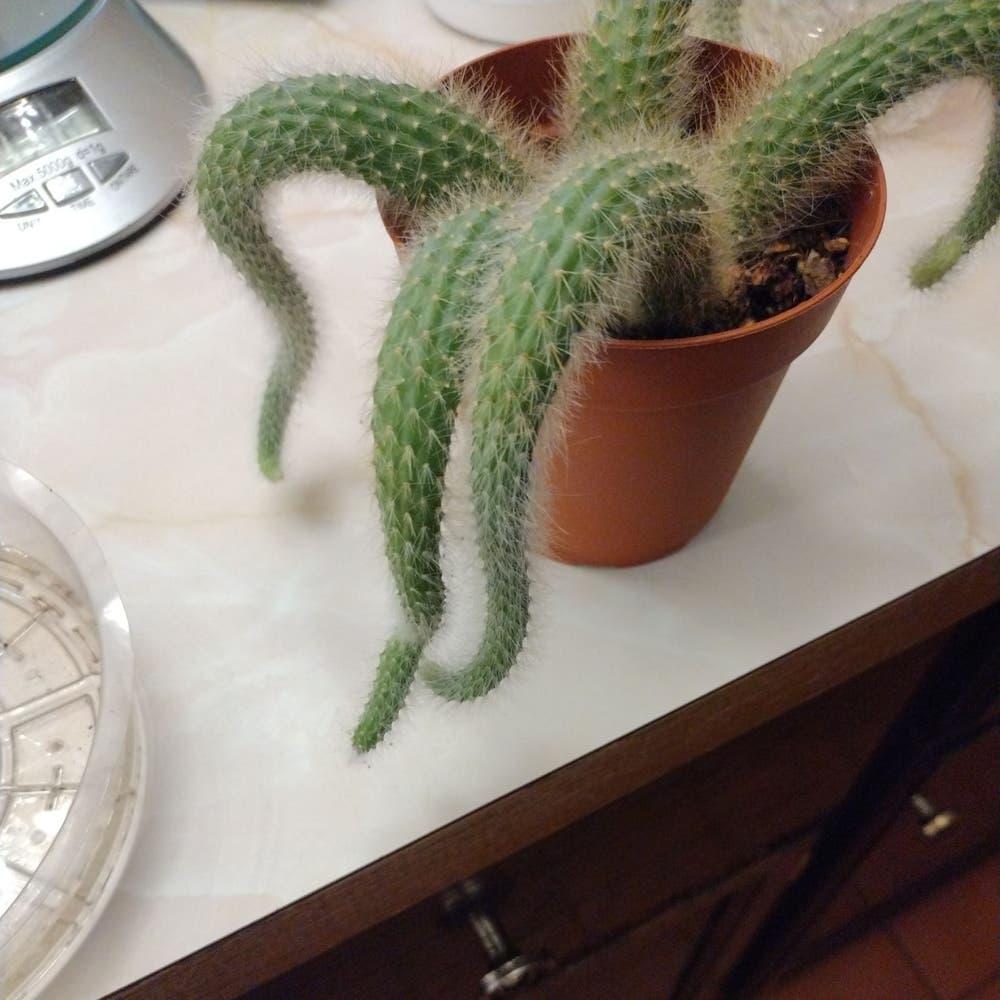
Is this normal? #succulentlove #monkeytailcactus #cactusclique #newgrowth #propagationstation A few weeks ago the tip of a monkey tail broke off and now 5 are growing from it. Is this weird? Should I cut them off and plant them?
-
More pictures from my photo shoot I had Sunday afternoon when I got back from the beach ☺️. I hope they are enjoying all the little bit of sunshine & daylight they are getting as it gets closer & closer to bringing them indoors for the winter 😮💨 I’m having so much anxiety about where the HECK I’m gonna put all these plants & how in the WORLD they are gonna get enough light because I don’t have enough grow lights or enough windows for the amount of plants I have … plant hoarder problems.. amirite? I know these might sound like silly problems to have but surely there are some folks out there that can relate.. right ? 😳 #CactusClique #Cactus #Cacti #Pothos #PothosPack #Aeonium #KiwiAeonium #Anacampseros #SatinPothos #HappyPlants #PlantsMakePeopleHappy #PlantAddict #NewGrowth #iamnothorder #SucculentLove #SucculentSquad #Succulents #Succulent #GrowingSuccs #GrowLights #PlantStorageandDecor
-
“Rare Cactus” mystery Couldn’t pass up this cutie, despite my terrible track record with these nondescript ”assorted succulents” (or, more accurately, ALL succulents…) and I have questions! 🙋🏻♀️ First, what exactly is this strange little thing? What do I need to know to avoid killing it as epically as I have every single cactus I’ve ever attempted? For instance—is it ok that I “repositioned” it when I transferred it from the 3” starter pot into the 3.5” ceramic one in the second pic? I immediately understood why it came so tightly packed 😬 and had a lot of problems getting them to “stand up” while growing in opposite directions, so I crossed them (which did the trick and looks cute, but for all I know they hate touching each other or something) and thought I’d better ask now while I can still reverse it if I have to! And… now what? Help me, #SucculentSquad! 🙏🌵 #PlantsMakePeopleHappy #PlantAddict #SucculentLove #GoldenTorch #CactusClique #Cactus #Cacti
-
So I just got Thai little guy from the farmers market. Any tips on giving it a good start? #MonkeyTailCactus
-
You’re going the wrong way mate Does anyone know why my Silver Torch is bending away from the light? I’ve only noticed this recently and we’ve had about a week of freezing temperatures if that’s got anything to do with it? #Cactus
-
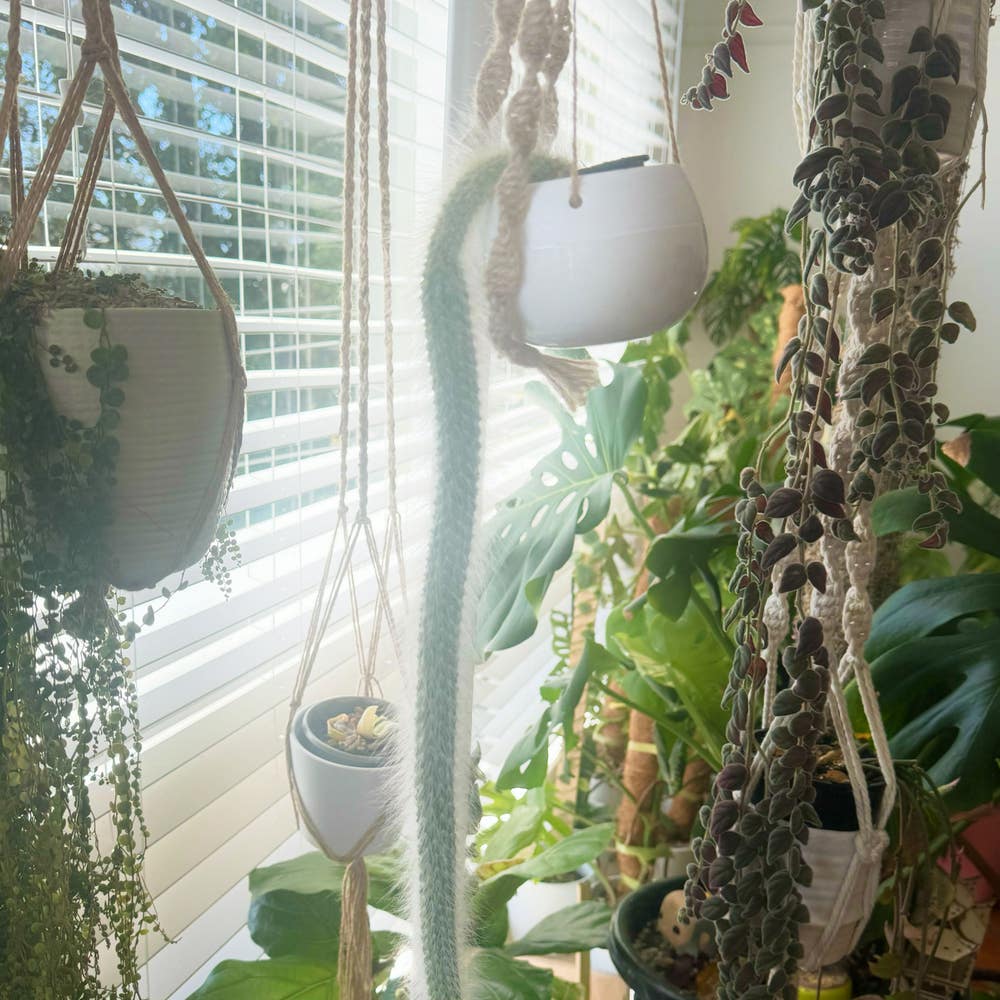
I'm super excited about Binx, my Monkey Tail Cactus that also came back with me from vacation in California. It has also grown a lot AND, it is developing a new arm right smack dab in the middle. It's still in the same pot it came in .. I'm a little scared to up-pot it #happyplants #plantsmakepeoplehappy #newgrowth #ultrakoreanfir
-
My monkey tail cactus is finally starting to look like monkey tails! How exciting! This came back with me from California last October in a carry-on bag with each arm just reaching/bending over the edge of the pot by an inch or so. 😁 #happyplants #cactusclique #newgrowth
-
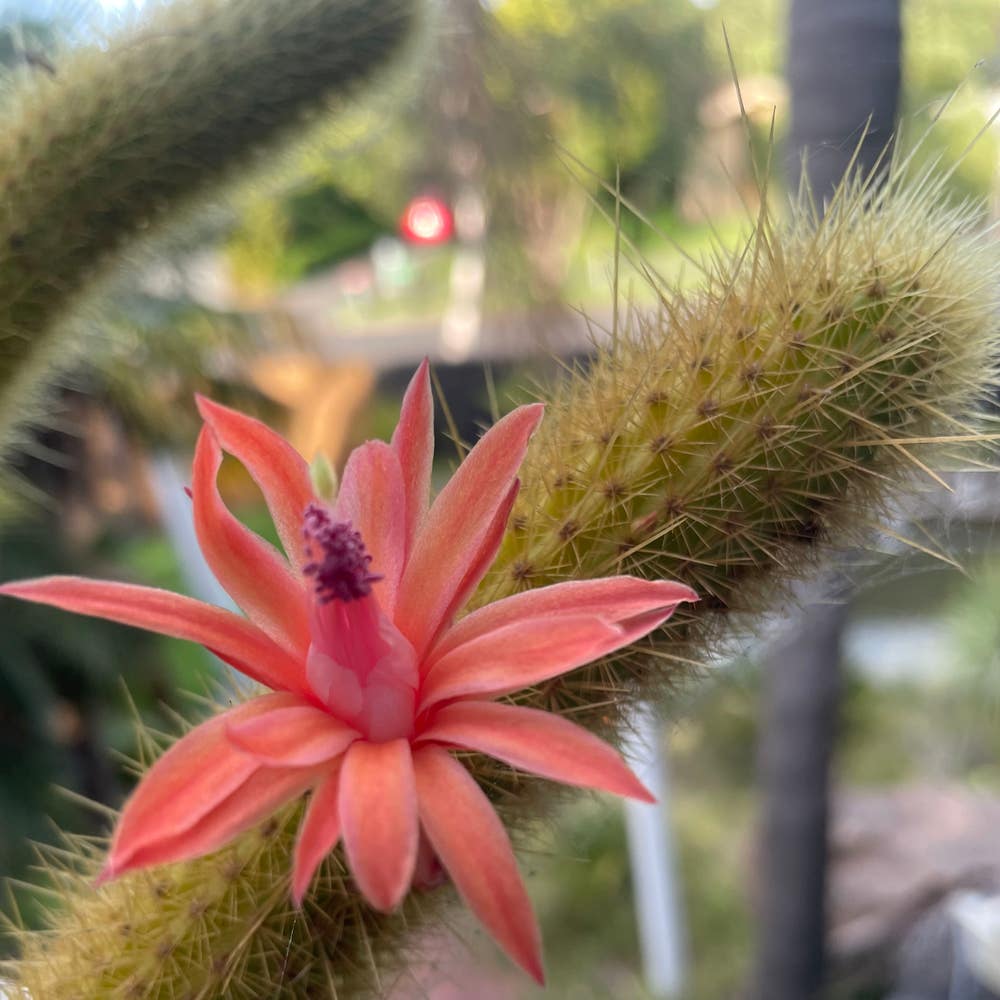
My golden monkey tail cactus (Hildewintera aureispina) has flowered for the first time in my care. I was gifted her in November, the flower is so beautiful I was in awe. #HappyPlants #PlantsMakePeopleHappy #PlantAddict #NewGrowth #SucculentLove #CactusClique #Cactus #Cacti #flowerpower #BloomingSuccs #GoldenMonkeytailCactus #MonkeyTailCactus #HoyaAddictHome
-
Lovely Apa has grown heaps since I propped him, and look, has grown a new nub 🥰 #MonkeyTailCactus #HildewinteraColademononis #HappyPlants #NewGrowth #PlantAddict #PlantsMakePeopleHappy #PLANTMAFIA #Cactus #CactusClique #foliagegirl #


Care Summary for Compact Cleistocactus

Compact Cleistocactus
 Greg recommends:
 Water
Water
0.5 cups every 12 days
 Placement
< 1ft from a window
 Nutrients
Repot after 2x growth
Based on the 4” pot your plant is in, and that it doesn’t get direct sunlight.
 Trending in your area











 Similar to Compact Cleistocactus
✨ Discover rare plants

Starfish Snake Plant

Peperomia 'Harmony's …

Sarcochilus fitzgeral…

Chandelier Plant

Ruby Ball

Pseudorphipsalis 'Blu…

Phalaenopsis schiller…

Hoya sipitangensis

Munstead Lavender

Echeveria Arrow

Tillandsia caerulea A…

Scotch Moss

Black Monkey Thorn Tr…

Croton Nervia

Euphorbia

Bonsai Crassula
