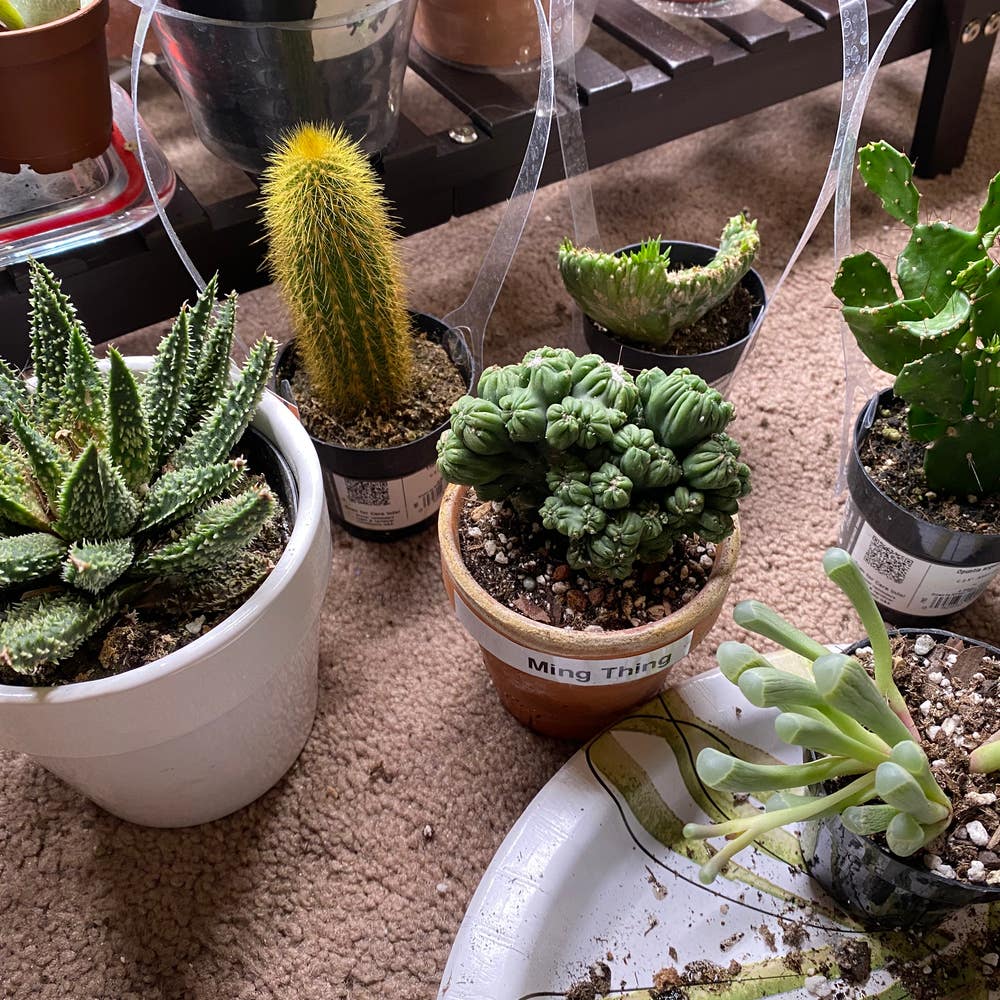
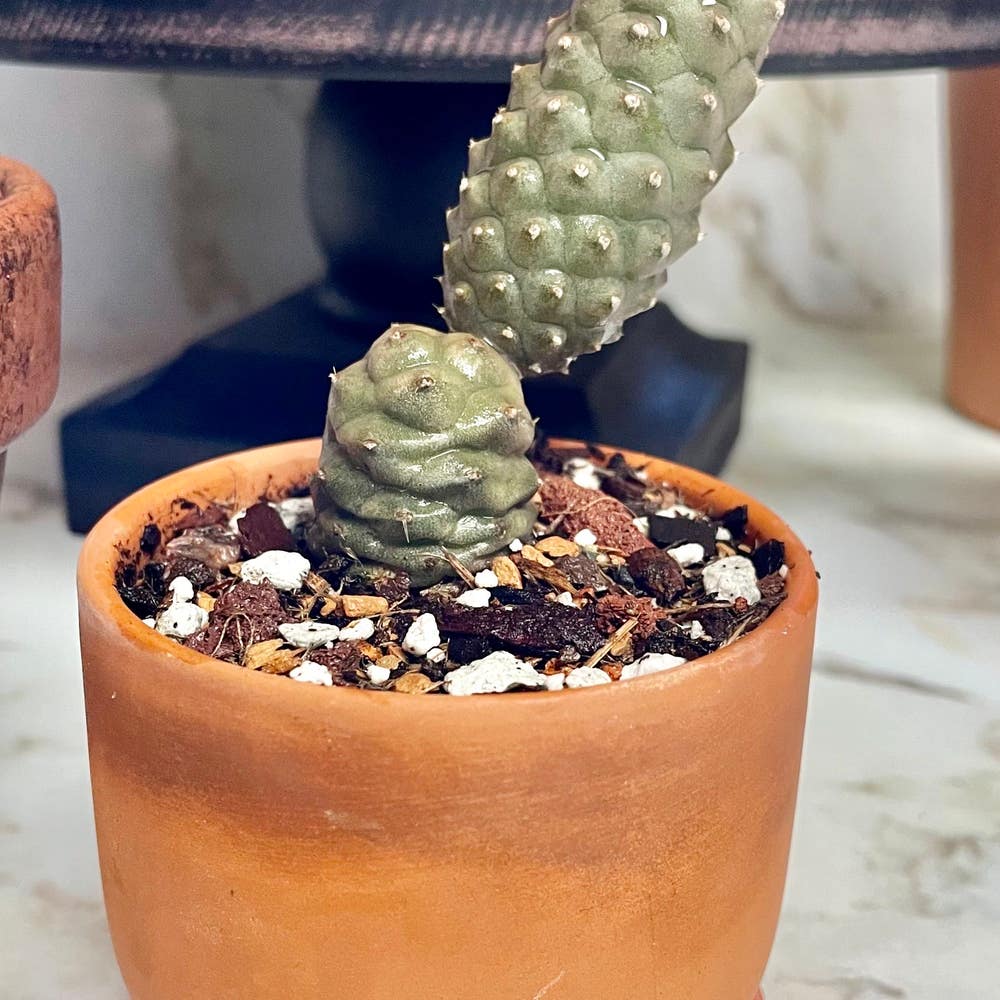
🌵 Best Potting Soil Mix for Ming Thing Cactus
Cereus forbesii f. monstrose 'Ming Thing'
By the Greg Editorial Team
Jun 18, 2024•5 min read
This article was created with the help of AI so we can cover more plants for you. May contain errors. See one? Report it here.
Nurture a robust Ming Thing Cactus 🌵 with this definitive guide to crafting the perfect soil mix for vitality and growth.
- Mold and yellowing signal soil issues; act fast to prevent nutrient theft and rot.
- Ideal soil mix: coarse sand, perlite, pumice, with pH 6.0-7.0 for root comfort.
- Refresh annually and use preventative practices to maintain soil health.
Spotting Trouble: When Your Ming Thing Cactus Soil Goes Bad
🚨 Telltale Signs of Unhealthy Soil
Mold is the enemy of your Ming Thing Cactus's soil. It's not just unsightly; it's a thief of vital nutrients. If you spot fuzzy or slimy intruders, it's time to act. A musty odor is another red flag—your soil is crying out for help.
Yellowing of your cactus could be a distress signal from the soil. Compacted, waterlogged soil is a silent killer, suffocating roots and turning your cactus's vibrant green to a sickly yellow or gray. If your cactus is floppier than usual, you've got a soil emergency on your hands.
The Fallout of a Bad Soil Choice
Making the wrong soil choice is like giving your cactus a one-way ticket to unhealthy town. Overly moist soil invites root rot, transforming roots into a mushy mess. It's not just about a sad-looking cactus; it's a full-blown health crisis.
Root rot is the silent killer in the cactus world. Discolored roots or a droopy plant are your cues to act fast. Improve drainage immediately, and remember: when it comes to watering, think marathon, not sprint. Your cactus needs the occasional drink, not a flood of affection.

The Perfect Potting Mix: What Ming Thing Cactus Loves
🌵 Key Ingredients for Ming Thing Success
Drainage is king for the Ming Thing Cactus. To hit the sweet spot, your potting mix must include components like coarse sand, perlite, and pumice. These ingredients ensure that water flows freely, preventing the dreaded soggy soil scenario.
Organic matter is also crucial. It should be light and airy, allowing roots to breathe and grow without being waterlogged. Think coco coir or peat moss—they're like the life of the potting mix party, holding moisture and nutrients without causing a muddy mess.
Remember, the pH level should hover between 6.0 and 7.0. This isn't just a number game; it's about creating a comfy home for your cactus roots. Lime can be your go-to for balancing the pH, ensuring your Ming Thing doesn't throw a fit.
🛍️ Commercial Mixes That Make the Cut
So you're not a DIY dirt chef? No worries. There are commercial mixes out there that get the job done. Brands like Dr. Earth, EB Stone, and Bonsai Jack have done their homework, mixing up batches that your Ming Thing will thrive in.
But beware, some mixes might be too heavy for your indoor cactus. You might need to play mixologist and add a bit of grit to lighten things up. It's like adjusting the seasoning in a recipe until it's just right for your taste—or in this case, your cactus's taste.
Keep your eyes peeled for mixes that boast organic ingredients. It's not just a trendy buzzword; it's about feeding your cactus a wholesome meal. And always, always check for superior drainage. If the mix can't pass a simple water flow test, it's a no-go.
In the end, finding the perfect potting mix is a bit like dating—you might have to try a few before you find "the one." But once you do, it's a match made in cactus heaven.

DIY Soil Science: Crafting Your Ming Thing Cactus Mix
🌵 The Recipe for Root Happiness
Gearing up to mix your own Ming Thing Cactus soil? Here's how to nail it. First, don your gardening gloves. Grab a bucket or bin, and let's get to it.
- Measure out three parts of a high-quality potting soil as your base.
- Add three parts coarse sand to ensure excellent drainage.
- Consider a part of pine bark fines for added structure (totally optional, but your cactus might thank you).
- Stir in one part perlite to promote aeration.
- Adjust the mix with additional perlite if it feels too dense.
💡 Why These Ingredients?
Each component in your DIY mix is a VIP guest at the root party. Potting soil provides nutrients and structure. Coarse sand keeps the mix from getting too clingy, avoiding water-logged roots. Pine bark fines are like the bouncers, preventing soil compaction. And perlite, that's the life of the party, ensuring air gets to the roots and water drains away like it should.
Mix thoroughly for a consistent, happy medium that your Ming Thing Cactus will thrive in. Remember, it's all about creating a balance that mimics the cactus's natural, gritty habitat.

Keeping It Great: Maintaining Healthy Soil for Your Cactus
🌱 Refreshing Your Cactus's Home
Annually, or when the soil looks spent, it's time for a change. To refresh your Ming Thing Cactus's soil, first, remove the plant from its pot. Second, knock away the old soil from the roots, being gentle to avoid damage. Third, fill the pot with a fresh, well-draining cactus mix. Finally, replant your cactus, giving it the stable, nutrient-rich environment it craves.
🛡️ Preventative Practices
Regular inspections are crucial. Look for signs of distress like discoloration or wilting, which could indicate soil problems. Aeration can be a game-changer; lightly fluff the topsoil to allow roots to breathe. Water wisely; let the soil dry out between waterings. Overwatering is a surefire way to soil sorrow. Repotting every few years can prevent a multitude of sins, ensuring your cactus doesn't sulk in subpar conditions.
⚠️ Safety First
This content is for general information and may contain errors, omissions, or outdated details. It is not medical, veterinary advice, or an endorsement of therapeutic claims.
Always consult a qualified healthcare professional before using any plant as food, medicine, or supplement.
Never eat any plant (or feed one to pets) without confirming its identity with at least two trusted sources.
If you suspect poisoning, call Poison Control (800) 222-1222, the Pet Poison Helpline (800) 213-6680, or your local emergency service immediately.
Spotted an error? Please report it here.
Craft the ideal home for your Ming Thing Cactus with a perfect potting mix and track 🌵 its health effortlessly with Greg's personalized care reminders and tips!