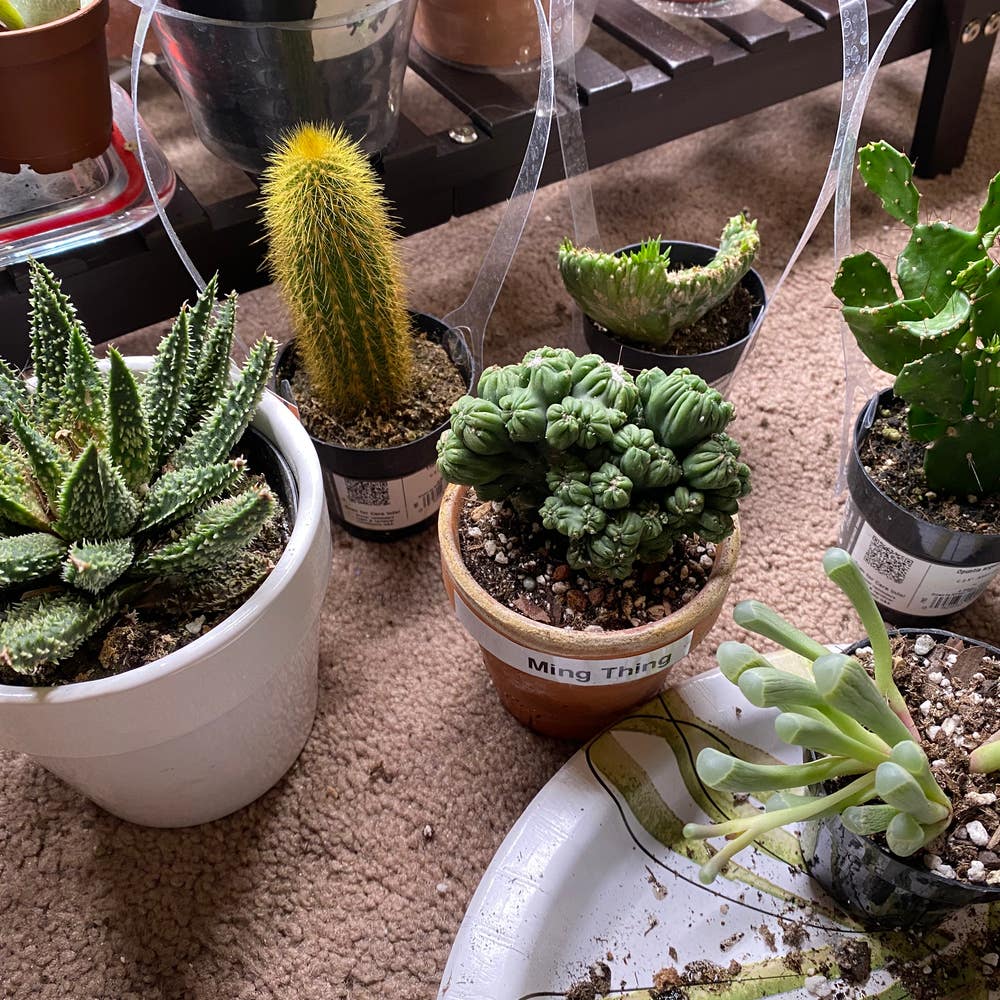
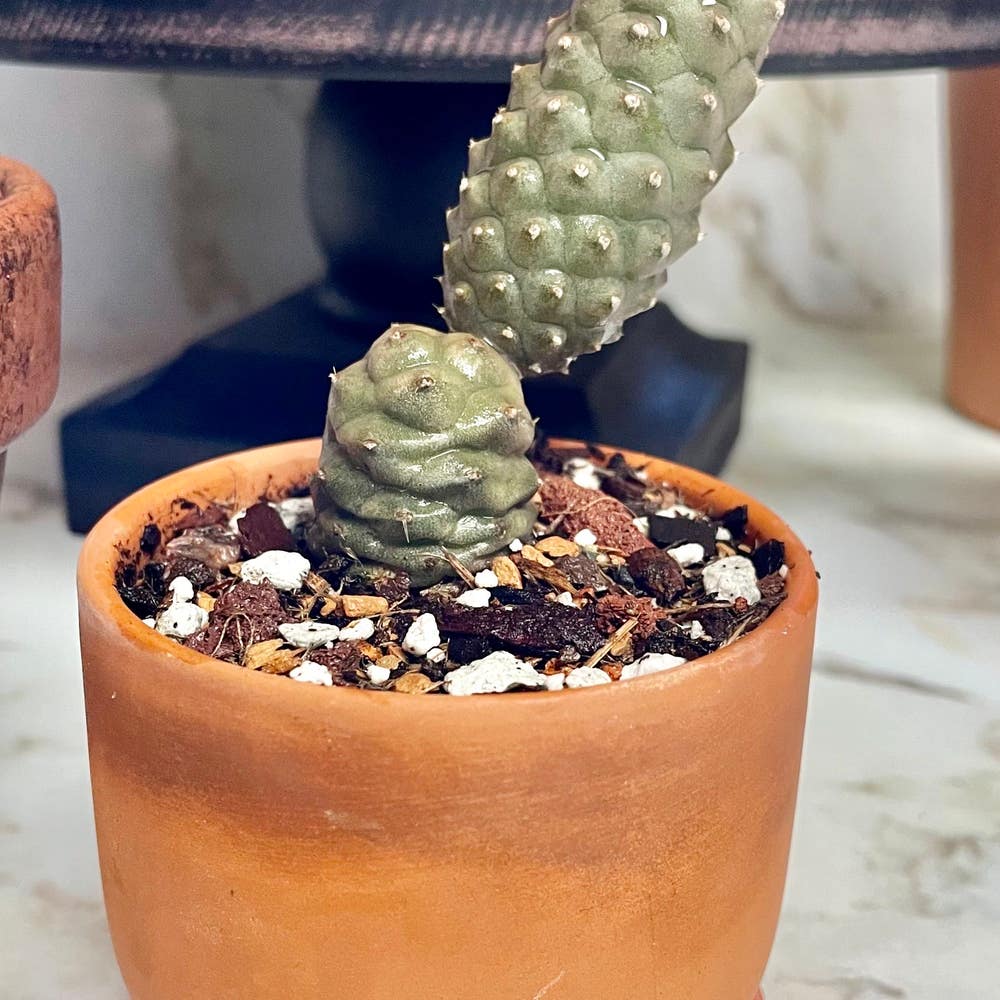
🌵 Why Are My Ming Thing Cactus Leaves Dropping?
Cereus forbesii f. monstrose 'Ming Thing'
By the Greg Editorial Team
Jun 18, 2024•4 min read
This article was created with the help of AI so we can cover more plants for you. May contain errors. See one? Report it here.
Prevent a prickly situation 🌵 by mastering Ming Thing Cactus care to keep those leaves attached!
- Overwatering and underwatering both lead to leaf drop; balance is key.
- Drainage and soil mix are critical for Ming Thing Cactus health.
- Pests, diseases, and nutrients require tailored care to prevent leaf loss.
When Watering Goes Wrong
🌊 Overwatering Woes
Swollen stems and mushy roots are your Ming Thing Cactus's SOS signals. Overwatering transforms these resilient plants into victims of your overzealous affection. Yellow leaves and a funky soil smell? That's the equivalent of a red flag waving frantically. It's a balancing act to find the right watering rhythm, but it's essential to avoid turning your cactus's home into a swamp.
🏜️ The Thirsty Cactus Conundrum
On the flip side, a cactus gasping for water will have dry soil and crispy leaves. It's staging a silent protest, demanding a drink. The key is to quench its thirst without overdoing it. Best practices include checking the top inch of soil for dryness before watering and ensuring your pot has unobstructed drainage holes. Remember, a cactus prefers to ride out a drought rather than navigate a flood.

The Root of the Problem: Drainage and Soil
🌊 Avoiding Swampy Situations
Drainage is your Ming Thing Cactus's lifeline. Without it, you're basically signing up for a leaf-drop horror show. Clear drainage holes are a must – they're the difference between a plant spa and a plant graveyard.
For soil, think luxury suite, not a cramped motel room. Your mix should be well-draining and airy, like a penthouse with a view. A combination of peat, perlite, and sand isn't just fancy talk; it's essential for root happiness.
🌱 Repotting for Relief
When your cactus starts shedding leaves like a dog in summer, repotting might just be the remedy. Timing is everything – do it when the soil is as dry as a comedian's wit.
Hydrate the roots before the big move to keep them flexible. Think of it as a pre-game stretch. And remember, a gentle touch is key; you're a plant masseur, not a wrestler.
Choose a pot that's a size up and has drainage holes. It's like upgrading to first class – more legroom, less stress. And always use that well-draining soil mix; it's the unsung hero in this leafy tale.

Battling the Invisible Enemies: Pests and Diseases
🕷️ Pests that Prey on Ming Thing
Spider mites are like ninjas, small and stealthy, but the webbing they leave is a dead giveaway. Mealybugs and scale insects are the freeloaders of the plant world, setting up camp and sucking your cactus dry. To evict these pests, start with a damp paper towel swipe. For a full-blown infestation, bring out the big guns: horticultural oils and insecticidal soaps.
For prevention, keep your Ming Thing on a regular watering schedule—neither a desert nor a swamp be. Introduce beneficial insects like ladybugs if you're feeling eco-friendly. They're the unpaid interns of the garden world, working tirelessly to keep pests in check. Remember, the best defense is a strong offense, so inspect regularly and act swiftly.
🍄 Fungal Foes and Disease Dilemmas
Fungal diseases are sneaky, often starting as unassuming spots on leaves. Black or brown lesions? Could be anthracnose. To combat these, think of fungicides as your plant's personal shield. Apply with gusto, ensuring every leaf is coated, but avoid drenching. Good air circulation and avoiding overwatering are your best preventative measures.
If you spot trouble, don't just stand there—act. Systemic treatments work from the inside out, giving your plant an immune boost. Integrated pest management is like setting up a neighborhood watch for your plant. It's not just about the occasional spray-down; it's about creating an environment where pests and diseases don't want to settle. Remember, vigilance is key—you're the bouncer of your plant's personal space.

Feeding Your Ming Thing: Nutrient Know-How
💡 Spotting Starvation Symptoms
Yellowing leaves on your Ming Thing Cactus might be shouting for nutrients. If the green fades to pale, nitrogen could be the absentee. Scorched leaf edges? Potassium may have left the building. Stunted growth and smaller leaves could be phosphorus playing hard to get. A soil test can act like a nutritional confessional, revealing what's lacking.
🍽️ The Fertilizer Fix
Balance is the game when feeding your cactus. Overdoing it with fertilizer is like bingeing on junk food – it can lead to nutrient burn. Aim for a fertilizer that's like a well-rounded diet for your plant. Observe the response after feeding; it's a continuous tuning process. Feed during the growing season; it's breakfast for champions, not a midnight snack. Remember, a tailored approach beats a one-size-fits-all solution.
⚠️ Safety First
This content is for general information and may contain errors, omissions, or outdated details. It is not medical, veterinary advice, or an endorsement of therapeutic claims.
Always consult a qualified healthcare professional before using any plant as food, medicine, or supplement.
Never eat any plant (or feed one to pets) without confirming its identity with at least two trusted sources.
If you suspect poisoning, call Poison Control (800) 222-1222, the Pet Poison Helpline (800) 213-6680, or your local emergency service immediately.
Spotted an error? Please report it here.
Prevent leaf drop and promote healthy growth 🌵 with Greg's custom watering plans and community advice, ensuring your Ming Thing Cactus gets the perfect amount of care.