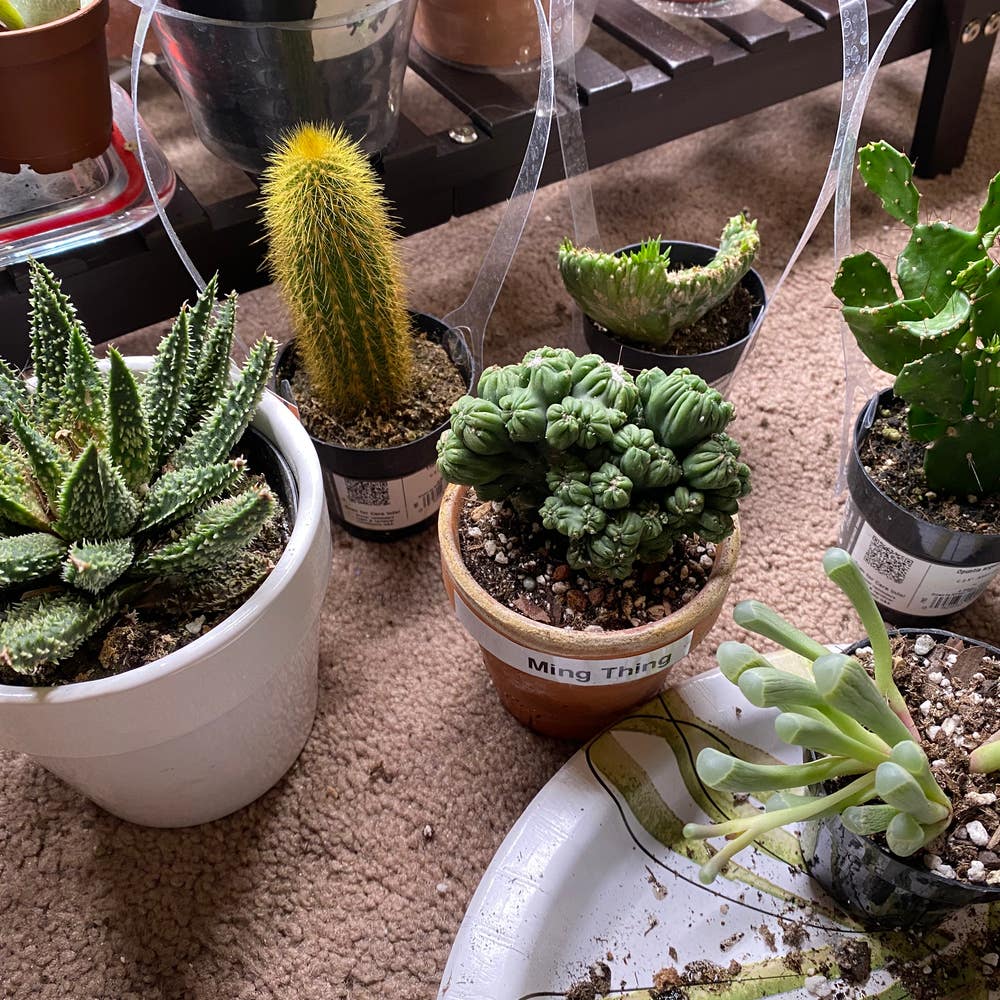
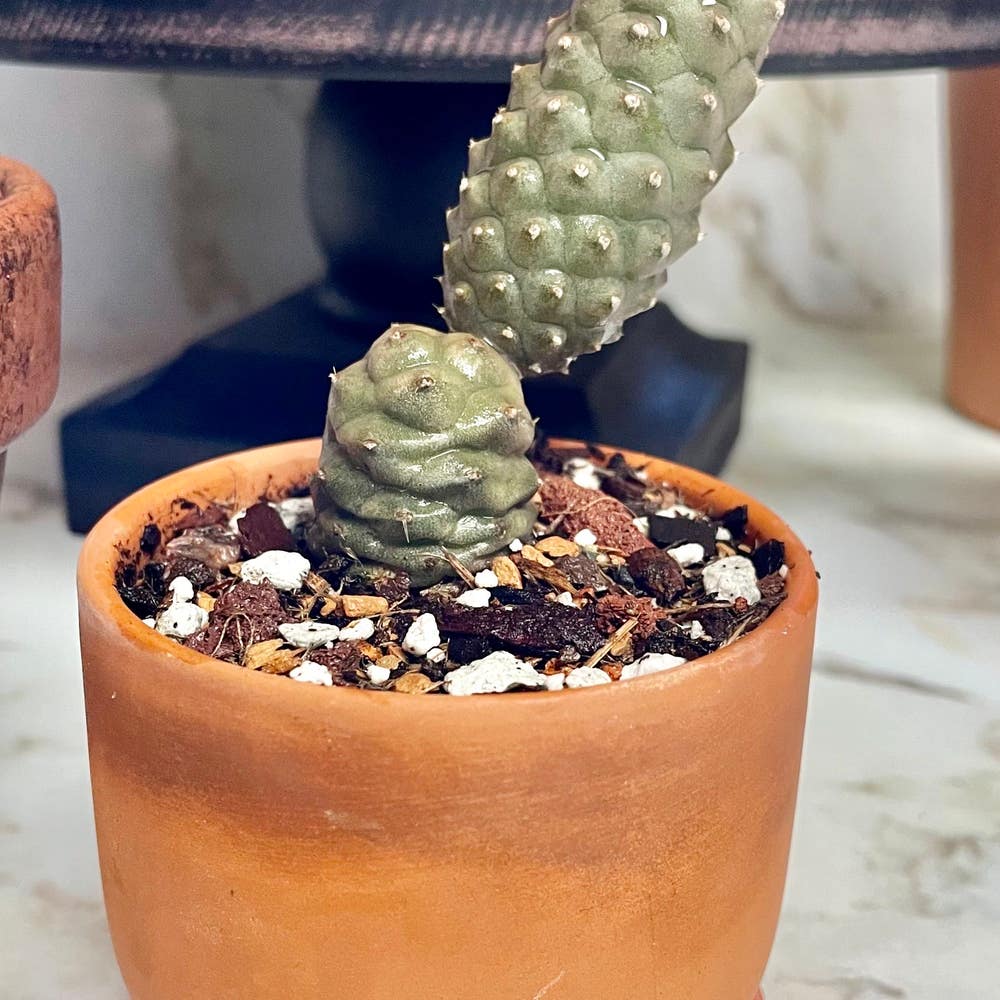
🌵 Why Are My Ming Thing Cactus Leaves Droopy?
Cereus forbesii f. monstrose 'Ming Thing'
By the Greg Editorial Team
Jun 18, 2024•4 min read
This article was created with the help of AI so we can cover more plants for you. May contain errors. See one? Report it here.
Transform your Ming Thing Cactus from droopy to vibrant 🌵✨ with these essential care insights and fixes.
- Droopy leaves signal distress; watch for yellowing, squishiness, and black spots.
- Balance water and soil; water deeply when dry, use well-draining mix.
- Stable light and temperature; adjust care with seasons for a perky cactus.
Spotting the Signs of Distress
🌵 Visual Cues: Identifying Droopy Leaves in Your Ming Thing Cactus
Droopy leaves are the first red flag that your Ming Thing Cactus is not its spiky, jubilant self. If the leaves sag or bend at odd angles, it's a clear visual cue that your cactus is calling for help. A fade in the vibrancy of green may also signal that all is not well in cactus town.
🚩 Beyond the Droop: Other Symptoms to Watch For
But let's not stop at droopiness. Yellowing leaves could be whispering tales of nutritional deficits or watering mishaps. If the leaves rival a raisin in texture, it's a shout-out for hydration. On the flip side, leaves that have the squish of a marshmallow might be victims of overwatering. Stunted growth isn't your cactus being lazy; it's a silent plea for better care. Discoloration or black spots? They're like flashing neon signs for immediate action. Keep an eye out for stems that have lost their will to stand tall, as this could indicate root issues or the dreaded root rot. And remember, pests are the uninvited diners at your cactus's expense, causing structural chaos.

Unraveling the Causes and Fixes for Droopy Leaves
💧 When Thirsty Roots Go Limp
Underwatering transforms your Ming Thing Cactus into a droopy spectacle. Leaves curl upward, conserving moisture in a futile attempt to survive. Check the soil; if it's drier than a humorist's punchline, it's time to water.
💦 Quenching the Thirst: Tips for Proper Watering
Water deeply until it drains out, but only when the soil is bone-dry. Your cactus craves a drink, not a swim, so let the soil dry completely before the next watering session.
💦 The Perils of Overindulgence
Overwatering leads to a soggy mess, with leaves drooping under the weight of excess moisture. If the soil feels like a wrung-out sponge, you've gone too far.
🌱 Fine-tuning Your Watering Routine to Avoid Future Flops
Adjust your watering habits with the seasons. More frequent in growth periods, less so when it's cooler. Keep the soil moist, not waterlogged, and always aim for the Goldilocks zone.
🌱 The Ground Beneath Their Feet
Soil and drainage are the unsung heroes in the fight against droopiness. A well-draining soil mix is non-negotiable for a perky cactus.
🌱 Quick Fixes for Soggy Soil Situations
If you're dealing with waterlogged soil, repot with a mix that's as averse to water as a cat to a bath. Mulch can help regulate moisture, and aerating compacted soil gives roots the breathing room they need.
🌞 Light and Temperature: The Balancing Act
Your cactus needs the right light and temperature to thrive. Too little light, and it stretches out; too much, and it scorches. Aim for bright, indirect light and stable temperatures.
🌞 Adjusting Conditions to Keep Your Cactus Perky
Monitor light and temperature closely. Shift your cactus to find the sweet spot where it gets enough light without being baked. Keep an eye on the thermometer, too—consistency is key.

Keeping Your Cactus Perky: Long-Term Strategies
💧 A Watering Schedule That Works
Tailoring your watering schedule to your Ming Thing Cactus's needs is like tuning a guitar – it has to be just right. In the summer, your cactus is a thirsty beast, craving more frequent watering. But when winter rolls around, it's more like it's in hibernation – water sparingly. Always check the soil before watering; if it's dry, it's time for a drink.
🏺 The Right Pot and Soil Mix
Choosing the right pot and soil mix is setting the stage for your cactus's long-term success. Terracotta or unglazed ceramic pots are your best bet, as they allow for breathability and help prevent water from overstaying its welcome. For soil, think gritty and well-draining – a mix of sand, perlite, and a pinch of organic matter will do the trick. Repot every couple of years to keep your cactus's environment fresh and conducive to growth.
👀 Monitoring and Adjusting
Stay vigilant against droopiness by keeping a close eye on your cactus. Adjust your care routine as needed – if your cactus is leaning or looking less than perky, it's trying to tell you something. Monitor the temperature and airflow around your cactus to prevent it from becoming a baked potato or a popsicle. Remember, consistency in care is key, but don't be afraid to pivot when necessary.

⚠️ Safety First
This content is for general information and may contain errors, omissions, or outdated details. It is not medical, veterinary advice, or an endorsement of therapeutic claims.
Always consult a qualified healthcare professional before using any plant as food, medicine, or supplement.
Never eat any plant (or feed one to pets) without confirming its identity with at least two trusted sources.
If you suspect poisoning, call Poison Control (800) 222-1222, the Pet Poison Helpline (800) 213-6680, or your local emergency service immediately.
Spotted an error? Please report it here.
Ensure your Ming Thing Cactus stands tall and proud 🌵 with Greg's custom care reminders, turning distress into success.