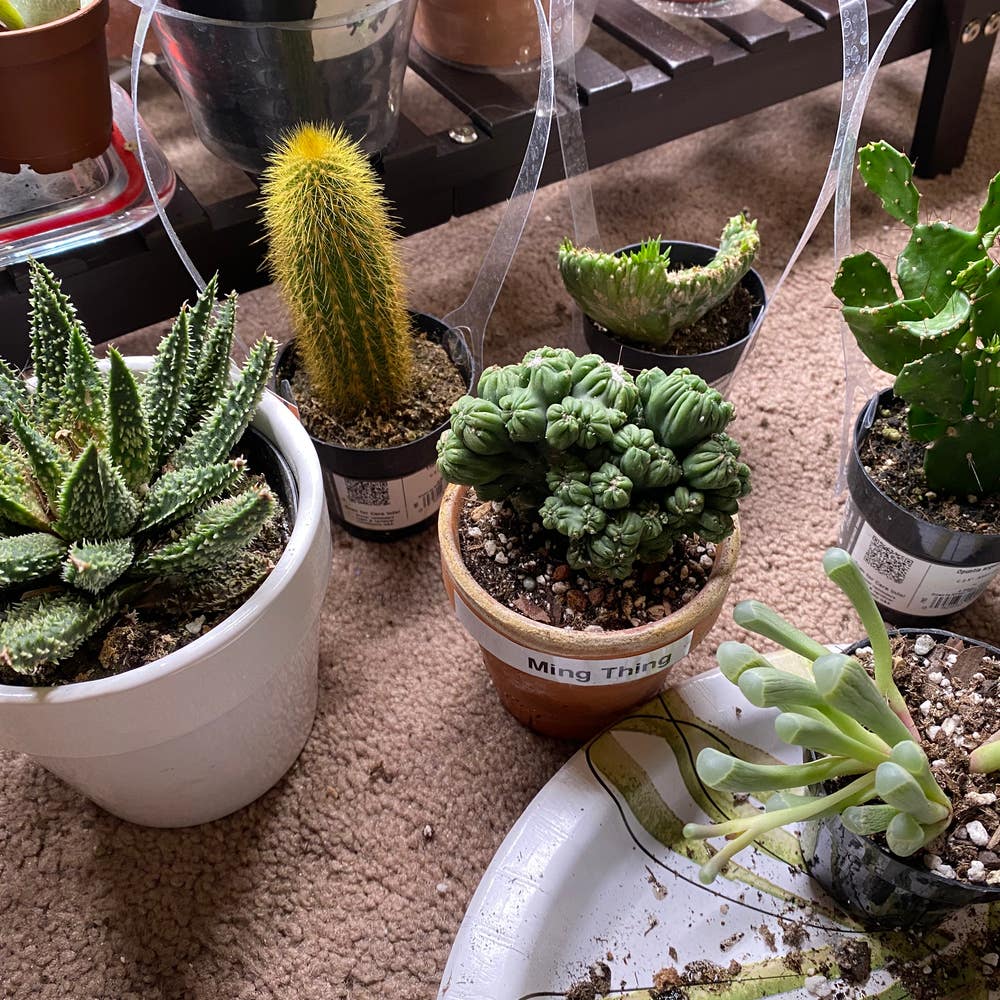
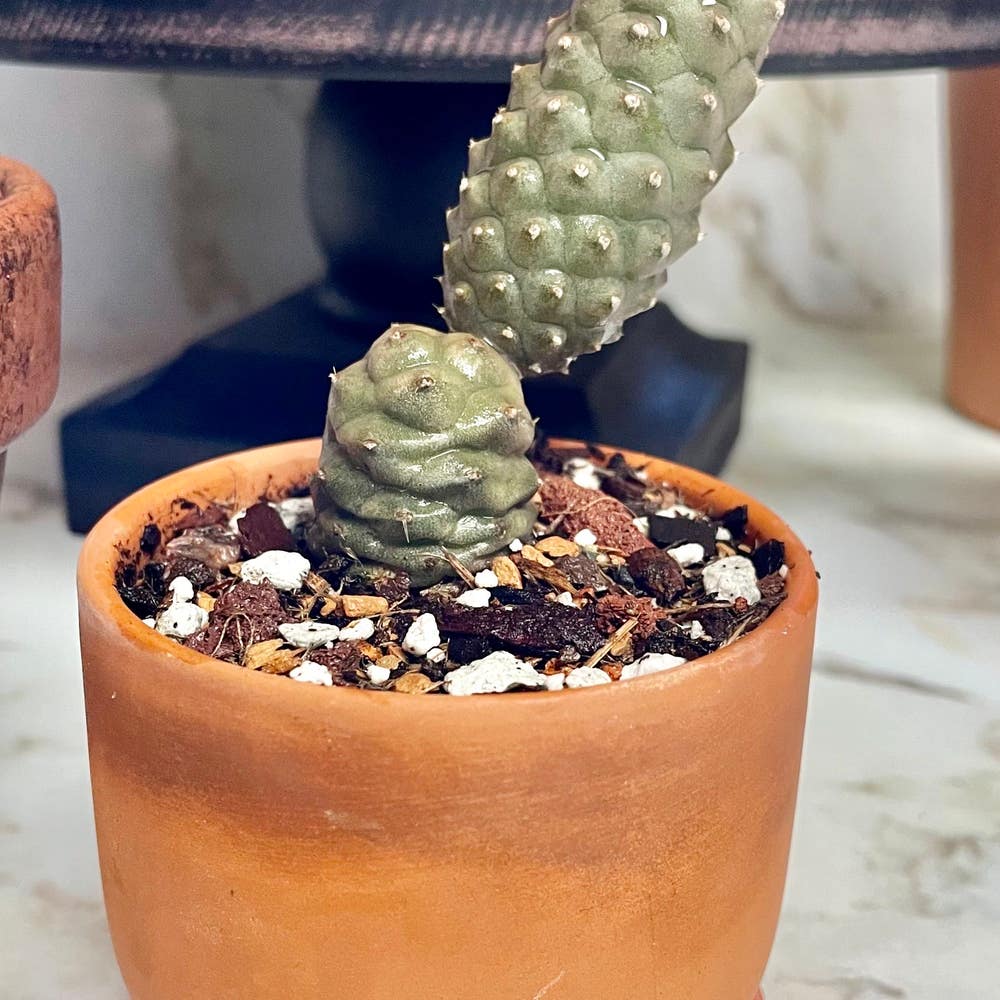
🌵 Why Are My Ming Thing Cactus Leaves Curling?
Cereus forbesii f. monstrose 'Ming Thing'
By the Greg Editorial Team
Jun 18, 2024•4 min read
This article was created with the help of AI so we can cover more plants for you. May contain errors. See one? Report it here.
Unravel the mystery behind your Ming Thing Cactus's curling leaves and restore its quirky charm 🌵!
- 🌞 Balance light exposure to prevent sunburn and shade-induced curling.
- 💧 Watering consistency is key—aim for moist, not soggy soil.
- 🐛 Tackle pests with insecticidal soap or neem oil for healthy leaves.
When the Sun's Too Much or Too Little
🌵 Signs of Sun Stress
In the realm of Ming Thing Cactus care, sun stress is a real drama. Sunburn manifests as brown or white spots, crispy patches, and bleached colors. It's like your cactus is waving a white flag, surrendering to the sun's relentless siege. Conversely, signs of insufficient light include stunted growth, pale hues, and a general wilted, stretched-out look, as if your cactus is reaching out for a lifeline.
🌞 Balancing the Light
Finding the sweet spot for your cactus's light exposure is key. Aim for bright, indirect sunlight, the kind that bathes your plant in a warm glow without the harshness of a midday sun. Think of it as the difference between a gentle wake-up call and an alarm blaring in your ear. If your cactus starts to look like it's been through a desert ordeal, it's time to dial back the direct rays. Keep a vigilant eye on the light conditions as seasons change, and adjust your cactus's position accordingly. It's a bit like a dance, moving closer or further from the light to the rhythm of the sun's movements.

Water Woes: Too Much Splash or Not Enough Dash
💧 Symptoms of Watering Mishaps
Identifying overwatering or underwatering is key to rescuing your Ming Thing Cactus. Overwatered cacti sport yellow, mushy leaves, while underwatered ones exhibit dry, wrinkled leaves. If the soil feels like a wet sponge, it's time to dial back on the water. Conversely, a brittle stem and leaf drop are distress signals for more hydration.
Fine-Tuning Your Watering Technique
To uncurl those leaves, consistency is your best friend. Aim for soil that's moist, not drenched. If your cactus is too dry, introduce a gentle increase in watering frequency. For the overwatered, let the soil dry out before the next watering. Remember, your pot needs proper drainage to prevent root rot. Adjust your watering habits with the seasons; less is more when it's cooler. Keep an eye on your plant's feedback – it's the best indicator of what to tweak next.

Uninvited Guests: Tackling Pest Problems
🐜 Spotting the Critters
Curling leaves on your Ming Thing Cactus might scream pests. Look for sticky residue, tiny bugs, or webbing on the undersides of leaves and stems. These are the smoking guns of an insect invasion. Aphids, spider mites, and mealybugs are the usual suspects. They're small, but their impact on your cactus is anything but.
🚪 Showing Pests the Door
Once you've identified pests, it's eviction time. Insecticidal soaps or neem oil are your go-to weapons. Apply with precision to hit every potential pest hideout. Follow the instructions—this isn't a time for guesswork. For a fungal fiesta, isolate and remove affected areas with sterilized shears and treat with a fungicide, adhering strictly to label directions. Regular plant check-ups are your best defense; think of it as routine pest patrol. If all else fails and your cactus is still a bug buffet, it might be time to call in the professionals. They'll help turn your plant from a bug hotel into a fortress.

Feeding Finesse: Nutrients and Root Health
💊 Diagnosing Nutrient Shortfalls and Root Issues
Yellowing leaves might be shouting 'nitrogen needed!' while crispy edges could be your cactus's way of screaming for potassium. Don't just guess; soil tests are your truth-tellers here, revealing what's missing beneath the surface. Roots should look like they hit the gym—sturdy and sprawling—not like they've been on a Netflix binge—weak and weepy.
🥦 The Right Diet for a Robust Cactus
Adjusting your cactus's diet is less about following the latest plant fad and more about precision and balance. A balanced, water-soluble fertilizer with an even NPK ratio can be like a wellness shake for your spiky friend. But remember, moderation is key—over-fertilizing is the equivalent of a nutrient overdose. Consider incorporating perlite or sand into your potting mix to improve drainage and avoid root rot. Regular checks and tweaks to your feeding regimen will keep your cactus looking sharp—literally.
⚠️ Safety First
This content is for general information and may contain errors, omissions, or outdated details. It is not medical, veterinary advice, or an endorsement of therapeutic claims.
Always consult a qualified healthcare professional before using any plant as food, medicine, or supplement.
Never eat any plant (or feed one to pets) without confirming its identity with at least two trusted sources.
If you suspect poisoning, call Poison Control (800) 222-1222, the Pet Poison Helpline (800) 213-6680, or your local emergency service immediately.
Spotted an error? Please report it here.
Keep your Ming Thing Cactus leaves unfurled and fabulous 🌵 with Greg's tailored care reminders, ensuring just the right mix of light, water, and nutrients from our article's tips.