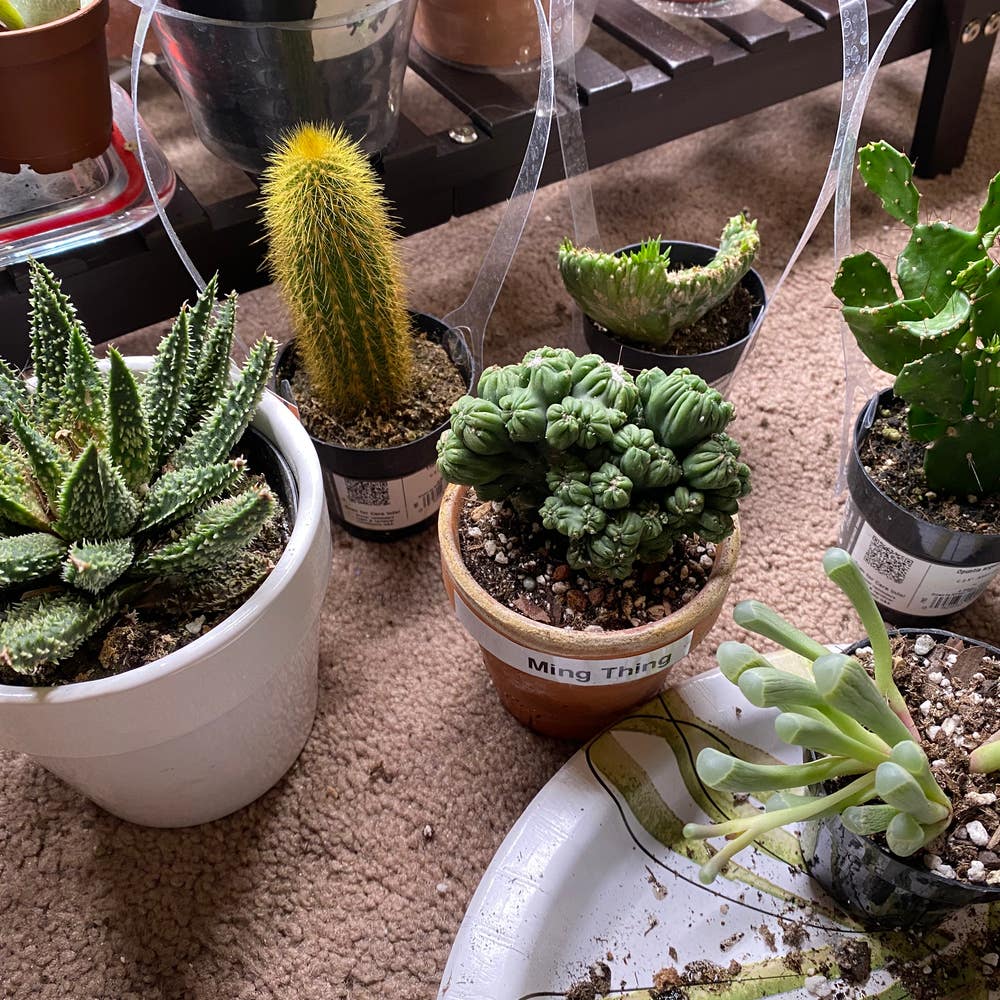
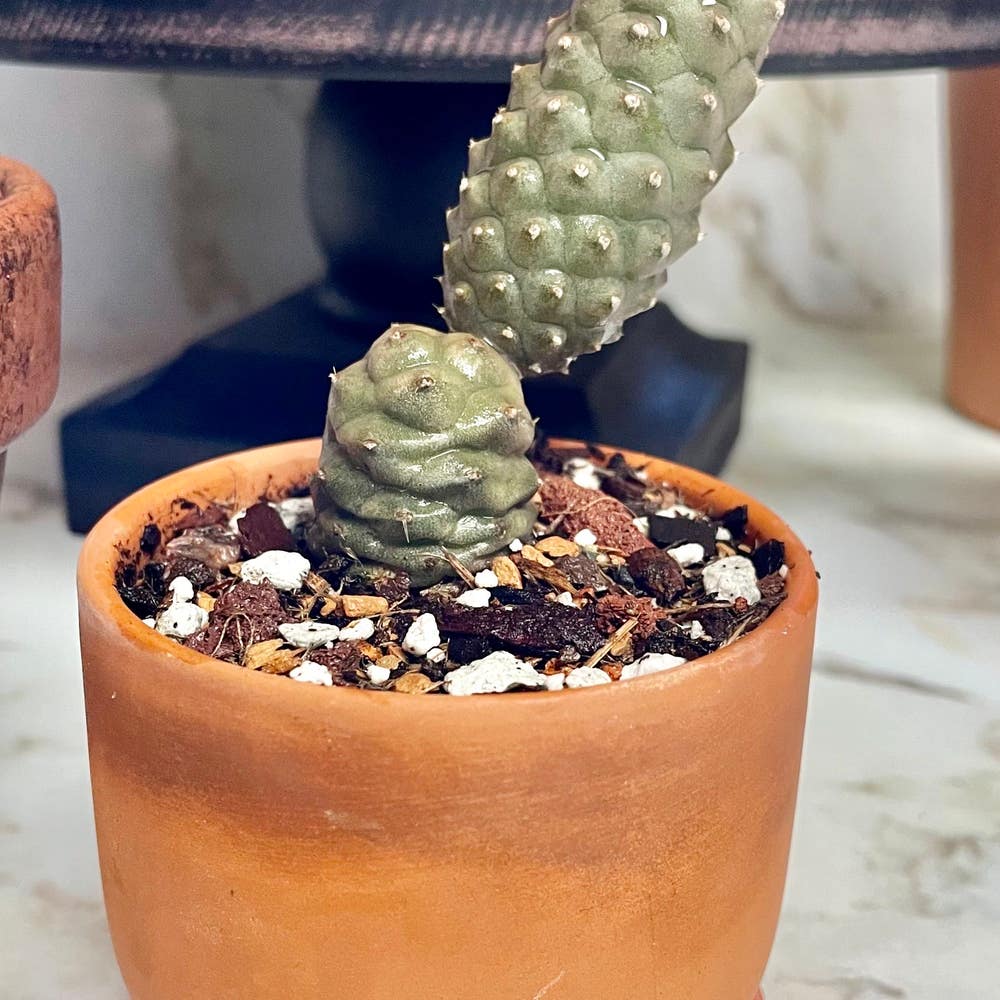
What Do I Do About Ming Thing Cactus Root Rot?
Cereus forbesii f. monstrose 'Ming Thing'
By the Greg Editorial Team
Jun 18, 2024•3 min read
This article was created with the help of AI so we can cover more plants for you. May contain errors. See one? Report it here.
Rescue your Ming Thing Cactus 🌵 from root rot's grip with our life-saving care tips!
- Discoloration signals root rot; healthy roots are firm and white.
- Sterilize shears, prune, dry roots to treat affected cacti.
- Prevent with well-draining soil, soak-and-dry watering, and proper light/airflow.
Spotting the Red Flags: Recognizing Root Rot in Your Ming Thing Cactus
🚨 Visual Symptoms to Look Out For
When your Ming Thing Cactus starts looking less like a quirky succulent and more like a wilted salad, it's time to perk up and pay attention. Discoloration and a general look of despair in your cactus are not just bad plant days; they're distress signals. If the once vibrant green has turned to a sickly yellow or brown, consider this your cactus's version of waving a white flag.
🌱 Getting Hands-On: Inspecting the Roots
To really get to the root of the problem, you'll need to do some digging—literally. Gently remove your cactus from its pot and take a look at what's going on underground. Healthy roots should be firm and white, like fresh produce, not mushy and brown like something that's been left in the fridge too long. If they crumble at the touch, it's time to switch from plant parent to plant paramedic.

Taking Action: How to Treat Root Rot in Ming Thing Cactus
🌵 Pruning the Problem: Removing Rotten Roots
First, sterilize your pruning shears; cleanliness is non-negotiable. Gently remove the Ming Thing Cactus from its pot and shake off excess soil to reveal the roots. Healthy roots are firm and light-colored, while rotten ones are dark and mushy. Snip the bad roots, ensuring you cut back to healthy tissue. This might feel like a cactus haircut, but it's a crucial step towards recovery.
💧 Drying Out: Adjusting Your Watering Habits
After surgery, let the cactus roots dry out in a warm, airy space. Think of it as a timeout for the roots to recuperate. Once you're ready to water again, adopt the soak-and-dry method: water thoroughly, then wait until the soil is bone-dry before the next watering. This mimics the natural desert conditions the Ming Thing Cactus craves.
🍄 Fungicide to the Rescue: When and How to Use It
If you're facing a fungal fiesta, it's time for fungicides. Choose a product suited for cacti and follow the label to the letter. Apply it to the soil, not the plant, to target the roots where the problem lies. Remember, fungicides are an ally, not a cure-all; your watering habits and soil quality are the true heroes here.

Prevention is Key: Keeping Root Rot at Bay
💧 The Right Foundation: Choosing and Mixing the Perfect Soil
Well-draining soil isn't just a preference; it's a necessity for the Ming Thing Cactus. Opt for a mix that's more gravel than garden, ensuring water passes through like a sieve. To improve soil structure, integrate perlite or pumice, which act like tiny life rafts keeping roots afloat amidst moisture.
🚰 Water Wisdom: Mastering the Art of Watering
Overwatering is the fast track to root rot. Use a moisture meter to gauge the soil's thirst, or trust the old-school finger test—dry top inch means go ahead, any dampness means stop. Watering schedules are more guidelines than gospel; adapt to your cactus's needs, not the calendar.
🌞 Environment Matters: Ensuring Proper Light and Airflow
Airflow is the unsung hero; it's the difference between a root rot rave and a healthy root hoedown. Position your cactus where the air isn't stale, and light is plentiful but not scorching. Think bright, indirect light—like a sunny brunch spot without the waitlist. Remember, a pot too big is a pot full of problems; cozy is better than cavernous for root health.

⚠️ Safety First
This content is for general information and may contain errors, omissions, or outdated details. It is not medical, veterinary advice, or an endorsement of therapeutic claims.
Always consult a qualified healthcare professional before using any plant as food, medicine, or supplement.
Never eat any plant (or feed one to pets) without confirming its identity with at least two trusted sources.
If you suspect poisoning, call Poison Control (800) 222-1222, the Pet Poison Helpline (800) 213-6680, or your local emergency service immediately.
Spotted an error? Please report it here.
Avoid future despair 🌵 in your Ming Thing Cactus with Greg's personalized care reminders that ensure just-right watering and optimal growing conditions.