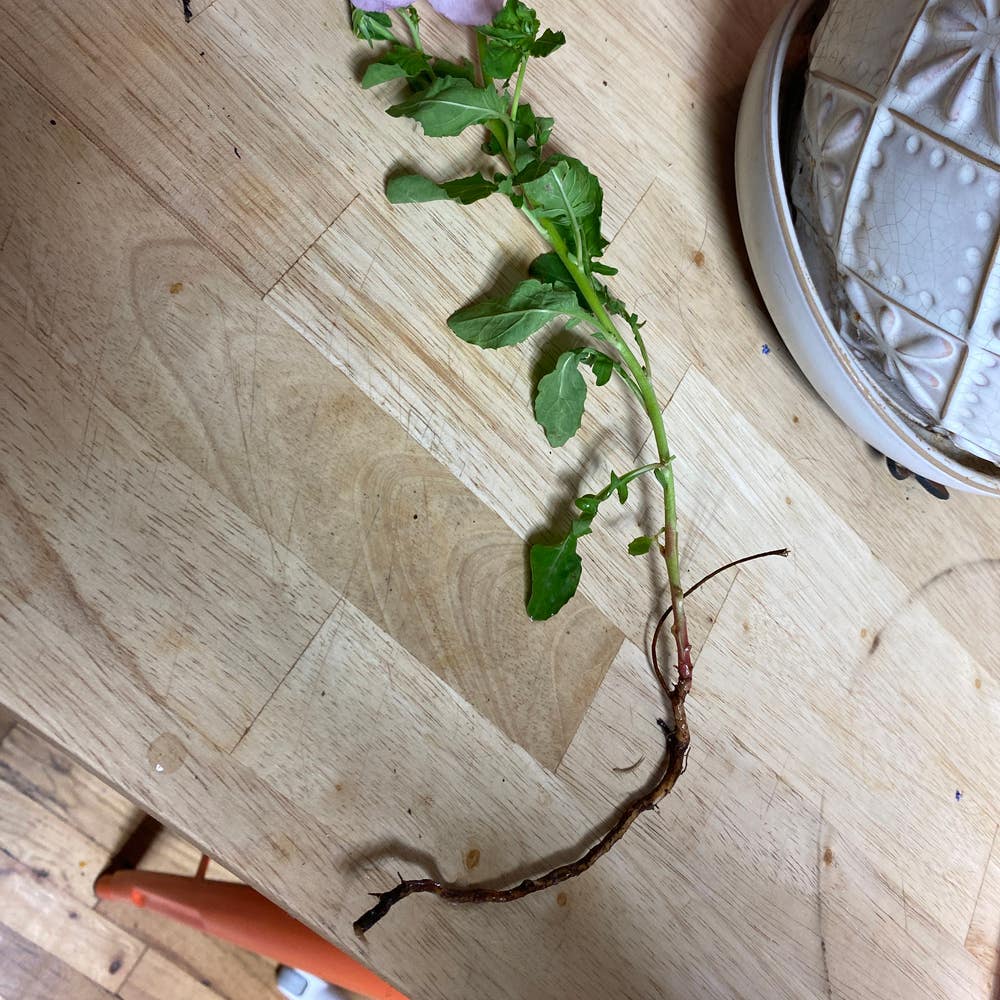
Why Are My Lindheimer's Beeblossom Leaves Mushy?
Oenothera lindheimeri
By the Greg Editorial Team
Jan 20, 2024•3 min read
This article was created with the help of AI so we can cover more plants for you. May contain errors. See one? Report it here.
- Mushy leaves indicate distress, often due to overwatering or poor drainage.
- Fungal infections contribute to mushiness; look for brown spots and dark roots.
- Prevent mushiness with proper watering, drainage, and fungal prevention measures.
Spotting the Trouble: Signs Your Beeblossom's Leaves Are Unhappy
🍂 Visual Symptoms
Beeblossom blues got you down? Mushy leaves are the cry for help you can't ignore. Look for leaves that feel like overripe peaches—too soft and giving way under gentle pressure. Discoloration is another red flag; yellowing or browning can mean your plant's in distress. And if the stems are as limp as overcooked spaghetti, you've got trouble.
🌱 Soil and Environment Check
Get your hands dirty and feel the soil. If it's soggier than a marshland, that's a no-go. The pot should have a weight that suggests moist, not waterlogged. Don't forget to eye the environment; if your plant's sitting in a dimly lit sauna or a drafty corridor, that could be part of the problem. Remember, plants are like Goldilocks—they want everything just right.
Rooting Out the Causes: Why Your Beeblossom's Leaves Turn Mushy
💦 Overwatering Woes
Overzealous watering is often the culprit behind your Beeblossom's leaf mush. It's a classic case of too much love; leaves don't need a bath, just a sip. Yellowing or browning and a general droopiness are telltale signs that you've gone overboard with the H2O.
🚰 Drainage Dilemmas
Good drainage is non-negotiable. Without it, you're essentially giving your plant's roots a one-way ticket to Soggy Town. Ensure your pot has adequate drainage holes and the soil isn't holding onto water like a sponge.
🍄 Fungal Foes
Fungi are the uninvited guests at the party, thriving in damp conditions. Look out for brown spots or a general look of despair in your plant. Mushy, dark roots are a red flag for fungal infections or root rot. It's not just about watering less; it's about ensuring the environment doesn't roll out the red carpet for these fungal party crashers.
Turning Over a New Leaf: Fixing and Preventing Mushiness
💧 Watering Wisdom
Adjusting your watering routine is crucial to resolve mushy leaves. Overwatering is often the culprit, so let the top inch of soil dry out before giving your plant another drink. Think of it as tough love for your Beeblossom; it's for their own good.
🌱 Soil Solutions
Improving soil structure is like giving your plant's roots a gym membership for better health. Mix in airy amendments like coco coir, perlite, and bark to prevent water from overstaying its welcome. Remember, roots need to breathe, not swim.
🍄 Fungal Fixes
Fungal parties are a no-go for your Beeblossom. If you spot an unwanted fiesta, consider a copper-based fungicide to crash it. Keep your plant's leaves as dry as your humor and ensure air circulation is as free-flowing as a conversation with your best friend.
⚠️ Safety First
This content is for general information and may contain errors, omissions, or outdated details. It is not medical, veterinary advice, or an endorsement of therapeutic claims.
Always consult a qualified healthcare professional before using any plant as food, medicine, or supplement.
Never eat any plant (or feed one to pets) without confirming its identity with at least two trusted sources.
If you suspect poisoning, call Poison Control (800) 222-1222, the Pet Poison Helpline (800) 213-6680, or your local emergency service immediately.
Spotted an error? Please report it here.
Ensure your Beeblossom thrives with healthy leaves 🍃 by using Greg to fine-tune your watering routine and safeguard against overwatering.