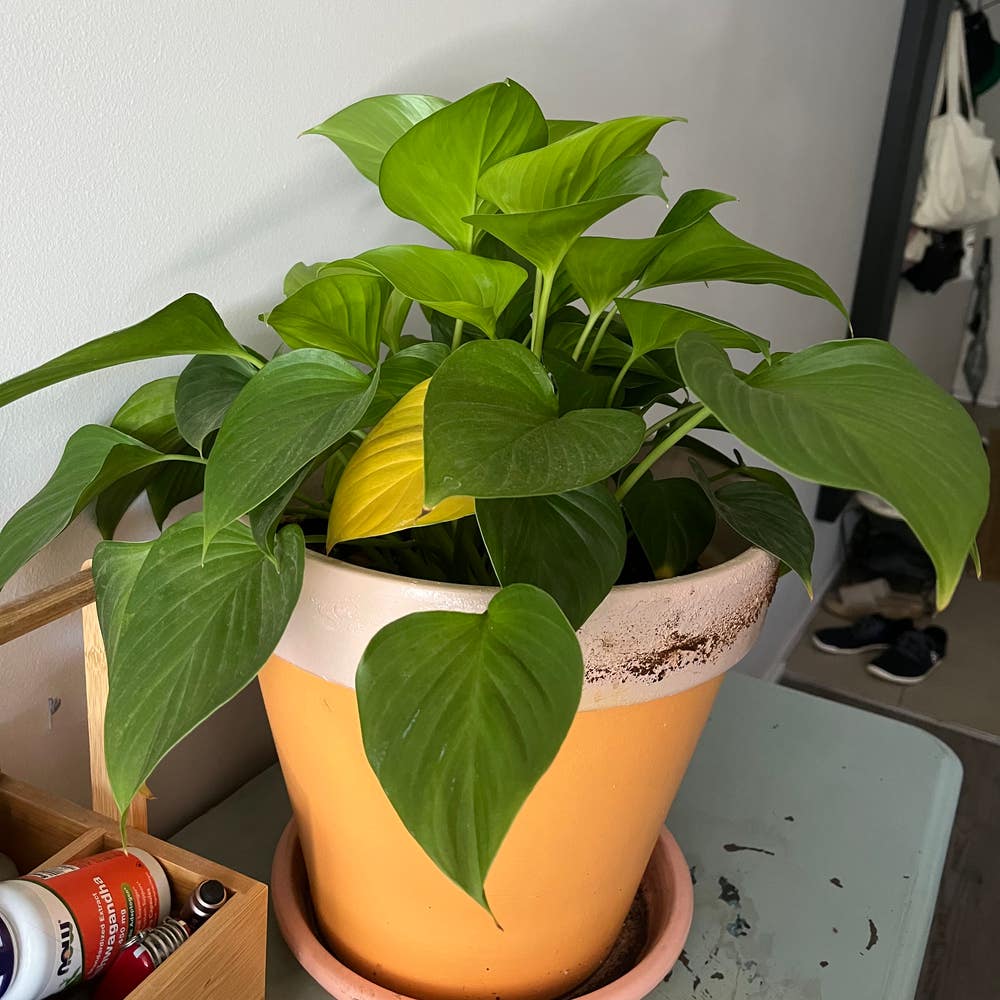
How Should Homalomena 'Red Velvet' Be Cut Back?
Homalomena humilis 'Red Velvet'
By the Greg Editorial Team
Mar 14, 2024•4 min read
This article was created with the help of AI so we can cover more plants for you. May contain errors. See one? Report it here.
Prune your 'Red Velvet' 🌿 to perfection, ensuring year-round lushness and vitality.
- 🍂 Prune when yellow or damaged leaves appear, ideally in spring for robust growth.
- ✂️ Use sharp, sterilized tools and cut above nodes to shape and promote bushiness.
- 🌱 Aftercare is crucial: water moderately, provide bright light, and monitor growth.
Best Time to Prune Your 'Red Velvet'
🚩 Spotting the Signs
Yellow or damaged leaves are your plant's way of waving a white flag. When you see these, it's time to reach for the shears. Overgrown stems? They're not just an eyesore; they're your 'Red Velvet' crying out for a trim.
📅 Seasonal Timing
Spring is your go-to season for pruning Homalomena 'Red Velvet'. It's the period of awakening and vigorous growth, making it the perfect time for a little plant grooming. Avoid fall and winter; your plant is chilling out, and pruning could be more of a shock than a spa treatment. If you're dealing with a particularly wild leaf in summer, a light snip won't hurt.
Pruning Your Plant Right
🛠️ Choosing Your Tools
Sharpness is non-negotiable. Select pruning shears or secateurs that could pass for a samurai's blade. Sterilize them with rubbing alcohol or a disinfectant solution. Safety comes first—don't skimp on gloves to protect your hands.
🌱 The Pruning Process
Inspect your Homalomena 'Red Velvet' for dead or overgrown sections. Plan your cuts to maintain the plant's natural shape. Snip just above a node to encourage bushier growth. Use bonsai shears or micro-tip snips for precision. Sterilize tools between cuts to prevent disease spread.
🚿 Immediate Aftercare
Post-prune, your plant is vulnerable. Water consistently and shield it from harsh conditions. Watch for new growth—it signals a successful recovery. Remember, it's plant rehab, and you're the nurturing caregiver.
Encouraging Regrowth
🌱 Fostering New Growth
After pruning your Homalomena 'Red Velvet', it's time to nurture new growth. Light is your plant's best friend at this stage. Position it to bask in bright, indirect sunlight. This boosts photosynthesis, encouraging those fresh shoots to pop up.
Watering should be consistent but moderate—overzealous hydration is a no-go. The soil should be kept slightly moist, not soggy. Think of it as a steady rhythm, not a flood.
🕵️ Monitoring and Adjusting Care
Keep a vigilant eye on your 'Red Velvet' post-trim. New growth is like a thumbs-up from your plant. If you're not seeing any, it might be time to reassess your care routine.
Adjust care practices based on the plant's feedback. No new shoots? Maybe it's time to tweak the light or water levels. Witnessing new leaves? You're on the right track—keep it up. Remember, the plant world doesn't rush, and neither should you.
Pruning Pitfalls to Dodge
🌱 Common Pruning Blunders
Pruning your Homalomena 'Red Velvet' should be a thoughtful process, not a hasty one. Rushing can lead to jagged cuts that harm the plant's health. Always take a moment to plan your approach, as if strategizing a chess move.
Avoid ignoring disease; if you spot any signs of infection, remove the affected foliage immediately and dispose of it safely. Think of it as a surgical extraction, where cleanliness is paramount.
When assessing which parts to prune, remember that less is often more. Over-pruning can be as detrimental as neglect, stripping the plant of its vital energy reserves. Aim to remove only what's necessary to maintain shape and health, like trimming split ends to preserve hair integrity.
🚑 Health Hazards from Improper Pruning
Improper pruning can lead to a host of issues, from stunted growth to increased susceptibility to diseases. It's like leaving a wound untreated; without proper care, it can worsen over time.
Timing errors can be particularly harmful. Pruning too early or too late in the season can disrupt the plant's natural growth cycle. Sync your pruning schedule with the plant's rhythm, just as you would align your sleep cycle with the rising and setting sun.
Remember, the goal is to prune with purpose. Each cut should serve a specific function, whether it's to remove dead wood, shape the plant, or encourage new growth. Pruning without a clear objective is like navigating without a map—you might end up somewhere, but it's likely not where you intended to go.
⚠️ Safety First
This content is for general information and may contain errors, omissions, or outdated details. It is not medical, veterinary advice, or an endorsement of therapeutic claims.
Always consult a qualified healthcare professional before using any plant as food, medicine, or supplement.
Never eat any plant (or feed one to pets) without confirming its identity with at least two trusted sources.
If you suspect poisoning, call Poison Control (800) 222-1222, the Pet Poison Helpline (800) 213-6680, or your local emergency service immediately.
Spotted an error? Please report it here.
Prune your Homalomena 'Red Velvet' to perfection by letting Greg remind you of the optimal timing ✂️ and care post-trimming for robust growth.