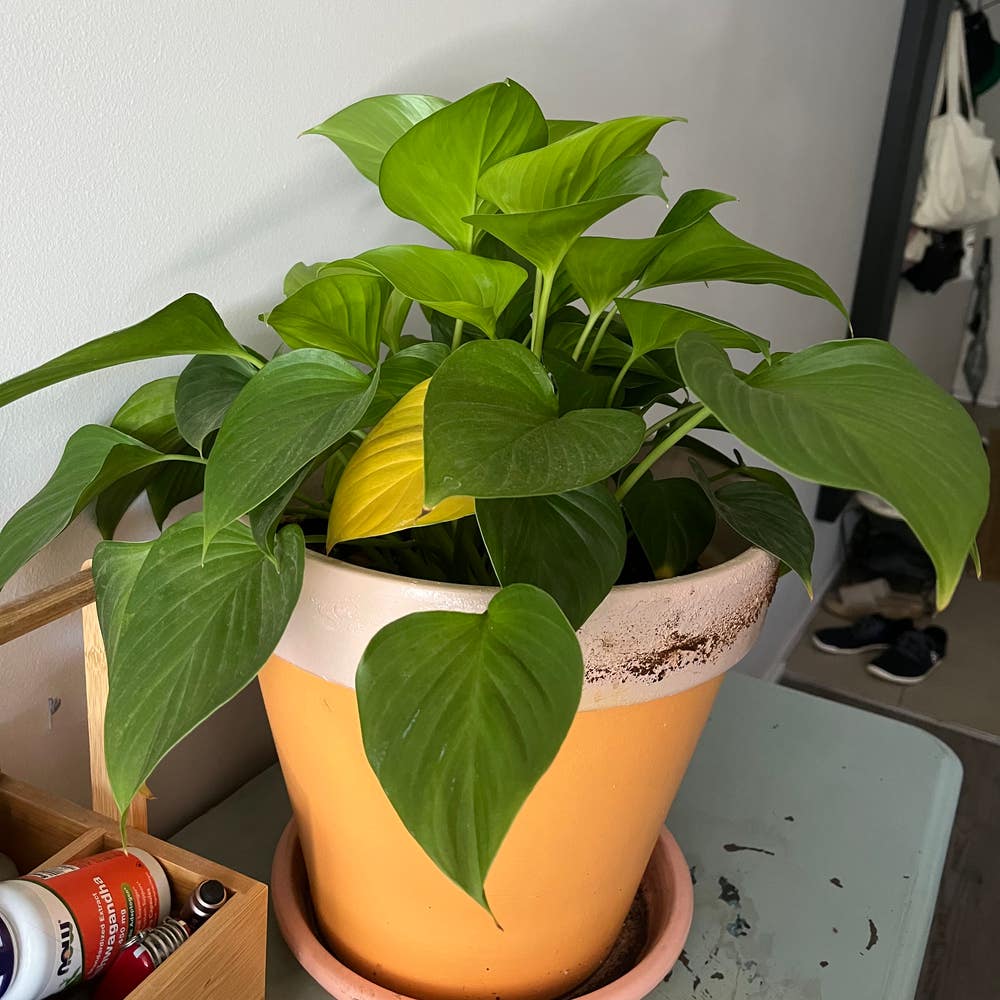
Black Spots on My Homalomena 'Red Velvet' Leaves
Homalomena humilis 'Red Velvet'
By the Greg Editorial Team
Mar 14, 2024•5 min read
This article was created with the help of AI so we can cover more plants for you. May contain errors. See one? Report it here.
Banish black spots 🕵️♂️ on your Homalomena 'Red Velvet' with this definitive treatment and prevention guide.
- Fungal vs. bacterial spots: Powdery texture or slimy odor helps identify.
- Environmental stress like overwatering can cause black spots.
- Prevent with good care: Adjust light, water, and airflow.
Spotting the Culprit: Identifying Black Spots and Their Causes
🕵️ What Do Black Spots Look Like?
Texture and pattern are your first clues. On Homalomena 'Red Velvet', black spots can manifest as circular or irregular shapes, sometimes bordered by a distinctive purple-red hue. They may appear raised, sunken, or even slimy, betraying an underlying issue.
🦠 Fungal vs. Bacterial: Knowing the Difference
Fungal spots often present with a powdery texture, while bacterial spots might feel slimy and look water-soaked. Fungal infections typically have fuzzy borders, whereas bacterial spots can ooze or emit a foul odor. Both types of spots can start small and grow, but their textures and margins differ.
🌿 When the Environment Strikes: Stress-Induced Spots
Environmental stress can cause black spots without an infection. Overwatering, poor drainage, and inadequate air flow are common culprits. Sunburn can also leave marks, so monitor your plant's response to light changes. Remember, consistency in care can prevent these environmental stressors from leaving their mark.
The Diagnosis: Pinpointing the Cause of Black Spots
🔍 Close Inspection Techniques
To unmask the cause of black spots on your Homalomena 'Red Velvet', start with a Sherlock-level scrutiny. Check the spots' size, shape, and color; they could range from tiny pinpricks to larger blotches, with hues from jet black to brownish. Are they uniform or scattered haphazardly? Flip the leaves; sometimes the underside tells a different story. Feel the texture—are they raised, recessed, or slimy? These tactile clues are as telling as the visual ones.
🧪 Testing and Confirmation
When your plant's SOS signals go beyond your green thumb expertise, it's time to call in the cavalry. Capture clear photos from different angles and note any symptom progression. If the black spots spread like gossip or your plant looks more wilted than a forgotten salad, professional help is warranted. Local nurseries, extension services, or a plant pathologist can offer diagnostic testing. They're the plant world's equivalent of a medical lab, providing clarity amidst the leafy chaos. Remember, accurate diagnosis is the linchpin of effective treatment.
The Battle Plan: Treating Black Spots
🍄 Fungicide to the Rescue: Treating Fungal Infections
Fungal infections are no joke for your Homalomena 'Red Velvet'. To tackle these, you'll need a fungicide. But not just any fungicide will do; you need the right one for the job. Protectant fungicides work best for early-stage infections, acting as a shield for your plant. For more advanced cases, systemic fungicides get into the plant's system, fighting the infection from the inside out.
Remember, reading the label isn't just for decoration—it's essential. Follow the instructions to the letter. And don't get trigger-happy with the spray; overuse can lead to resistance, making your efforts futile. Keep the fungi on their toes by rotating your fungicides. Think of it as a strategic game where you're always one step ahead.
💥 Bacteria Busters: Addressing Bacterial Infections
When bacteria are the villains, it's time for bactericides. Copper-based bactericides are your heavy artillery here. They're tough on bacteria but should be used with precision. Target the infected areas and spare the healthy ones. It's like performing surgery on your plant—only remove what's necessary.
Sterilize your tools before and after use to avoid spreading the infection. It's like maintaining hygiene in an operating room. And timing is crucial; apply bactericides when the plant is most receptive, usually during the cooler parts of the day. Don't wait until the infection has thrown a full-blown party on your plant's leaves—act swiftly.
In both cases, whether it's fungal or bacterial, cleanliness is your ally. Keep your gardening tools as clean as a whistle, and your Homalomena 'Red Velvet' will thank you. Remember, these treatments are potent. Use them wisely to avoid turning your plant problems into a horror movie sequel.
Prevention: Keeping Black Spots at Bay
🌿 Cultural Practices for Healthy Leaves
Adjust your care routine to prevent the pesky black spots from making a comeback on your Homalomena 'Red Velvet'. It's like updating your software—necessary for smooth performance.
- Water wisely: Keep the foliage dry by watering at the base of the plant. Think of it as targeted hydration.
- Prune with purpose: Use sterilized shears to cut away affected areas. It's a tactical move for plant health.
- Choose the right soil: Well-draining soil isn't just a preference; it's a must for preventing fungal parties.
🌍 Environmental Adjustments
Creating an environment that black spots loathe is like setting up a no-fly zone.
- Light: Provide bright, indirect light. It's the equivalent of a cozy sunbath that doesn't burn.
- Airflow: Good circulation is non-negotiable. Stagnant air is to fungi what a candy store is to kids.
- Spacing: Give your plants room to breathe. Overcrowding is the first invite to a disease potluck.
Remember, prevention is all about being proactive. It's not just a one-time deal; it's a lifestyle change for your plant. Keep your eyes peeled, and don't let your guard down—those black spots are sneaky.
⚠️ Safety First
This content is for general information and may contain errors, omissions, or outdated details. It is not medical, veterinary advice, or an endorsement of therapeutic claims.
Always consult a qualified healthcare professional before using any plant as food, medicine, or supplement.
Never eat any plant (or feed one to pets) without confirming its identity with at least two trusted sources.
If you suspect poisoning, call Poison Control (800) 222-1222, the Pet Poison Helpline (800) 213-6680, or your local emergency service immediately.
Spotted an error? Please report it here.
Banish those pesky black spots 🕵️♂️ with Greg's personalized care plans, ensuring your Homalomena 'Red Velvet' thrives in the perfect environment.