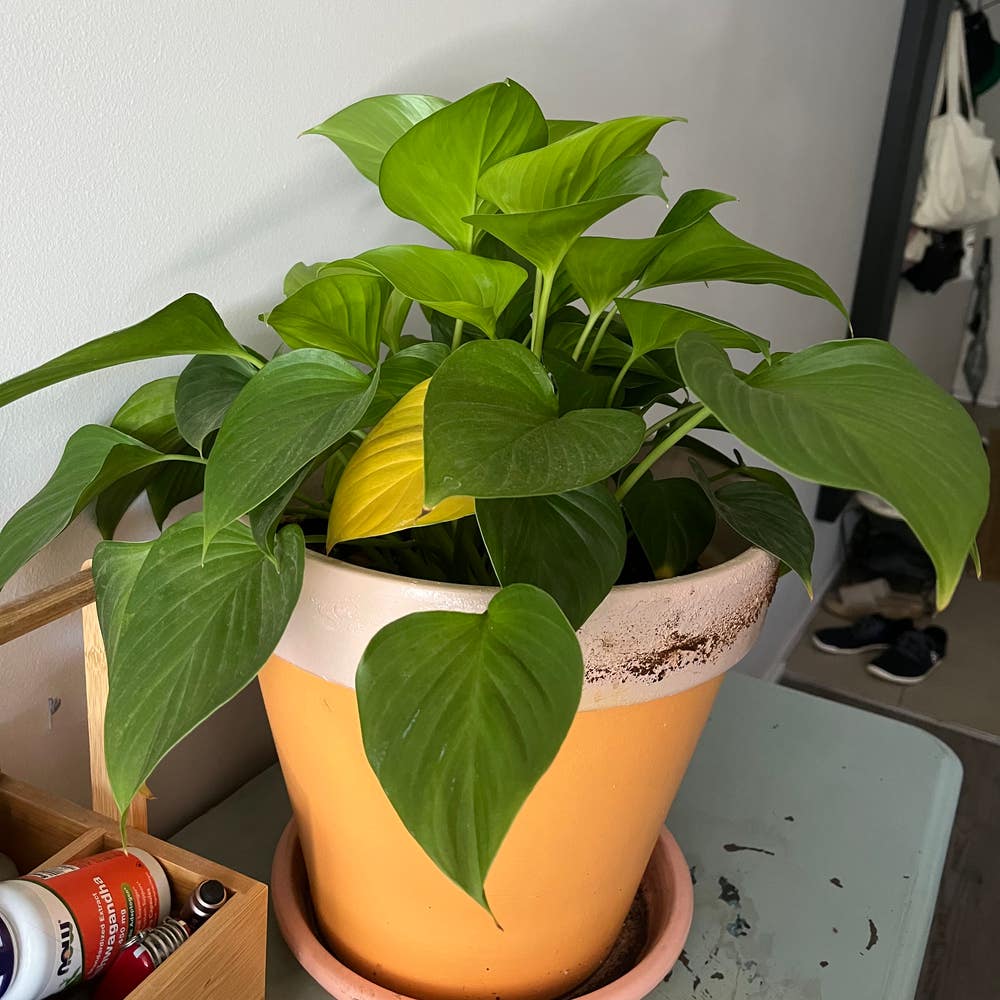
Why Are My Homalomena 'Red Velvet' Leaves Turning Yellow?
Homalomena humilis 'Red Velvet'
By the Greg Editorial Team
Mar 14, 2024•5 min read
This article was created with the help of AI so we can cover more plants for you. May contain errors. See one? Report it here.
Uncover the secret to reviving your Homalomena's yellow leaves and keep them perpetually green 🌿.
- 🚨 Yellow leaves signal distress; assess severity to act promptly.
- 💧🌞 Balance water and light to prevent yellowing.
- 🌱 Nutrient balance and care routine are crucial for leaf health.
Spotting the Signs: When Your Plant's Leaves Start to Yellow
🚨 Recognizing Yellowing Leaves
Yellowing leaves on your Homalomena 'Red Velvet' are the plant's SOS. You might notice the once lush green turning a dull yellow, either in patches or uniformly. The leaves could also lose their firmness, looking a bit limp. It's not just a fashion statement; it's a distress call.
📉 Assessing the Severity
Severity matters. A few yellow leaves here and there might not spell disaster, but if your Homalomena is more yellow than a school bus, it's time to take action. Check if the yellowing is on older, lower leaves or if it's creeping into the new growth. The latter is a clear sign that your green buddy needs a lifeline, pronto.
Unearthing the Causes: Why Your Plant's Leaves May Turn Yellow
💧 Too Much Water
Overwatering is a common misstep. Your plant's roots can't breathe leading to a yellowing spectacle. Check for soggy soil and a lack of drainage. If the pot feels like a swamp, you've gone overboard with the H2O.
🏜️ Not Enough Water
Conversely, underwatering turns leaves yellow as a distress flare. When the soil is bone-dry and the leaves feel like old parchment, it's time to quench that thirst. Remember, a plant's not a camel; it can't store water for drought days.
🌞 Light: Finding the Sweet Spot
Lighting is key. Too much sun and your plant's leaves might as well be frying. Not enough, and they'll yellow from light starvation. Aim for bright, indirect light; think of it as a cozy middle ground for your leafy friend.
🍽️ The Nutrient Balancing Act
Nutrient imbalances are like a bad diet for your plant. Yellow leaves might signal a deficiency in nitrogen or other key nutrients. But don't overcompensate—too much fertilizer can be just as harmful. It's all about that balance.
Turning Over a New Leaf: Remedies for Yellowing
💧 Fine-Tuning Watering Habits
Watering your Homalomena 'Red Velvet' is not a guessing game. Use a moisture meter to check the soil's moisture level; it's a straightforward way to know when to water. If you don't have a gadget, the finger test works too. Top inch dry? Time to hydrate. Overwatered? Let the soil dry out more between waterings. Remember, your plant's not a fan of soggy feet.
🌞 Adjusting Light Exposure
Light is like your plant's daily coffee—it needs just the right amount to thrive. Too much and your Homalomena 'Red Velvet' gets a sunburn, too little and it's in a perpetual state of grogginess. Bright, indirect light is the sweet spot. Consider shades or light-diffusing curtains to soften intense rays, or a grow light for dark corners. Rotate the pot occasionally for even exposure.
🍽️ Nutrient Boost: Fertilization and Soil Health
Yellow leaves might be crying out for a nutritional pick-me-up. Conduct a soil test to pinpoint deficiencies. A balanced fertilizer can work wonders, but it's not an all-you-can-eat buffet—follow the instructions. Over-fertilizing is like force-feeding your plant; it does more harm than good. If you're unsure, start with a half-strength solution. Enhance soil health with compost or humate to improve nutrient uptake.
Keeping the Green: Preventative Tips to Maintain Healthy Leaves
🔄 Consistency is Key: Establishing a Care Routine
Your Homalomena 'Red Velvet' doesn't need grand gestures; it craves routine. Like clockwork, establish a care schedule that includes watering, feeding, and pruning. This isn't just about keeping the plant alive, it's about letting it thrive.
👀 Vigilant Plant Parenting: Regular Monitoring
Keep your eyes peeled. Regular inspections can catch early signs of yellowing before they become a full-blown botanical brouhaha. Adjust your care with the seasons—more water in the heat, less in the cool, like adjusting your layers for a day out. Rotate your plant for even growth, because nobody wants a lopsided living ornament.
💧 Water Wisdom: Best Practices
Watering is an art. Your plant's thirst isn't constant—it changes with the weather, the seasons, and its growth cycle. Find that sweet spot where the soil is moist but not soggy, like a perfectly wrung-out sponge.
🌞 Light Consistency: A Balancing Act
Light is to plants what coffee is to humans—essential. But just as you wouldn't down an espresso at midnight, don't let your plant get scorched in direct sunlight. Aim for indirect light that's as consistent as your favorite barista's brew.
🐜 Proactive Pest Patrol
Don't wait for pests to throw a party on your plant. Regularly check under the leaves and along the stems. If you spot any freeloaders, show them the door with appropriate treatments.
🌦 Seasonal Adjustments: Tuning Your Care
As seasons shift, so should your care strategy. Dial down the watering in winter and make sure your plant isn't baking in the summer sun. It's like updating your wardrobe; you wouldn't wear flip-flops in a snowstorm.
🌱 Soil and Fertilizer: The Foundation
Soil is your plant's home, and you want it to be comfy. Use a well-draining mix that supports root health. Fertilize with a light hand—think of it as seasoning food, not dousing it in sauce.
Remember, keeping your Homalomena 'Red Velvet' green is about being a proactive plant parent, not a reactive one. Stay sharp, stay consistent, and your plant will stay grateful.
⚠️ Safety First
This content is for general information and may contain errors, omissions, or outdated details. It is not medical, veterinary advice, or an endorsement of therapeutic claims.
Always consult a qualified healthcare professional before using any plant as food, medicine, or supplement.
Never eat any plant (or feed one to pets) without confirming its identity with at least two trusted sources.
If you suspect poisoning, call Poison Control (800) 222-1222, the Pet Poison Helpline (800) 213-6680, or your local emergency service immediately.
Spotted an error? Please report it here.
Turn your Homalomena 'Red Velvet' leaves from yellow back to lush green 🌿 with Greg's tailored watering schedules and nutrient tracking for peak plant health.