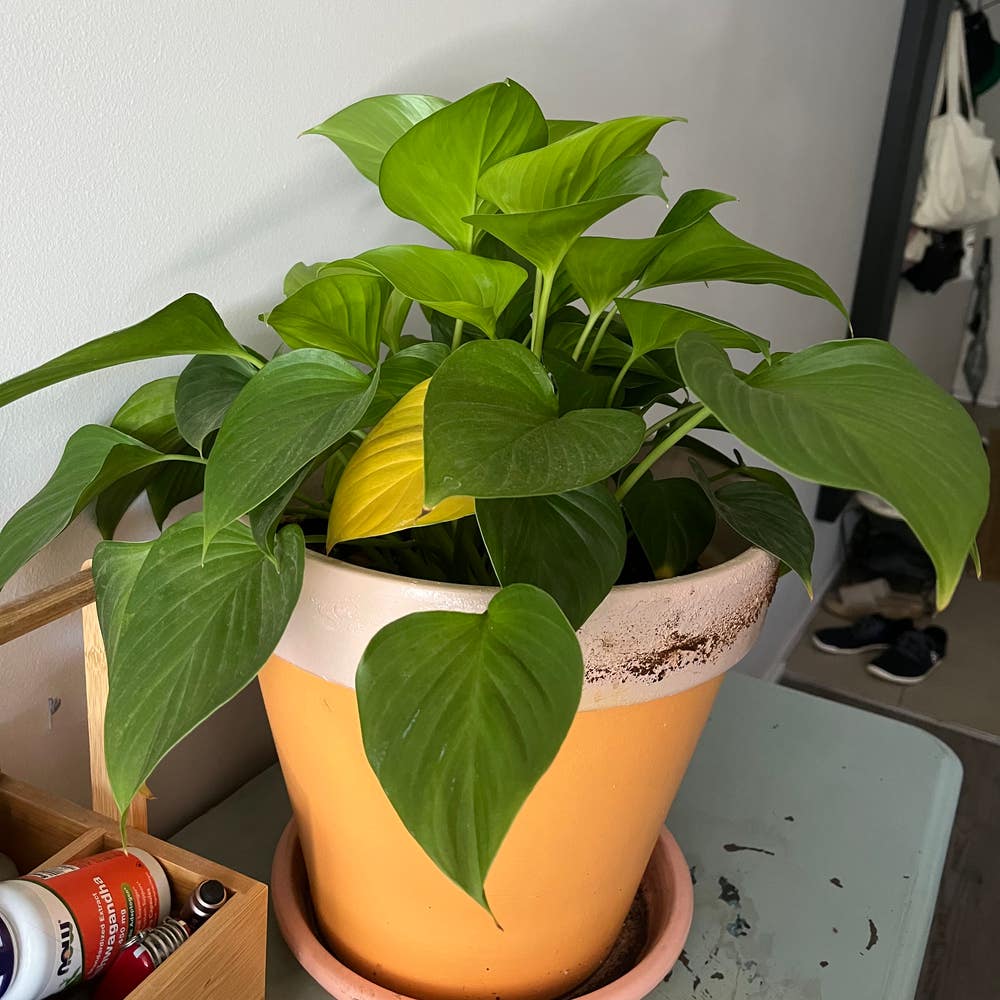
Managing Yellow Leaves on Your Homalomena 'Camouflage'
Homalomena 'Camouflage'
By the Greg Editorial Team
Nov 07, 2024•4 min read
This article was created with the help of AI so we can cover more plants for you. May contain errors. See one? Report it here.
Transform your Homalomena 'Camouflage' from yellow to vibrant green with these expert care tips! 🌿
- 🌱 Yellow leaves indicate issues like nutrient deficiencies, overwatering, or environmental stress.
- 🔍 Assess leaf texture: soft means overwatering, crispy indicates underwatering.
- 🌞💧 Monitor light and humidity for optimal health; adjust care seasonally.
Diagnosing Yellow Leaves
🧐 Visual Symptoms: How to Identify Yellowing
Identifying yellow leaves on your Homalomena 'Camouflage' starts with understanding the type of yellowing. General yellowing typically affects older leaves, indicating an overall issue, while localized yellowing may suggest specific problems like pests or disease.
Pay attention to the age of the leaves. If younger leaves are yellowing, it often points to nutrient deficiencies or environmental stress. Additionally, assessing leaf texture and firmness is crucial; soft, mushy leaves can indicate overwatering, while crispy, dry leaves suggest underwatering.
💧 Assessing Soil Moisture: Techniques for Testing
To diagnose yellow leaves, checking soil moisture is essential. The finger test is a simple method: insert your finger into the soil up to the second knuckle. If it feels dry, it’s time to water; if it’s wet, hold off.
For more precise readings, consider using a moisture meter. This tool provides accurate moisture levels, helping you avoid the pitfalls of over or underwatering. Regular checks, especially after watering, can help you establish a routine for optimal plant health.
🌤️ Evaluating Environmental Conditions: Light and Humidity Checks
Environmental conditions play a significant role in leaf health. Use a light meter to measure the light levels your plant receives. This tool helps ensure your Homalomena is getting the right amount of light, which is crucial for its growth.
Additionally, observe your plant's behavior. If it stretches toward the light or has pale leaves, it may need more exposure. Monitoring humidity is equally important; using a hygrometer can help you maintain the ideal humidity levels for your plant, preventing stress that leads to yellowing leaves.
By carefully diagnosing these factors, you can take the first steps toward restoring your plant's vibrant health. Next, we’ll explore effective treatments for yellow leaves to help your Homalomena thrive.
Treating Yellow Leaves
🌱 Step-by-Step Guide to Reviving Yellow Leaves
Reviving yellow leaves on your Homalomena 'Camouflage' starts with identifying the cause. Common culprits include overwatering, underwatering, or nutrient deficiencies.
Once you've pinpointed the issue, adjust your care routine accordingly. For instance, if overwatering is the problem, reduce your watering frequency.
Next, monitor your plant's response to these changes. Look for signs of recovery, such as new growth or a return to vibrant green leaves.
✂️ Pruning Techniques: When and How to Trim Affected Leaves
Pruning is essential for maintaining the health of your plant. Start by identifying which leaves to prune; typically, you should remove those that are severely yellowed or damaged.
For this task, you'll need clean, sharp scissors or pruning shears. Using the right tools ensures a clean cut, minimizing stress on the plant.
To prune effectively, follow these steps:
- Identify the affected leaves.
- Cut them at the base, close to the stem.
- Dispose of the cut leaves to prevent any potential disease spread.
🔄 Adjusting Care Routines: Modifying Watering and Feeding
Flexibility in your care routine is crucial for your plant's health. As conditions change, so should your approach to watering and feeding.
Watch for signs that indicate a need for adjustment. Changes in leaf color or growth patterns can signal that your plant requires more or less water or nutrients.
By staying attentive and responsive to your plant's needs, you can help ensure it thrives. This proactive approach will lead to healthier, more vibrant leaves over time.
As you implement these strategies, remember that consistency and observation are key. With the right care, your Homalomena 'Camouflage' can flourish beautifully.
Long-term Care for Healthy Leaves
👀 Regular Monitoring: How to Keep an Eye on Leaf Health
Establishing a routine for checking your Homalomena 'Camouflage' is crucial for maintaining vibrant leaves. Aim to inspect your plant weekly, looking for any signs of distress such as yellowing, drooping, or leaf drop.
These symptoms can indicate underlying issues that need immediate attention. By staying proactive, you can catch problems early and keep your plant thriving.
🌦️ Seasonal Adjustments: Adapting Care Throughout the Year
Seasonal changes significantly impact your plant's care needs. As temperatures fluctuate, so do light levels, humidity, and watering requirements.
In winter, for instance, your plant may require less water due to lower evaporation rates. Conversely, during the growing season, you might need to increase humidity and light exposure to support healthy growth.
🌱 Choosing the Right Soil: Importance of Soil Quality
Selecting the right soil is fundamental for your Homalomena 'Camouflage'. A well-draining potting mix is essential, ideally containing components like peat and perlite to promote aeration and moisture retention.
Watch for signs of poor soil quality, such as compaction or poor drainage, which can lead to root health issues. Healthy soil supports robust growth, ensuring your plant remains vibrant and lush.
By integrating these long-term care strategies, you can foster a thriving environment for your Homalomena 'Camouflage'. This proactive approach not only enhances leaf health but also enriches your overall plant care experience.
⚠️ Safety First
This content is for general information and may contain errors, omissions, or outdated details. It is not medical, veterinary advice, or an endorsement of therapeutic claims.
Always consult a qualified healthcare professional before using any plant as food, medicine, or supplement.
Never eat any plant (or feed one to pets) without confirming its identity with at least two trusted sources.
If you suspect poisoning, call Poison Control (800) 222-1222, the Pet Poison Helpline (800) 213-6680, or your local emergency service immediately.
Spotted an error? Please report it here.
Transform yellow leaves into lush greenery 🌱 by using Greg's tailored care reminders and expert tips to ensure your Homalomena 'Camouflage' thrives!