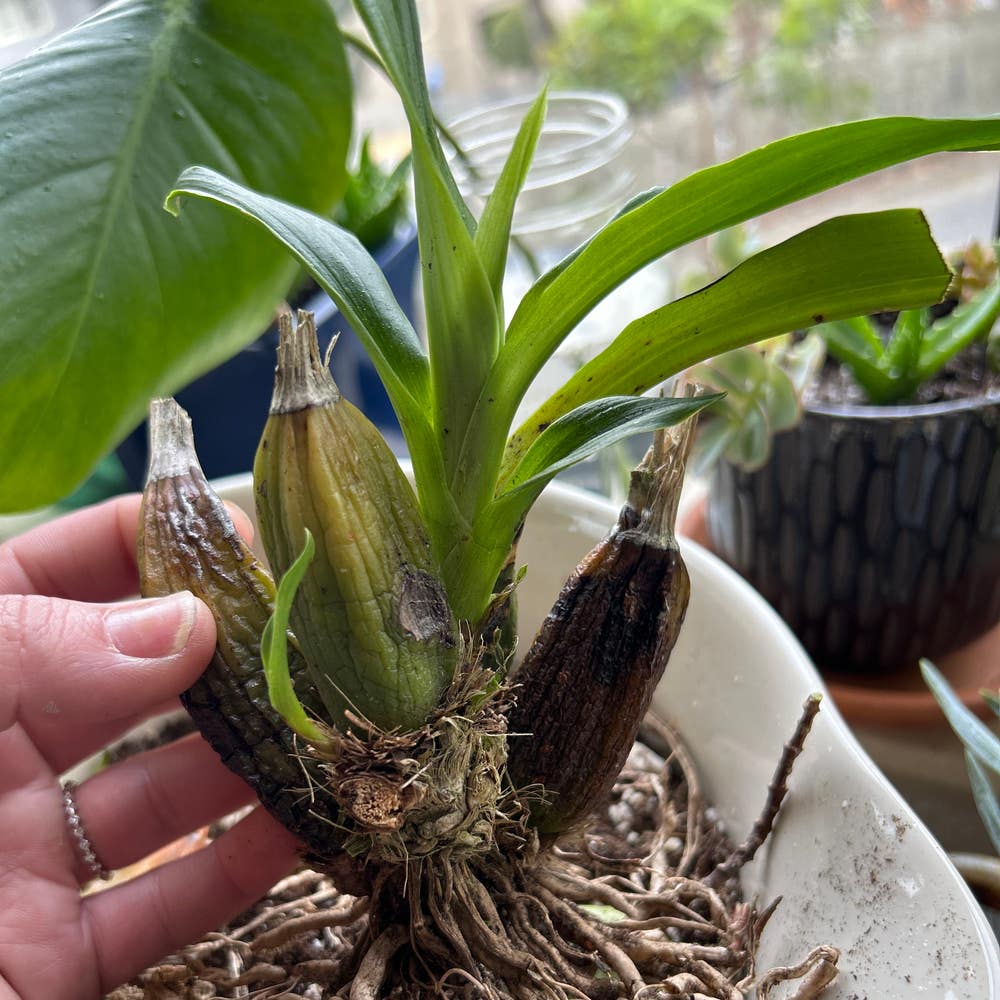
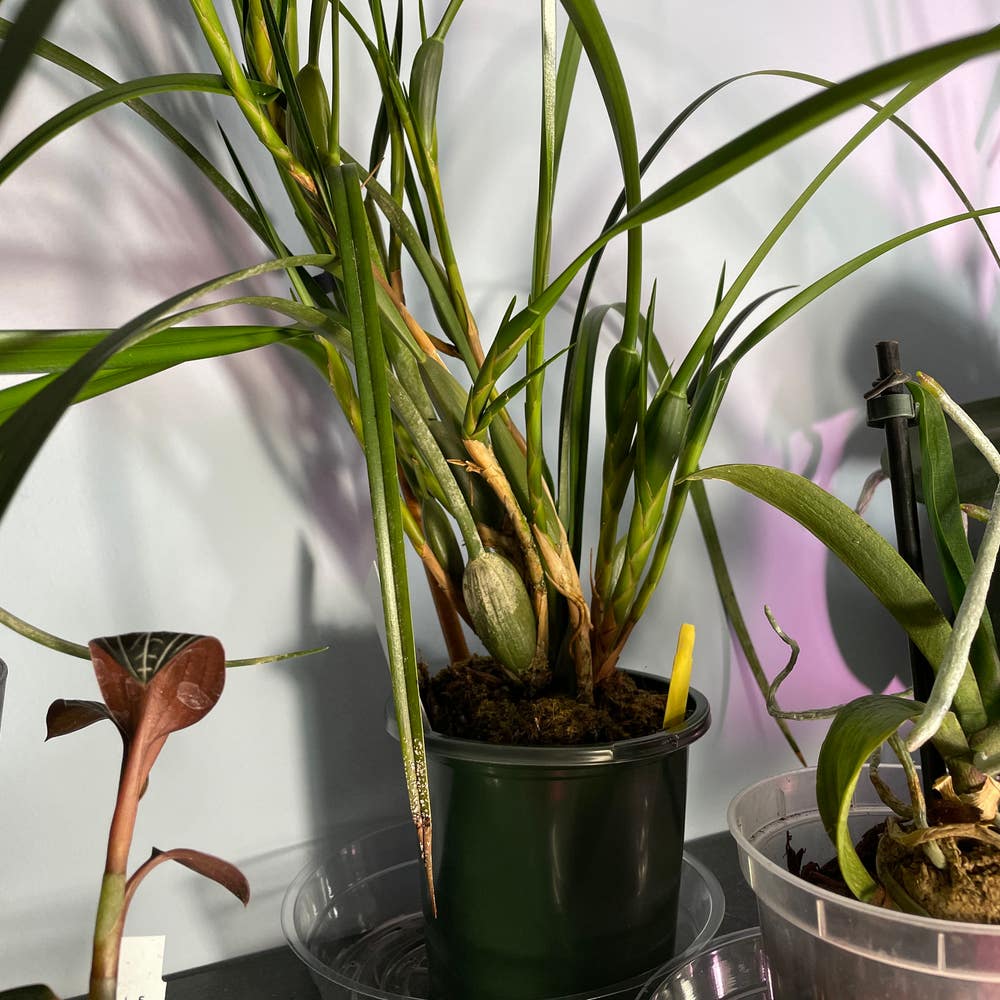
Why Does My Chinese Crown Orchid Have Yellow Leaves?
Eulophia graminea
By the Greg Editorial Team
Jun 18, 2024•3 min read
This article was created with the help of AI so we can cover more plants for you. May contain errors. See one? Report it here.
- Insufficient light and water issues lead to yellow leaves.
- Balanced fertilization and stable temperatures are crucial for orchid health.
- Regular observation and swift action prevent and address yellowing.
Pinpointing the Culprits Behind Yellow Leaves
🌞 Not Enough Sunlight?
- Pale leaves can signal insufficient light. Your Chinese Crown Orchid might be craving more rays.
- Find the sunlight sweet spot where indirect light prevails, avoiding the extremes of shadow and scorch.
💧 Water Woes: Too Much or Too Little
- Overwatering leads to soggy roots and yellowing leaves. It's a common misstep with dire consequences.
- Conversely, underwatering leaves your orchid thirsty, with yellow leaves as a distress call for more water.
🍽️ Hungry for Nutrients
- A nutrient-starved orchid will have leaves that look faded and weak. It's a sign to reevaluate your feeding regimen.
- Balanced fertilization is key, focusing on the specific nutrients your orchid is likely missing.
🌡️ Feeling the Heat or the Chill
- Temperature extremes can cause temperature tantrums in your orchid, manifesting as yellow leaves.
- Aim for ideal temperature ranges to keep your orchid in a state of comfortable equilibrium.

Turning Over a New Leaf: Remedial Actions
💡 Let There Be Light (But Not Too Much)
Adjusting your Chinese Crown Orchid's light exposure is like tweaking a camera lens to get the perfect shot. Bright, indirect light is the sweet spot. Gradually move your orchid closer to a light source, but shield it from the harsh midday sun to prevent leaf scorch. Rotate the plant regularly for even growth.
🚰 Watering Wisdom
Think of watering your orchid as a precision task, not a downpour. Allow the top inch of soil to dry before watering again. This encourages healthy root hydration without the risk of rot. Ensure your potting mix is well-draining and the pot has adequate drainage holes.
🍽️ Nutrient Know-How
Orchids aren't greedy, but they do need their nutrients. A balanced fertilizer designed for orchids can work wonders. Apply it sparingly during the growing season—overfeeding can harm more than help. Remember, less is often more when it comes to fertilization.
🌞 Temperature and Humidity Harmony
Your orchid doesn't want to shiver or sweat. Keep it in a stable environment with temperatures between 65-75°F (18-24°C) and humidity around 40-60%. If your home is dry, a humidity tray or a regular misting can help. Watch out for sudden temperature drops or spikes, which can stress your plant.

Proactive Plant Parenting: Preventing Yellow Leaves
🌱 Establishing a Tailored Care Routine
Prevention beats cure, especially with Chinese Crown Orchids. Consistency is your secret weapon against yellow leaves. Develop a care routine that's as regular as your favorite TV show's weekly episode. This means watering on a schedule, fertilizing with precision, and adjusting for the seasons—less water when it's cooler, more when it's warmer.
🌞 Adjusting care with the seasons: A proactive approach
As seasons shift, so should your orchid care. Think of it as updating your wardrobe for the weather. Winter calls for less watering and fertilizing, while summer might mean stepping up your game. Your orchid's needs change with the temperature and light, so stay on your toes.
👀 Vigilant Observation: The Key to Early Detection
Keep an eye on your orchid like it's the neighbor's puppy you've been trusted to watch. Leaf changes are like subtle hints of what's going on beneath the surface. Catching these early can mean the difference between a quick fix and a full-blown yellow leaf situation.
⚡ Swift action: Responding to the first yellow flags
When you spot the first sign of yellow, act fast. It's not the time to admire the autumnal hue; it's time to troubleshoot. Check for overwatering, underfeeding, or improper light—then correct course. Immediate action can turn things around before your orchid sends out an SOS.

⚠️ Safety First
This content is for general information and may contain errors, omissions, or outdated details. It is not medical, veterinary advice, or an endorsement of therapeutic claims.
Always consult a qualified healthcare professional before using any plant as food, medicine, or supplement.
Never eat any plant (or feed one to pets) without confirming its identity with at least two trusted sources.
If you suspect poisoning, call Poison Control (800) 222-1222, the Pet Poison Helpline (800) 213-6680, or your local emergency service immediately.
Spotted an error? Please report it here.
Banish yellow leaves from your Chinese Crown Orchid by letting Greg tailor 📐 a care plan that adjusts watering and light for vibrant growth!