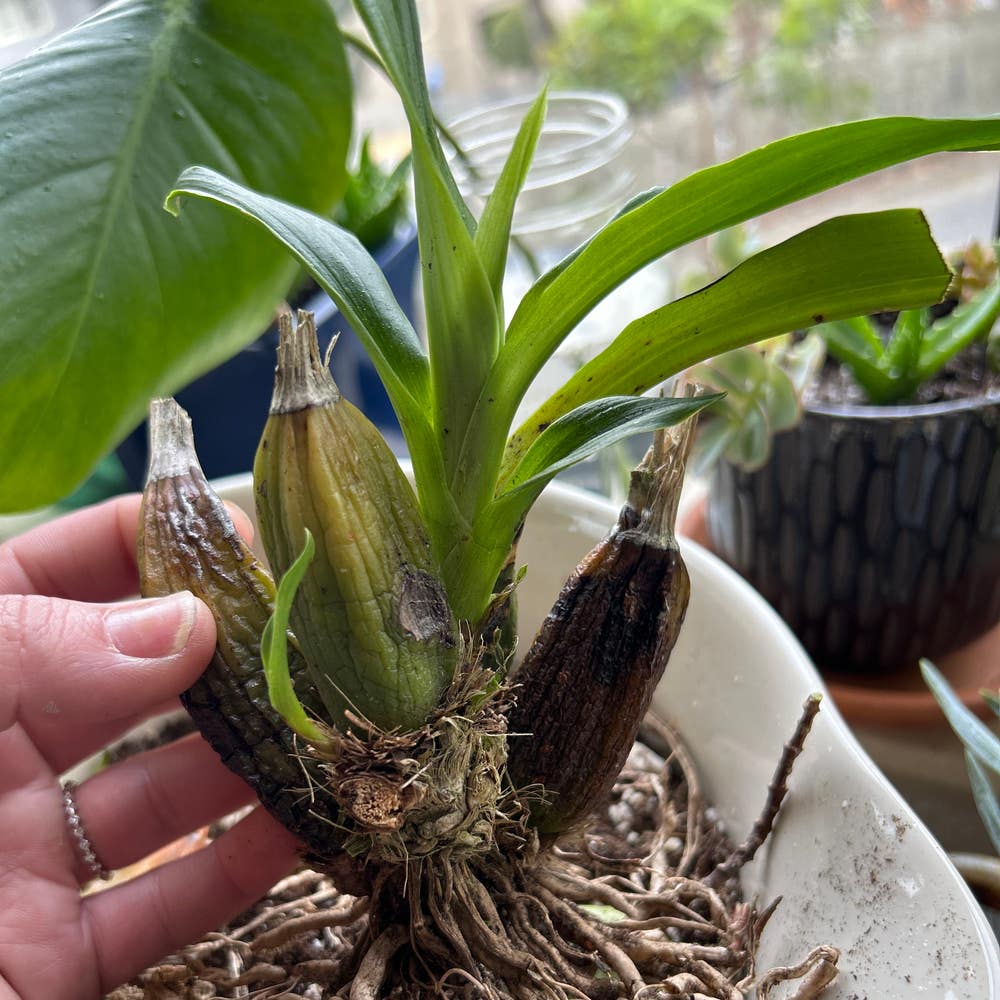
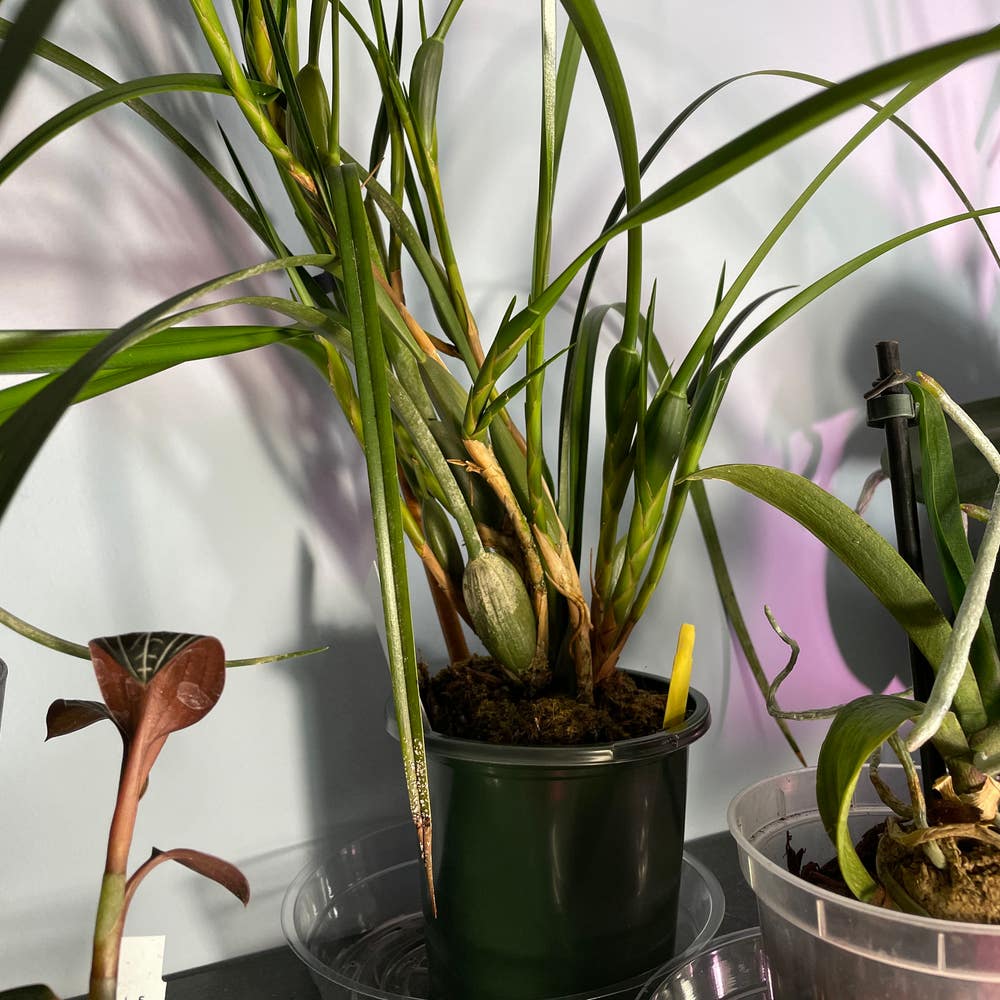
🌞 Does My Chinese Crown Orchid Need Direct Sunlight?
Eulophia graminea
By the Greg Editorial Team
Jun 18, 2024•4 min read
This article was created with the help of AI so we can cover more plants for you. May contain errors. See one? Report it here.
- Indirect sunlight is key for Chinese Crown Orchids, not direct.
- North or East windows preferred for gentle morning light.
- Seasonal adjustments necessary - move orchid as sun path changes.
Sunlight 101 for Your Chinese Crown Orchid
💡 What Direct Sunlight Really Means for Your Orchid
Direct sunlight is the full force of the sun's rays, unfiltered and potent. It's the kind of light that casts sharp shadows and can be too intense for your Chinese Crown Orchid. Indirect sunlight, on the other hand, is gentler, diffused through curtains or bounced off surfaces, providing a softer glow that's more to your orchid's liking.
🧭 The Window Direction Dance: Finding the Perfect Spot
The direction your window faces plays a crucial role in your orchid's well-being. North or East-facing windows are typically best, offering the mild morning light that these plants crave. Hemisphere adjustments are key; if you're in the southern hemisphere, reverse the directions. Remember, the sun's path changes with the seasons, so stay vigilant and ready to shuffle your orchid's position to maintain that sweet spot of sunlight.

When the Sun Shines Too Bright: Protecting Your Orchid
🕶️ Signs Your Orchid Might Be Getting Too Much Sun
Orchids can't speak, but they're not shy about showing distress. Sunburnt leaves with a reddish hue scream 'too much sun!' If you spot pale, bleached areas or crispy edges, your Chinese Crown Orchid is waving a white flag. Dark, limp foliage? That's a sign of light deprivation, but that's a story for another day.
🌞 Cool Shades and Other Sun Shields
Your orchid's delicate beauty demands a gentle touch with sunlight. Think of sheer curtains as sunglasses for your plant, softening harsh rays. An east-facing window offers a sweet spot of morning light without the midday glare. If the sun insists on a staring contest, consider moving your orchid to a less intense location or using a light-diffusing film. Remember, the sun plays a seasonal game of tag—stay vigilant and shuffle your orchid around as needed.

The Balancing Act: Light and Other Comfort Factors
🌞 Temperature and Humidity: The Sun's Sidekicks
Light, temperature, and humidity form a trio that can make or break your Chinese Crown Orchid's health. Bright, indirect sunlight pairs with temperatures of 60°F to 75°F (15°C to 24°C) to create a cozy environment. Humidity should be moderate, mimicking the orchid's native subtropical habitat. Too dry, and your orchid might start shedding tears in the form of wilted leaves. Too moist, and you're in a fungal fiesta territory.
🌸 Seasonal Sun Shifts: Adapting Through the Year
As the Earth tilts and twirls, the sunlight streaming through your window changes its tune. Winter may mean cozying up your orchid closer to the light, while summer demands a retreat to shadier grounds. It's a seasonal shuffle that requires keen observation and timely tweaks to your orchid's placement. Remember, consistency is key, but so is flexibility—like a yoga instructor for plant care.

The Ultimate Light Recipe for Chinese Crown Orchid Bliss
💡 Crafting the Perfect Light Environment
Finding the sweet spot for your Chinese Crown Orchid's light needs is less about luck and more about strategy. Bright, indirect light is the gold standard—think of a spot near a window where the sun's rays never directly hit the leaves. A sheer curtain can be a game-changer, diffusing harsh sunlight into a gentle glow that your orchid will love.
💡 When to Consider Artificial Sunshine
If your home is more dungeon than sunroom, don't despair. Grow lights are your ally in the quest for orchid bliss. LEDs or fluorescents? Both can work wonders, but LEDs are the energy-efficient choice. Remember, it's not just about making up for the lack of sunlight; it's about crafting a consistent light source that mimics the natural day cycle. Keep an eye out for signs of light deprivation—slow growth, no blooms—and be ready to flip the switch on some artificial rays.
⚠️ Safety First
This content is for general information and may contain errors, omissions, or outdated details. It is not medical, veterinary advice, or an endorsement of therapeutic claims.
Always consult a qualified healthcare professional before using any plant as food, medicine, or supplement.
Never eat any plant (or feed one to pets) without confirming its identity with at least two trusted sources.
If you suspect poisoning, call Poison Control (800) 222-1222, the Pet Poison Helpline (800) 213-6680, or your local emergency service immediately.
Spotted an error? Please report it here.
Let your Chinese Crown Orchid flourish in just the right light by relying on Greg to track 🌤 seasonal sunlight changes and tailor your plant's care routine.