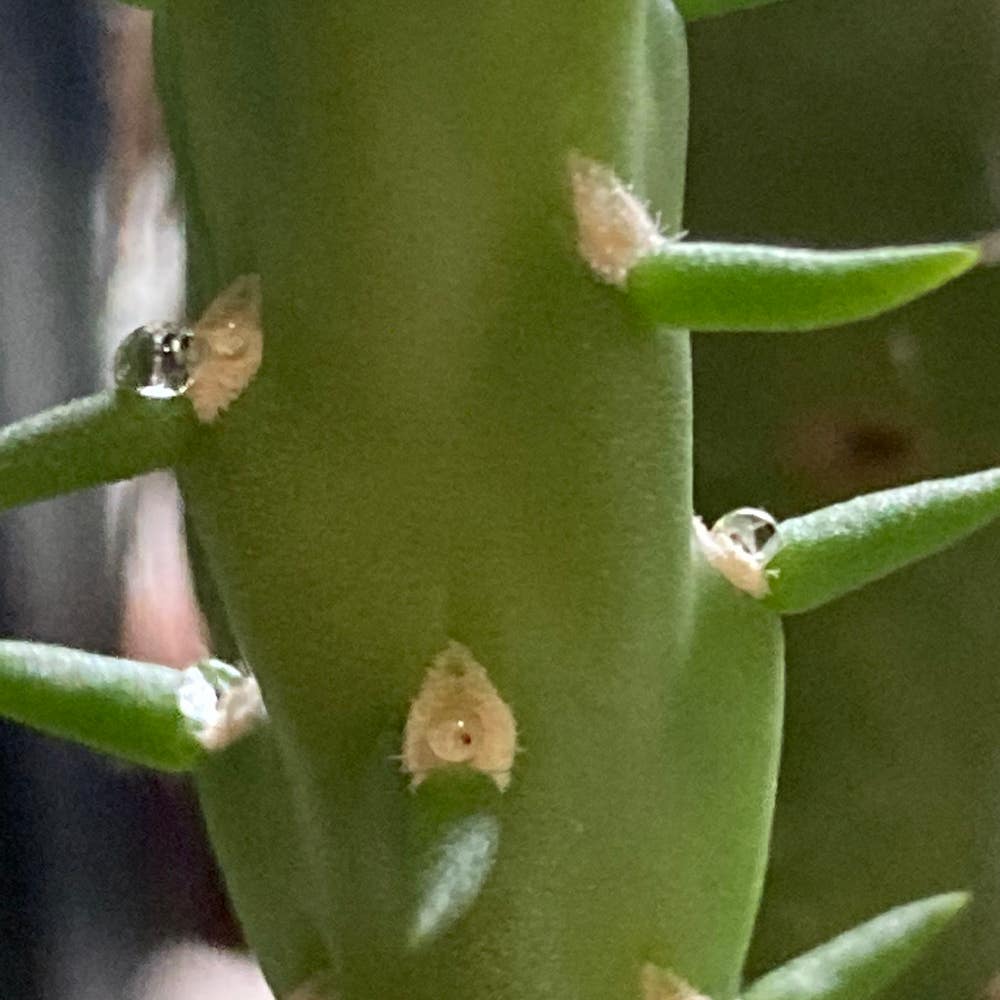
Why Are My Silver Cholla Leaves Dropping?
Cylindropuntia echinocarpa
By the Greg Editorial Team
Apr 24, 2024•4 min read
This article was created with the help of AI so we can cover more plants for you. May contain errors. See one? Report it here.
Halt your Silver Cholla's SOS 🌵 by cracking the code on its leaf-dropping distress!
- Leaf drop signals distress; isolate and check for pests immediately.
- 🌵 Overwatering and underwatering can both cause leaf loss in Silver Cholla.
- Consistent temperature, light, and airflow are key to preventing leaf drop.
Spotting the Signs: When Your Silver Cholla is Unhappy
🍂 Recognizing Leaf Drop in Silver Cholla
Leaf drop in Silver Cholla can be as subtle as a whisper or as loud as a shout. Normal shedding is like your plant's version of light housekeeping, but a sudden leaf landslide is a distress signal. Look for leaves that detach too easily, or display discoloration and spots. These aren't just quirky plant habits; they're cries for help.
🚨 Immediate Steps to Take
When your Silver Cholla starts dropping leaves like it's in a race to get naked, it's time to act. First, isolate the plant to prevent potential spread of disease. Next, check for pests; these little critters can be the ninjas of the plant world—stealthy and damaging. Finally, assess the watering schedule and ensure it's not drowning in love or parched from neglect.
Water Woes: Walking the Fine Line
🌊 Overwatering: The Silent Killer
Overwatering your Silver Cholla is like giving it too much of a good thing—it can't handle the excess. Yellowing leaves and a funky smell from the soil are distress signals. The roots suffocate in overly moist conditions, leading to root rot. This is a common mistake for those who equate more water with more care.
💧 The Thirsty Cactus: Underwatering Issues
Conversely, a Silver Cholla with leaves curling upwards is a plant in survival mode. It's trying to minimize water loss. Touch the soil; if it's as dry as a bone, it's time to water. But don't just drench it—aim for moist, not soggy, soil. Remember, your cactus's health hinges on this hydration balance.
Environmental Stress: Keeping Your Cool (and Warmth)
🌡️ Temperature Tantrums
Extreme temperature shifts are trouble for Silver Cholla. Heat stress causes leaves to curl, attempting to shield themselves from the sun's intensity. Conversely, cold stress can leave leaves wilted and discolored. To prevent this, maintain a consistent temperature. Avoid placing your Cholla near heaters or air conditioners, as these create unpredictable microclimates.
💡 Light and Airflow: The Balancing Act
Your Silver Cholla needs a Goldilocks zone of light—not too much, not too little. Bright, indirect sunlight is ideal. If using artificial light, adjust the distance and duration carefully. Airflow is also crucial; ensure good circulation without exposing your plant to harsh drafts. This balance helps prevent leaf drop and keeps your Cholla standing tall and healthy.
Root of the Matter: Soil and Root Health
🕵️ Checking In on the Roots
Root inspections are the undercover work of plant care. Gently remove your Silver Cholla from its pot to check the roots. They should be firm and white, not soft, brown, or black. Mushy roots are a distress signal, indicating potential rot.
💧 Soil Solutions
Soil composition is crucial. A well-draining mix is like the Cholla's best friend, preventing root rot. Create your own mix with sand, perlite, and peat moss, or opt for a commercial cactus mix.
- Organic matter like compost can enrich the soil, but don't overdo it. Your Cholla isn't a fan of soggy feet.
- Coco coir and bark can help maintain the right moisture balance, especially in drier climates.
- Drainage isn't just about the soil. Ensure your pot has holes and consider a layer of pebbles at the bottom to keep water from pooling.
- Pot size matters. Too big, and the soil stays wet too long; too small, and the roots can't breathe. Go for a pot that's just right.
Regularly reassess the soil pH and electrical conductivity (EC) to keep the nutrient game strong. If you suspect root issues, don't hesitate to unpot, trim the affected roots, and repot in fresh soil. Remember, the right soil mix isn't just dirt; it's your Cholla's life support system.
⚠️ Safety First
This content is for general information and may contain errors, omissions, or outdated details. It is not medical, veterinary advice, or an endorsement of therapeutic claims.
Always consult a qualified healthcare professional before using any plant as food, medicine, or supplement.
Never eat any plant (or feed one to pets) without confirming its identity with at least two trusted sources.
If you suspect poisoning, call Poison Control (800) 222-1222, the Pet Poison Helpline (800) 213-6680, or your local emergency service immediately.
Spotted an error? Please report it here.
Ensure your Silver Cholla stays thriving 🍂 with Greg's tailored watering reminders, safeguarding against the stressors that cause leaf drop.