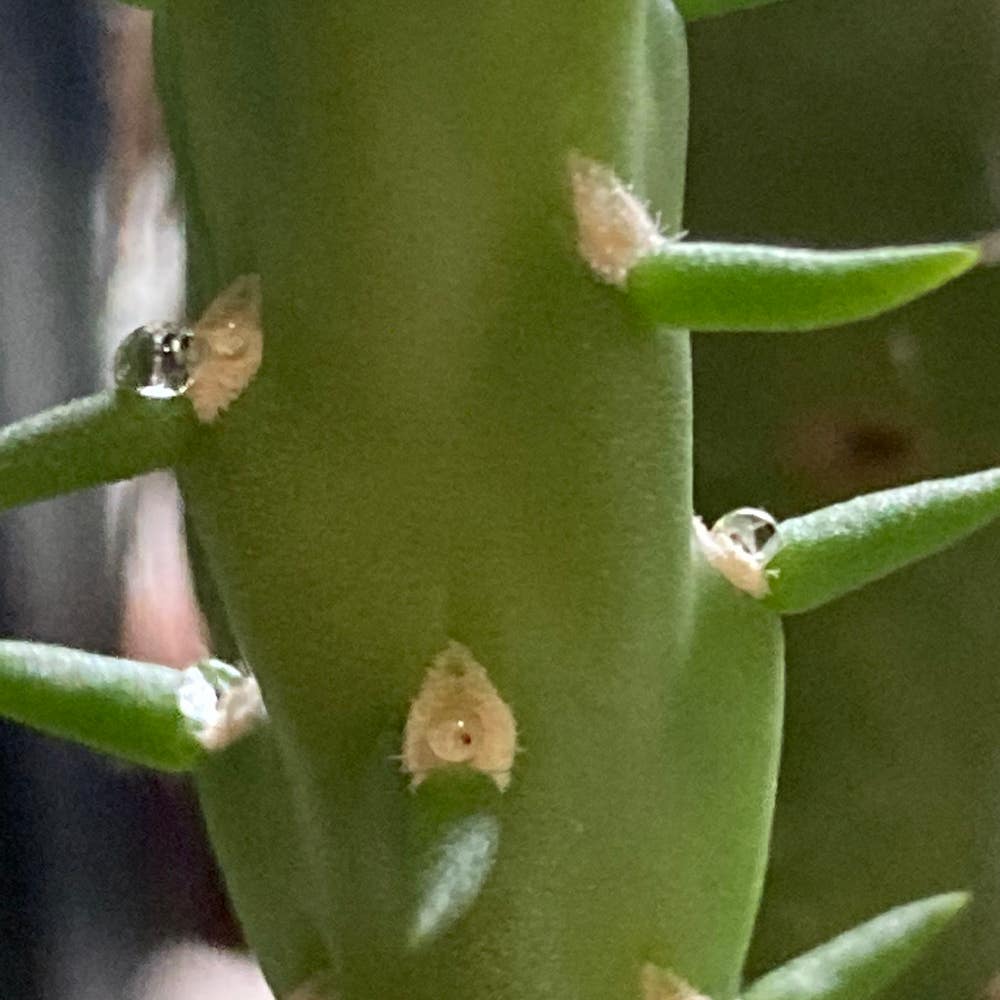
Best Humidity Levels for Silver Cholla
Cylindropuntia echinocarpa
By the Greg Editorial Team
Jul 21, 2024•5 min read
This article was created with the help of AI so we can cover more plants for you. May contain errors. See one? Report it here.
Elevate your plant game 🌵 by syncing your home's humidity with Silver Cholla's desert vibe for thriving cacti.
- 🌵 Silver Cholla prefers 20-50% humidity, reflecting its desert origins.
- 🌡️ Use a hygrometer to monitor and adjust your cactus's environment.
- ⚖️ Balance is key: avoid over-humidification and under-humidification with careful monitoring.
Silver Cholla Humidity Basics
Silver Cholla cacti are native to arid environments, where the air is dry and the rainfall is minimal. These conditions have shaped their unique adaptations, allowing them to thrive with low humidity levels. When caring for Silver Cholla indoors, it's essential to mimic these desert-like conditions to maintain their health.
💧 Relative Humidity for Silver Cholla
Relative humidity is the amount of water vapor present in the air, expressed as a percentage of the maximum amount the air can hold at a given temperature. For Silver Cholla, the ideal relative humidity range is on the lower end, reflecting its desert heritage. To keep tabs on your indoor humidity levels:
- Use a hygrometer to measure the relative humidity near your Silver Cholla.
- Aim to maintain a humidity level between 20-50%, which is comfortable for these cacti.
- Regularly check the hygrometer to ensure the environment remains consistent with the Silver Cholla's needs.
Assessing Your Local Humidity
Determining if your indoor humidity is a match for Silver Cholla's needs starts with a simple tool: the hygrometer. This device will reveal the moisture levels in your home, essential for tailoring your plant care.
- Place the hygrometer near your Silver Cholla, avoiding direct sunlight and drafts that could skew the reading.
- Take multiple readings throughout the day to understand the fluctuation in humidity levels.
- Compare readings from different rooms to find the best spot for your plant.
🌵 Adjusting to Silver Cholla's Needs
Once you've got a bead on your local humidity, it's time to adjust your care routine. Silver Cholla thrives in arid conditions, so your goal is to mimic its natural desert habitat.
- If the air is too dry, consider a pebble tray or occasional misting to gently increase humidity.
- Conversely, if the air is too moist, enhance ventilation or use a dehumidifier to protect your cactus from excess moisture.
- Keep in mind that temperature can influence humidity, so maintain a warm environment to prevent condensation and moisture buildup.
Increasing Humidity for Silver Cholla
Silver Cholla cacti, hailing from arid environments, may occasionally need a humidity boost, especially in artificially heated or air-conditioned homes that can be drier than their natural habitat. To gently increase humidity:
- Use a pebble tray: Place a tray filled with pebbles and water beneath the plant's pot, ensuring the pot is not submerged in water. The evaporation will increase the humidity around the plant.
- Occasional misting: Lightly spritz the Silver Cholla with water to provide a temporary humidity increase. Be cautious not to overdo it, as the plant is not accustomed to high moisture levels.
Avoiding Over-Humidification
While increasing humidity can be beneficial, it's crucial to avoid over-humidification, which can lead to health issues for the Silver Cholla. Watch for these signs:
- Soft, mushy stems or black spots indicate too much moisture.
- A musty smell or visible mold growth suggests excessive humidity.
To maintain a balanced environment:
- Ensure good air circulation around the plant to prevent stagnant, overly moist air.
- Use humidity-increasing methods sparingly and monitor the plant's response to avoid creating a habitat conducive to fungal growth.
Lowering Humidity for Silver Cholla
Silver Cholla thrives in arid conditions, so when indoor humidity climbs too high, it's time for intervention. Look out for signs like mold growth or a general softness in the plant's tissue—these are distress signals.
- Use a dehumidifier to actively reduce moisture levels in the air.
- Improve ventilation by opening windows or using fans to circulate air and prevent stagnation.
- Consider relocating your Silver Cholla to a room with better airflow or lower natural humidity.
🌵 Preventing Under-Humidification
While Silver Cholla is a desert plant, extremely low humidity can still cause stress. Watch for symptoms such as shriveled appearance and crispy leaves, which indicate the air may be too dry.
- Place a shallow water tray near the plant to introduce a slight increase in ambient moisture.
- Grouping plants together can create a microclimate with slightly higher humidity.
- If the air is excessively dry, a light misting can temporarily boost humidity, but do so sparingly to avoid over-humidification.
Maintaining Ideal Humidity
Maintaining the right humidity for Silver Cholla isn't just a one-time setup; it's an ongoing dialogue with your plant. Here's a quick refresher on the essentials:
- Silver Cholla thrives in low humidity, mirroring its desert origins.
- Use a hygrometer to keep tabs on the humidity levels around your plant.
- Adjust your care routine as needed, based on the readings you get.
Monitoring is key. Just like a chef tastes their dish throughout cooking, keep tasting the air for your Silver Cholla.
🎧 Final Tips and Reminders
Remember, the importance of humidity for your Silver Cholla can't be overstated. It's the silent factor that can make or break your plant's well-being. Here's what to keep in mind:
- Stay vigilant and responsive to the hygrometer's tale.
- Grouping plants or using a pebble tray can subtly boost humidity if needed.
- Ensure good air circulation to prevent over-humidification.
Think of yourself as a plant DJ, adjusting the humidity levels to keep the vibe right for your Silver Cholla to party on.
⚠️ Safety First
This content is for general information and may contain errors, omissions, or outdated details. It is not medical, veterinary advice, or an endorsement of therapeutic claims.
Always consult a qualified healthcare professional before using any plant as food, medicine, or supplement.
Never eat any plant (or feed one to pets) without confirming its identity with at least two trusted sources.
If you suspect poisoning, call Poison Control (800) 222-1222, the Pet Poison Helpline (800) 213-6680, or your local emergency service immediately.
Spotted an error? Please report it here.
Turn into a plant DJ 🎚️ for your Silver Cholla by letting Greg fine-tune the perfect desert ambiance with tailored humidity alerts.