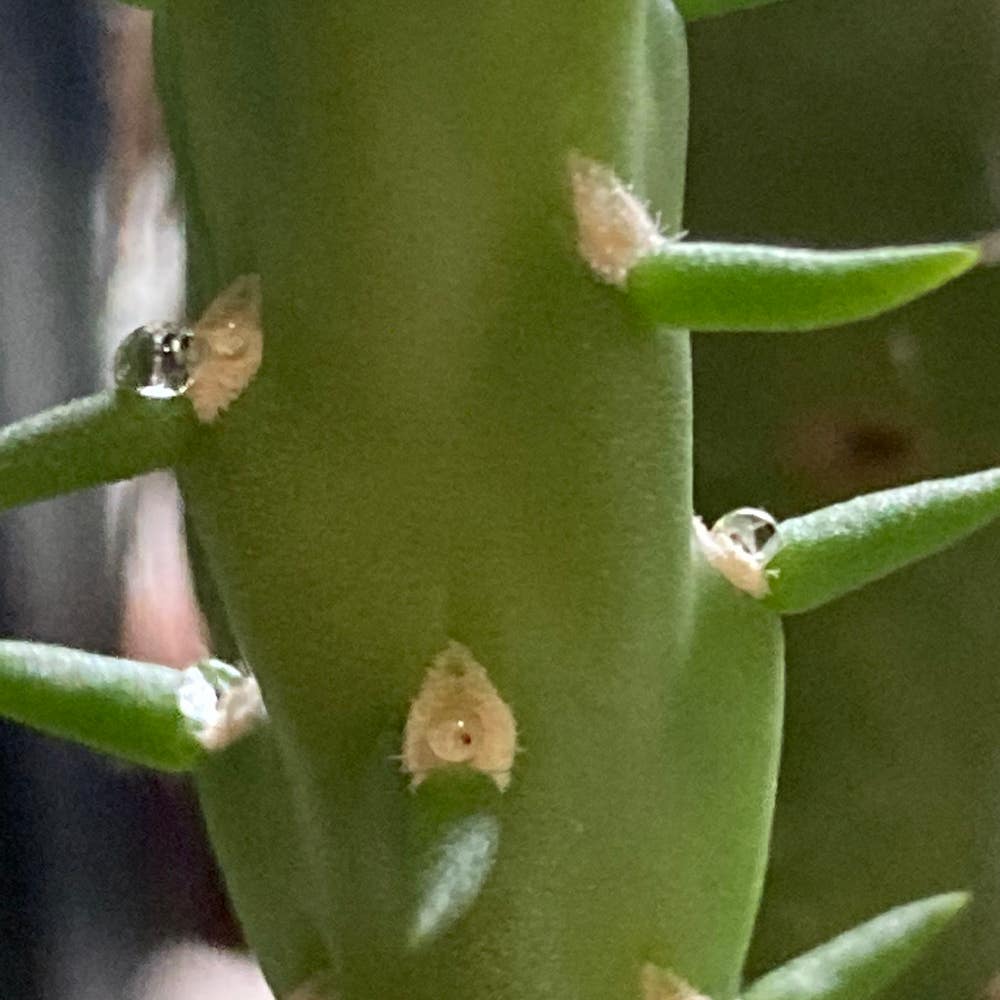
What Are The Bugs on My Silver Cholla? 🐞
Cylindropuntia echinocarpa
By the Greg Editorial Team
Apr 24, 2024•3 min read
This article was created with the help of AI so we can cover more plants for you. May contain errors. See one? Report it here.
Protect your Silver Cholla's beauty 🌵 from destructive pests with expert-recommended defense tactics!
- 🕷️ Spider mites and mealybugs: Combat with neem oil or alcohol.
- Scale and soil lurkers: Remove with alcohol swabs, horticultural oil, or dry soil.
- Early detection and quarantine: Key strategies for pest-free Silver Cholla.
Meet the Usual Suspects: Common Silver Cholla Pests
🕷️ Spider Mites: The Sneaky Sap-Suckers
Webbing on your Silver Cholla? You've got spider mites. These tiny terrors sap the life out of your plant.
- Fight back with neem oil or insecticidal soap. Hit the undersides of leaves where they party.
- Keep them away with regular misting and by giving new plants a time-out before joining the gang.
⚖️ Scale: The Sticky Bandits
Notice waxy covers on stems? Scale insects are mooching off your Silver Cholla.
- Fight back by swabbing with alcohol or dousing them in horticultural oil.
- Keep them away with routine pruning and health checks. Vigilance is your best defense.
🦟 Fungus Gnats and Fruit Flies: The Soil Lurkers
Tiny flies around your plant? The soil's a nursery for fungus gnats and fruit flies.
- Fight back with a one-two punch of hydrogen peroxide and sticky traps.
- Keep them away by letting the soil dry out a bit between waterings. Overloving with water is a no-no.
🐛 Mealybugs: The Fluffy Invaders
White cottony clusters are a dead giveaway for mealybugs. These fluffy fiends are bad news.
- Fight back with a dab of alcohol or a splash of neem oil.
- Keep them away by quarantining new plants and keeping things clean. Don't let your guard down.
Other Uninvited Guests
🐞 Aphids, Thrips, and Whiteflies: More Pests on the Radar
Aphids: These clingy critters love to throw a party on new growth, flaunting their green or black bodies. Spot them by their love for gossip, leaving sticky honeydew that leads to sooty mold. Blast them with a water jet or dab with alcohol to break up the shindig.
Thrips: These are the stealthy infiltrators, leaving behind a trail of silvery streaks and black specks. Catch them hiding in buds or between leaves. Combat them with neem oil or insecticidal soap, and don't hesitate to prune affected areas.
Whiteflies: The surprise guests that flutter up in a cloud when you're least expecting it. Find them by the sticky honeydew they leave behind. Trap them with yellow sticky traps or show them the door with neem oil.
Prevention: It's all about the vigilance—inspect regularly and isolate new plants. Keep it clean; don't let dead leaves become a buffet. Circulate air; pests hate a breeze. And remember, ladybugs are the bouncers you want on your side.
When Bugs Strike: Effective Response Strategies
🔍 Early Detection: The Key to Control
Inspecting your Silver Cholla for pests is like playing detective in your own garden. Look for webbing, stickiness, or unusual leaf damage. These are the tell-tale signs that something's amiss. Catching these early is the equivalent of nipping trouble in the bud.
🚨 Immediate Action: Quarantine and Treatment
Isolate the affected Silver Cholla pronto. It's like putting up a "Do Not Disturb" sign to keep the pests from partying on your other plants. Once quarantined, assess whether you're dealing with a minor annoyance or a full-scale invasion.
Organic treatments like neem oil or insecticidal soap can be your first line of defense. They're like the neighborhood watch for your plants—keeping an eye out and acting when trouble shows up. But if the bugs laugh off your organic efforts, it's time to bring out the big guns.
Chemical treatments should be your last resort. Use them with the precision of a sniper—targeted and sparingly. Overuse is not just overkill; it's a fast track to resistant superbugs. Remember, the label is your playbook—follow it to a T.
⚠️ Safety First
This content is for general information and may contain errors, omissions, or outdated details. It is not medical, veterinary advice, or an endorsement of therapeutic claims.
Always consult a qualified healthcare professional before using any plant as food, medicine, or supplement.
Never eat any plant (or feed one to pets) without confirming its identity with at least two trusted sources.
If you suspect poisoning, call Poison Control (800) 222-1222, the Pet Poison Helpline (800) 213-6680, or your local emergency service immediately.
Spotted an error? Please report it here.
Eradicate pests from your Silver Cholla with organic treatments 🌿 and rely on Greg to schedule your plant's defense strategy!