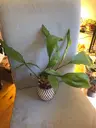
Strobilanthes bilabiata
Taxonomy

Strobilanthes bilabiata
Strobilanthes
Acanthaceae
Lamiales

How to care for Strobilanthes bilabiata
How often to water your Strobilanthes bilabiata

every 9
Strobilanthes bilabiata needs 0.5 cups of water every 9 when it doesn’t get direct sunlight and is potted in a 5" pot.
Use our water calculator to personalize watering recommendations to your environment or download Greg for more advanced recommendations for all of your plants.
Water 0.5 cups every
9
Finding light for Strobilanthes bilabiata in your home

a window
Strobilanthes bilabiata may have difficulty thriving, and will drop leaves 🍃, without ample sunlight.
Place it less than 3 feet from a south-facing window to maximize the potential for growth.
Select your region to see how the current weather in your area affects the placement of Strobilanthes bilabiata in your home 🏡.
How to fertilize Strobilanthes bilabiata

Most potting soils come with ample nutrients which plants use to produce new growth.
By the time your plant has depleted the nutrients in its soil it’s likely grown enough to need a larger pot anyway.
To replenish this plant's nutrients, repot your Strobilanthes bilabiata after it doubles in size or once a year—whichever comes first.
-
Here is my regrown Persian shield plant. In February, it was eaten down to a nub by a rat. This is one of my favorite plants and needlessly to say I was pretty upset when I saw it. There was actually nothing left except a half an inch and a couple small leaves. I’ve been working for months on this plant in order to get it to come back. It’s doing very well. This is the same plant that was in the blue pot in my oasis. That was prior to the rat, eating it. Now it’s doing great. #HappyPlants #PlantsMakePeopleHappy #PlantAddict #NewGrowth #NewPlantMom #SucculentLove #RarePlants #PropagationStation @AdonicKohleria2 @BabeVila @BuffCaperspurge @DreamMachine @FamedGymealily @HFplantoasis @princesspitstop #OutdoorGrowing @GreatestYuzu9 @MamaLinne
-
Just posting to share my pride and joy, I've had it since Dec 2021, it is my first success story and kicked off a mild addiction, lol. This Dragon's Tongue survived a whole year of not enough light before I moved it and it took off like crazy. I call it my Drama Llama because it's grown so fast it has often suffered from bound roots making it VERY dramatic if not watered every few days. I repotted the goofy thing TWICE last year. It's currently in an 8in and happy. Apparently happy enough I've got a little white flower bud! #happyplants
-
Waffle plant watering. Do you trust the app for your watering needs? My waffle plants seems very crunchy. It’s a new plant to me so I’m not sure. I’ve read that it’s best to keep the soil moist but I believe this app is saying wait 7 days between watering. What do you think?
-
@
-
Rescued this looked over beauty at Lowe’s. Got $4.50 off for the crispy leaves. I was planning on repotting it, but what else should I know? #WafflePlant #RescuePlants #HappyPlants #PlantsMakePeopleHappy
-
What is this plant? I rescued this plant from the clearance rack at Home Depot. It did not have a tag in it so I have no idea what it is. Greg says it’s a New Guinea impatiens but I don’t think it looks exactly like those. ChatGPT says it’s a young Persian shield. I’m honestly confused and have no guess as to what it is. Does anyone have any idea? #PlantID
-
This little lady is so delicate! If i miss one day of morning misting, she is down and droopy by late afternoon. Any tips on how to keep her up. #DramaticPlants #StrobilanthesDyeriana
-
can I save my plant, its on it's last leafs #StrobilanthesDyeriana
-
What happened she died in only 4days…. #WafflePlant
-
How to encourage branching? #StrobilanthesDyeriana I just got this plant I am curious on how to encourage branching to make it fuller? Does it branch on its own over time or will I need to prune to encourage it to branch out?


Care Summary for Strobilanthes bilabiata
Strobilanthes bilabiata
 Greg recommends:
 Water
Water
0.5 cups every 9 days
 Placement
< 3ft from a window
 Nutrients
Repot after 2x growth
Based on the 4” pot your plant is in, and that it doesn’t get direct sunlight.
 Trending in your area














 Similar to Strobilanthes bilabiata

✨ Discover rare plants

Milky Widow's Thrill

Haworthia emelyae com…

Variegated Arrowhead …

Bonsai Crassula

Echeveria 'Joan Danie…

Peperomia 'Harmony's …
Graptopetalum 'Marqui…

Thelocactus macdowell…

Euphorbia

Hoya pottsii 'Khao Ya…

Begonia hydrocotylifo…

Black Monkey Thorn Tr…
Philodendron 'Rio'

Cleistocactus icosago…
Hoya 'Memoria'

Munstead Lavender

Royal Flush Split Rock