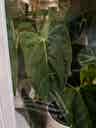
Streptocarpus linguatus
Taxonomy

Streptocarpus linguatus
Streptocarpus
Gesneriaceae
Lamiales

How to care for Streptocarpus linguatus
How often to water your Streptocarpus linguatus

every 9
Streptocarpus linguatus needs 0.5 cups of water every 9 when it doesn’t get direct sunlight and is potted in a 5" pot.
Use our water calculator to personalize watering recommendations to your environment or download Greg for more advanced recommendations for all of your plants.
Water 0.5 cups every
9
Finding light for Streptocarpus linguatus in your home

a window
Streptocarpus linguatus may have difficulty thriving, and will drop leaves 🍃, without ample sunlight.
Place it less than 3 feet from a south-facing window to maximize the potential for growth.
Select your region to see how the current weather in your area affects the placement of Streptocarpus linguatus in your home 🏡.
How to fertilize Streptocarpus linguatus

Most potting soils come with ample nutrients which plants use to produce new growth.
By the time your plant has depleted the nutrients in its soil it’s likely grown enough to need a larger pot anyway.
To replenish this plant's nutrients, repot your Streptocarpus linguatus after it doubles in size or once a year—whichever comes first.
-
How should I take care of dying blooms
-
Is it OK to keep it in a plastic pot or do I need to re-pot this plant? If yes, what kind of pot is better? Thanks! #KenyanViolet
-
Should I remove the dead flowers? #KenyanViolet
-
What's the best way to get your african violet to flower I have had this African Violet for about a year it was a one leaf cutting its never flowered and it's in a chunky soil mix and in a self watering pot and it's under a grow light for 12 hours, about 2 feet away from the grow light
-
African violet 🤍 My favorite beauty, the African violet named Ophelia, is an uncommon one because she is actually white while most are purple or even pink! I love her dearly but was shocked and disappointed when I found out that she had a minor case of root rot! I found a solution, though it will be hard for her to recover. I had to cut off two flowers and all the buds and leaves that had gotten the sickness. Later on, I had to cut off another flower, leaving her with only one. I put her in a bag as a ‘humidity dome’. She is fighting and is now working on growing some flowers back! I’m so proud of her for surviving through these tough times and still having one flower! Before and after. Pics below! ⬇️ #TheWateringHole #RootRot #AfricanViolet
-
pots Just bought a kenyan violet yesterday and have no idea which pot is best for it?? im very new to all this so please let me know!! will saucer pots be good for it? #NewPlantMom
-
Should I go ahead and plant this or is there not enough roots? #KenyanViolet
-
African Violet!! The flowers have been falling a bit, but I water her enough! Why is this? How can I get my flowers strong and healthy and happy again? #AfricanViolet #StrongPlants
-
Cajun popcorn Kenyan Violet #africanviolet Just wondering if this should be in a larger pot. The new leaves are so compact in the center. I have never had this type of variegated African Violet before so I am not sure if this is how they grow or not. It is in a 4" ceramic pot, unglazed. It is very healthy, and growing.
-
My violet just grows leaves i love him but will he ever bloom again ;--;.. He bloomed once when i got him a while ago but now has just been chilling and spitting littke leaves out lol. Is he happy? #africanviolet


Care Summary for Streptocarpus linguatus
Streptocarpus linguatus
 Greg recommends:
 Water
Water
0.5 cups every 9 days
 Placement
< 3ft from a window
 Nutrients
Repot after 2x growth
Based on the 4” pot your plant is in, and that it doesn’t get direct sunlight.
 Trending in your area








 Similar to Streptocarpus linguatus
✨ Discover rare plants

Euphorbia baioensis
Ace of Spades

Stomatium acutifolium

Anastasia Weeping Fig

Rhipsalis clavata

Aloe 'Lavender Star'

Peperomia 'Harmony's …
Astroloba congesta

Variegated Arrowhead …

Christmas Candle

Scindapsus pictus 'Si…

Hoya pottsii 'Khao Ya…

Pink Ruby Sedevaria
Hoya crassipetiolata

Royal Flush Split Rock

Betel

Ruby Ball