
Florida Betony
About Florida Betony
Florida Betony is a super rare houseplant 🌿 that is isn’t challenging to grow and needs regular watering to thrive. They do best in long-lasting, direct light ☀️ and should be less than 1 foot from a window.
Florida Betony likes soil that is well draining. Your plant shouldn't need added fertilizers if you repot each time it doubles in size.
Florida Betony belongs to the Stachys genus, and is native to Florida.
Taxonomy

Stachys floridana
Stachys
Lamiaceae
Lamiales
Also known as
Florida betony, Florida hedgenettle, rattlesnake weed and wild artichoke

How to care for Florida Betony
How often to water your Florida Betony

every 9
Florida Betony needs 0.5 cups of water every 9 when it doesn’t get direct sunlight and is potted in a 5" pot.
Use our water calculator to personalize watering recommendations to your environment or download Greg for more advanced recommendations for all of your plants.
Water 0.5 cups every
9
Finding light for Florida Betony in your home

a window
Florida Betony love being close to bright, sunny windows 😎.
Place it less than 1ft from a south-facing window to maximize the potential for growth.
Florida Betony does not tolerate low-light 🚫.
Select your region to see how the current weather in your area affects the placement of Florida Betony in your home 🏡.
How to fertilize Florida Betony

Most potting soils come with ample nutrients which plants use to produce new growth.
By the time your plant has depleted the nutrients in its soil it’s likely grown enough to need a larger pot anyway.
To replenish this plant's nutrients, repot your Florida Betony after it doubles in size or once a year—whichever comes first.
-
what is wrong with my lambs ear?
-
So heii it's 6 in the morning I wake up and go straight to take my dog out so it can pee and when I m back I see something I didn't want to see. My plant was on the ground 😭.At first I thought it t was Alexa's doing she my dog but when I took a closer look it looked kinda fishy . U see the stem exactly above the soil were being eaten by something,a bug(?). I have attached it's photo. I quickly took out the plant (there were also small babies) and started searching for more bug 🐛 and there were several of them . I Donno what to do It's been like 4 days since I brought it out hoping for more sunlight and this happens. If you've experienced similar problem let me know what you did🥲 #plantlove #planteatingbugs #carehelp
-
What plant is this? I found this plant beside a dumpster and took it Home, But i dont know how to care for it and its getting worse. Greg says its a Silver Ragwort but I’m not convinced
-
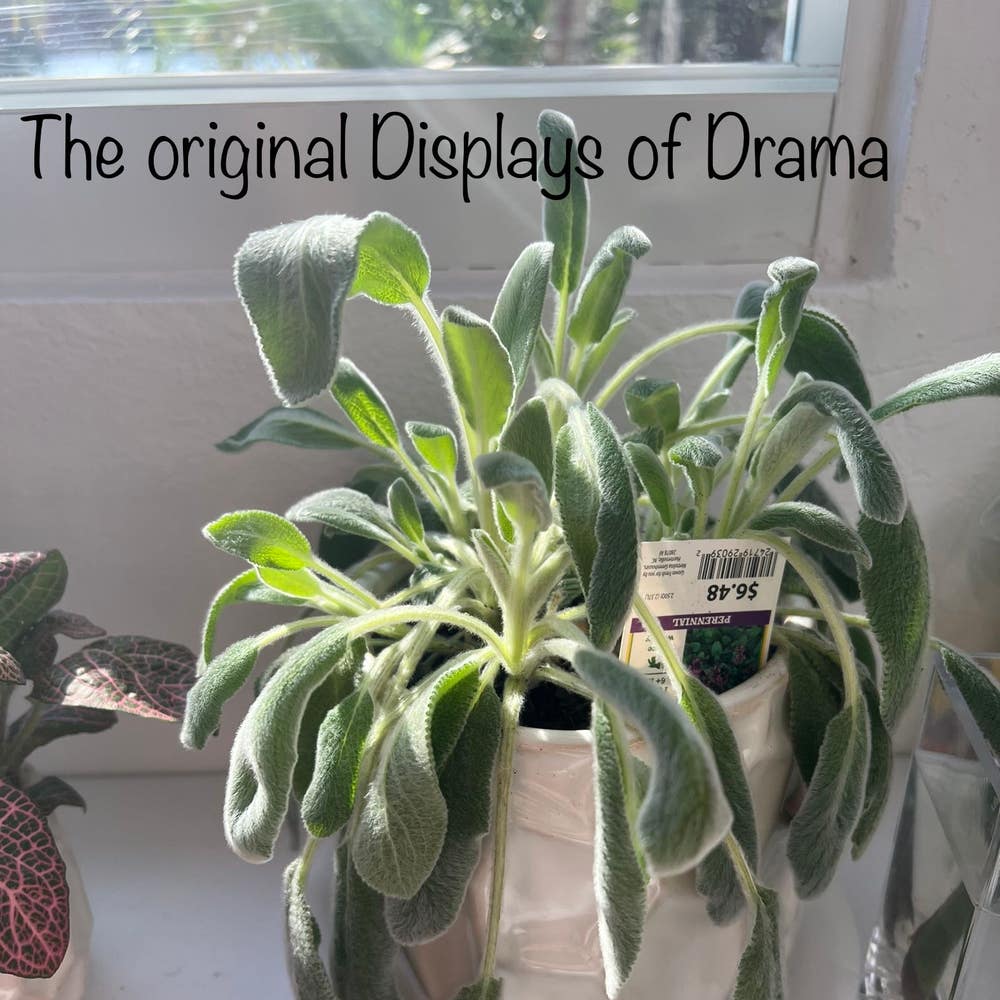
Stress?? I got this lambs ear about a week ago I think and I repotted it a few days ago because it was completely root bound. It was a mess. Roots everywhere. I tried to be as gentle as possible but I still lost some roots. This is her today. Is she just in shock from the repotting or did I kill her? I’m really nervous.
-
Within like an hour! I have a feeling this #lambsear is going to be a drama queen!
-
Rescued this baby from my old high schools lawn 🥰 she was just a-growing in such a hostile environment!
-
How do I save this little baby I got this plant for free and I’m trying to nurse it back to life… should I give up on it or? Do I dead head it or water less? I’m so lost
-
Is there any way to save this plant???? I water him regularly but he just falls down within 12 hours.
-
No roots on Lambs Ear I got this Lambs Ear from a small shop in front of someone's house and it was really weird, leaves where brown at the bottom and it had a really long stem with no leaves. I cut off the bits that looked a bit rotten and tried to pot the rest hoping it would get roots (which it didn't have in the first place) It doesn't look dead quite yet but the leaves are going a bit funky and brown Any tips on how to get it to grow roots?
-
Drama Queen Come Back TLDR: pictures tell the full story Shortly after its initial purchase this Lamby had been a full blown drama queen. Then I though I had finally gotten the trick and she was doing well. But she said nope: One day I noticed she was getting sun scorched. Moved her direct afternoon light to bright indirect. At first she was okay and then from one day to the next it seemed, she tried to fully die. She was given to me by my best friend and was my first non succulent house plant so I was determined that she had to live. And here we are, thriving. Not back to her full size but come one tell me this isn’t an impressive comeback. Wonder what she’ll throw at me next? #PlantsMakePeopleHappy #ComebackStories #NotSoHappyPlants #HappyPlants #PlantAddict #PLANTMAFIA


Care Summary for Florida Betony
Florida Betony
 Greg recommends:
 Water
Water
0.5 cups every 9 days
 Placement
< 1ft from a window
 Nutrients
Repot after 2x growth
Based on the 4” pot your plant is in, and that it doesn’t get direct sunlight.
 Trending in your area








 Similar to Florida Betony

✨ Discover rare plants
Hoya 'Memoria'

Crassula 'Purple Drag…

Bonsai Crassula

Hoya 'Millie'
Astroloba congesta

Scindapsus pictus 'Si…
Anthurium papillilami…

Milky Widow's Thrill

Echeveria Esther

Pseudorphipsalis 'Blu…

Maroon Pitcher Plant

Echeveria Arrow

Cereus peruvianus 'Pa…

Betel

Variegated Arrowhead …

Sedeveria 'Blue Elf'

Graptoveria 'Douglas …
