
Mooncarrot
Also known as
Athamanta caucasica, Athamanta collina, Athamanta daucifolia, Athamanta daucoides, Athamanta libanotis pyrenaica, Athamanta montana sibirica, Athamanta pubescens, Athamanta pyrenaica, Athamanta riviniana, Athamantha libanotis, Balinotella libanotis leiocarpa, Balinotella libanotis pyrenaica, Bubon pyrenaicus, Crithmum pyrenaicum, Libanotis alpina, Libanotis athamanthoides, Libanotis athamantica, Libanotis athamantina, Libanotis athamantoides, Libanotis candollei, Libanotis crithmoides, Libanotis daucifolia, Libanotis daucifolia athamantoides, Libanotis daucoides, Libanotis daucus-creticus, Libanotis elata, Libanotis gracilis, Libanotis hosteana, Libanotis hostiana, Libanotis humilis, Libanotis leiocarpa, Libanotis libanotis, Libanotis major, Libanotis montana, Libanotis montana athamanthoides, Libanotis montana bipinnata, Libanotis montana candollei, Libanotis montana-ferulacea, Libanotis montana gracilis, Libanotis montana leiocarpa, Libanotis montana pubescens, Libanotis nitens, Libanotis nitida, Libanotis pubescens, Libanotis pyrenaica, Libanotis pyrenaica athamantoides, Libanotis pyrenaica bipinnata, Libanotis pyrenaica callayi, Libanotis pyrenaica eulibanotis, Libanotis pyrenaica glabra, Libanotis pyrenaica montana, Libanotis riviniana, Libanotis sibirica, Libanotis taurica, Libanotis vulgaris, Libanotis vulgaris pubescens, Ligusticum athamantoides, Ligusticum divaricatilobum, Ligusticum sibiricum, Seseli athamanthoides, Seseli athamantoides acaule, Seseli libanotis athamantoides, Seseli libanotis bipinnatum, Seseli libanotis callayi, Seseli libanotis glabrum, Seseli libanotis intermedium, Seseli libanotis leiocarpum, Seseli libanotis longilobum, Seseli libanotis maius, Seseli libanotis pubescens, Seseli libanotis pyrenaicum, Seseli libanotis sibiricum, Seseli libanotum, Seseli nitidum, Seseli pencanum, Seseli pubicarpum, Seseli reichenbachii, Seseli sibiricum, Seseli vulgare and Sium ammi
Taxonomy

Seseli libanotis
Seseli
Apiaceae
Apiales

How to care for Mooncarrot
How often to water your Mooncarrot

every 9
Mooncarrot needs 0.5 cups of water every 9 when it doesn’t get direct sunlight and is potted in a 5" pot.
Use our water calculator to personalize watering recommendations to your environment or download Greg for more advanced recommendations for all of your plants.
Water 0.5 cups every
9
Finding light for Mooncarrot in your home

a window
Mooncarrot love being close to bright, sunny windows 😎.
Place it less than 1ft from a south-facing window to maximize the potential for growth.
Mooncarrot does not tolerate low-light 🚫.
Select your region to see how the current weather in your area affects the placement of Mooncarrot in your home 🏡.
How to fertilize Mooncarrot

Most potting soils come with ample nutrients which plants use to produce new growth.
By the time your plant has depleted the nutrients in its soil it’s likely grown enough to need a larger pot anyway.
To replenish this plant's nutrients, repot your Mooncarrot after it doubles in size or once a year—whichever comes first.
Care Summary for Mooncarrot
Mooncarrot
 Greg recommends:
 Water
Water
0.5 cups every 9 days
 Placement
< 1ft from a window
 Nutrients
Repot after 2x growth
Based on the 4” pot your plant is in, and that it doesn’t get direct sunlight.
 Trending in your area

Window Leaf

Satin Pothos

Philodendron Birkin

Heartleaf Philodendron
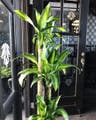
Cornstalk Dracaena

Song of India

Swiss Cheese Vine

Elephant Bush

Polka Dot Plant
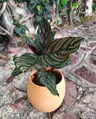
Pinstripe Calathea
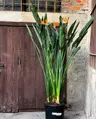
Bird of Paradise

Chinese Evergreen

Money Tree

Golden Barrel Cactus

Tomato Plant

String of Buttons

Small-Leaf Spiderwort

Purple Heart
 Similar to Mooncarrot
✨ Discover rare plants

Ace of Spades

White Apple Moth Orch…
Skeleton Key Pothos

Hoya pottsii 'Khao Ya…
Hoya crassipetiolata

Pink Ruby Sedevaria

Variegated Arrowhead …

Hoya 'Memoria'

Sedum 'White Diamond'

Dinteranthus microspe…

Scindapsus pictus 'Si…

Electric Blue Gecko

Maroon Pitcher Plant

Picasso's Paintbrush

Stomatium acutifolium

Betel
