
Grass-Leaved Groundsel
Taxonomy

Senecio gramineus
Senecio
Asteraceae
Asterales

How to care for Grass-Leaved Groundsel
How often to water your Grass-Leaved Groundsel

every 12
Grass-Leaved Groundsel needs 0.5 cups of water every 12 when it doesn’t get direct sunlight and is potted in a 5" pot.
Use our water calculator to personalize watering recommendations to your environment or download Greg for more advanced recommendations for all of your plants.
Water 0.5 cups every
12
Finding light for Grass-Leaved Groundsel in your home

a window
Grass-Leaved Groundsel may have difficulty thriving, and will drop leaves 🍃, without ample sunlight.
Place it less than 3 feet from a south-facing window to maximize the potential for growth.
Select your region to see how the current weather in your area affects the placement of Grass-Leaved Groundsel in your home 🏡.
How to fertilize Grass-Leaved Groundsel

Most potting soils come with ample nutrients which plants use to produce new growth.
By the time your plant has depleted the nutrients in its soil it’s likely grown enough to need a larger pot anyway.
To replenish this plant's nutrients, repot your Grass-Leaved Groundsel after it doubles in size or once a year—whichever comes first.
-
Honestly im not sure if mine is healthy cause the leaves look crispy i don't know weather it is due to to much sun or like not being hydrated do any of all know what might be wrong with my plant
-
#Senecio Is this plant labeled correctly?
-
First time caring for dolphins. I’m in IL weather is about to get cool. I’ve had this outside since spring. Tips on bringing it in for fall/winter? #StringOfDolphins
-
It looks not as green #StringOfDolphins
-
Leaves turning brown! Does anyone know what causes this? Home girl has beeen thriving and is still growing but this started happening. Helllp
-
Welcome home Lola
-
String of Pearls issue My string of pearls was growing like mad, but lately it has slowed down and many of the pearls have dried up. It's in succulent soil (my mix) and I've been careful not to over water, but I wonder if I've gone too far. Any ideas, oh great minds of Greg? #plantsmakepeoplehappy #stringofpearls #troubleshooting #help #succulentlove #whatthesuccwednesday
-
String of Pearls issues My string of pearls was growing like mad, but lately it has slowed down and many of the pearls have dried up. It's in succulent soil (my mix) and I've been careful not to over water, but I wonder if I've gone too far. Any ideas, oh great minds of Greg? #plantsmakepeoplehappy #stringofpearls #troubleshooting #help #succulentlove #whatthesuccwednesday
-
#bluechalksticks Leggy Blue Denali is now almost 2.5' tall 😬 can you prop the middle portion to grow a new crown when cutting leggy crowns? Also, this boy got full sun and still grew a gangster lean... 'Greg' says indirect light, everything I've read says all the direct light it can get. Also read that it loves full sun but to be kept cooler- which is why he came indoors 🤔 #propagationstation I live in N. GA so we have heat, humidity, and bright 🌞 if that helps 😊
-
Hey! Could someone give me some advice on how to take care of my raindrop vine? She’s small, and I water her often, but her ends are very dry and the drops fall off often. Any advice or tips?


Care Summary for Grass-Leaved Groundsel
Grass-Leaved Groundsel
 Greg recommends:
 Water
Water
0.5 cups every 12 days
 Placement
< 3ft from a window
 Nutrients
Repot after 2x growth
Based on the 4” pot your plant is in, and that it doesn’t get direct sunlight.
 Trending in your area










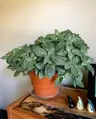

 Similar to Grass-Leaved Groundsel
✨ Discover rare plants

Parrot Pitcher Plant

Ruby Ball

Cleistocactus icosago…

Royal Flush Split Rock

Crassula 'Calico Kitt…

Milky Widow's Thrill

Chandelier Plant

Kilimanjaro Plant

Ace of Spades

Rhipsalis clavata

Kudu Lily
Carolina Reaper

Scindapsus pictus 'Si…

Burro's Tail

Aloe 'Lavender Star'

Maroon Pitcher Plant

Aeonium 'Blushing Bea…
