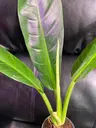
Hens and Chicks Poppy
Taxonomy

Papaver somniferum 'Hens and Chicks'
Papaver
Papaveraceae
Ranunculales

How to care for Hens and Chicks Poppy
How often to water your Hens and Chicks Poppy

every 9
Hens and Chicks Poppy needs 0.5 cups of water every 9 when it doesn’t get direct sunlight and is potted in a 5" pot.
Use our water calculator to personalize watering recommendations to your environment or download Greg for more advanced recommendations for all of your plants.
Water 0.5 cups every
9
Finding light for Hens and Chicks Poppy in your home

a window
Hens and Chicks Poppy love being close to bright, sunny windows 😎.
Place it less than 1ft from a south-facing window to maximize the potential for growth.
Hens and Chicks Poppy does not tolerate low-light 🚫.
Select your region to see how the current weather in your area affects the placement of Hens and Chicks Poppy in your home 🏡.
How to fertilize Hens and Chicks Poppy

Most potting soils come with ample nutrients which plants use to produce new growth.
By the time your plant has depleted the nutrients in its soil it’s likely grown enough to need a larger pot anyway.
To replenish this plant's nutrients, repot your Hens and Chicks Poppy after it doubles in size or once a year—whichever comes first.
-
Love this one. Beautiful large delicate blooms. Tricky learning how to keep her happy … but she is!!
-
#OpiumPoppy #OpiumPoppy #Poppy #PropagationStation #Germination
-
Im finally getting these to grow! I've never gotten these this far. However I'm wondering when they are going to flower? They are all Tasmanian and one pot is giganteum. #OpiumPoppy
-
I can only get these to sprout and then they die. What am I doing wrong? #OpiumPoppy I finally got my babies growing! They are so big! Every time I water them they just get bigger. However I'm wondering when I will have pods growing? They seem to be at the lettuce stage but how long does this last? I have Tasmanian and Giganteums. I'm looking forward to their beautiful flowers but when will that happen?
-
What do I do about these fungus gnats that are growing in my soil. I’m letting it dry but I still see them appearing #CommonPoppy
-
What’s best grow light settings for poppies? It’s supposedly hens & chicks poppies (not to be confused with succulent) #OpiumPoppy
-
What's the best grow lights for tasmanian poppies. I've been trying to grow these for YEARS! I can get them to sprout in two days. But after that.... It's way too hot for them to grow outside. Inside there's not enough light so they grow week and small #OpiumPoppy


Care Summary for Hens and Chicks Poppy
Hens and Chicks Poppy
 Greg recommends:
 Water
Water
0.5 cups every 9 days
 Placement
< 1ft from a window
 Nutrients
Repot after 2x growth
Based on the 4” pot your plant is in, and that it doesn’t get direct sunlight.
 Trending in your area








 Similar to Hens and Chicks Poppy
✨ Discover rare plants

Bonsai Crassula

Christmas Candle

Black Monkey Thorn Tr…

Picasso's Paintbrush

Philodendron 'Glorius'

Pink Ruby Sedevaria

Eden Climbing Rose

Kudu Lily

Parrot Pitcher Plant

Aeonium 'Blushing Bea…

Treasure Flower

Orange Lipstick Plant

Rhipsalis clavata

Peperomia 'Harmony's …

Miss All-American Bea…

Blue Moon Wisteria
Rosularia platyphylla