Nymphaea 'Tangerine Pink'
Taxonomy

Nymphaea 'Tangerine Pink'
Nymphaea
Nymphaeaceae
Nymphaeales

How to care for Nymphaea 'Tangerine Pink'
How often to water your Nymphaea 'Tangerine Pink'

every 9
Nymphaea 'Tangerine Pink' needs 0.5 cups of water every 9 when it doesn’t get direct sunlight and is potted in a 5" pot.
Use our water calculator to personalize watering recommendations to your environment or download Greg for more advanced recommendations for all of your plants.
Water 0.5 cups every
9
Finding light for Nymphaea 'Tangerine Pink' in your home

a window
Nymphaea 'Tangerine Pink' love being close to bright, sunny windows 😎.
Place it less than 1ft from a south-facing window to maximize the potential for growth.
Nymphaea 'Tangerine Pink' does not tolerate low-light 🚫.
Select your region to see how the current weather in your area affects the placement of Nymphaea 'Tangerine Pink' in your home 🏡.
How to fertilize Nymphaea 'Tangerine Pink'

Most potting soils come with ample nutrients which plants use to produce new growth.
By the time your plant has depleted the nutrients in its soil it’s likely grown enough to need a larger pot anyway.
To replenish this plant's nutrients, repot your Nymphaea 'Tangerine Pink' after it doubles in size or once a year—whichever comes first.
-
Black spots I've been growing these for a month or two. The leaves still haven't opened, but they started getting these black spots on them. What are they, and how do I fix it? Also, the seeds keep floating. Is that normal?
-
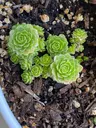
Please tell me if my succulent is thriving or not? This is my third plant and it’s winter where I’m located. I just want to be a plant lady and have a good green thumb! What does it look like this may need? #StarLotus
-
My amazing best friend,👯♀️ who feels like a sister to me, gifted me a water lily bulb! I've never had one before, and I'm really looking forward to seeing how it turns out. Do you have any tips or advice?🪴🌺🥰


Care Summary for Nymphaea 'Tangerine Pink'
Nymphaea 'Tangerine Pink'
 Greg recommends:
 Water
Water
0.5 cups every 9 days
 Placement
< 1ft from a window
 Nutrients
Repot after 2x growth
Based on the 4” pot your plant is in, and that it doesn’t get direct sunlight.
 Trending in your area















 Similar to Nymphaea 'Tangerine Pink'

✨ Discover rare plants

Rhipsalis clavata

Betel

Echeveria Esther

Eden Climbing Rose
Philodendron 'Gabby'

Black Monkey Thorn Tr…

Echeveria Arrow

Begonia lubbersii

Variegated Arrowhead …

Chinese Evergreen 'Go…

Orange Lipstick Plant

Phalaenopsis schiller…

Bonsai Crassula
Anthurium papillilami…

Red Mistletoe Cactus

Milky Widow's Thrill

Raphionacme flanaganii