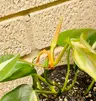
monkey cup
Taxonomy

nepenthes miranda
Nepenthes
Nepenthaceae
Caryophyllales

How to care for monkey cup
How often to water your monkey cup

every 7
monkey cup needs 0.5 cups of water every 7 when it doesn’t get direct sunlight and is potted in a 5" pot.
Use our water calculator to personalize watering recommendations to your environment or download Greg for more advanced recommendations for all of your plants.

Water 0.5 cups every
7
Finding light for monkey cup in your home

a window
monkey cup love being close to bright, sunny windows 😎.
Place it less than 1ft from a south-facing window to maximize the potential for growth.
monkey cup does not tolerate low-light 🚫.
Select your region to see how the current weather in your area affects the placement of monkey cup in your home 🏡.
How to fertilize monkey cup

Most potting soils come with ample nutrients which plants use to produce new growth.
By the time your plant has depleted the nutrients in its soil it’s likely grown enough to need a larger pot anyway.
To replenish this plant's nutrients, repot your monkey cup after it doubles in size or once a year—whichever comes first.
-
When my pitcher plant 's pitcher is closed does that mean it has eaten? #TropicalPitcherPlant
-
I just purchased a Venus fly trap plant and after taking a photo of it this plant identifier app is telling me it’s a tropical pitcher plant. How do I know if this info is correct? #TropicalPitcherPlant
-
If I have no insects, when should I feed it #TropicalPitcherPlant
-
Who has had good luck with these they’re quite interesting and need distilled water. They are carnivorous, I understand..  #TropicalPitcherPlant
-
My pitchers keep dieing #TropicalPitcherPlant
-
Flordeliza My pictcher plant is growing new pitcher but the never open and they just die. She can’t get enough nutrients. I give her distilled water as highly encouraged, but she isn’t doing amazing.
-
Does nepenthes Alata ever get bigger pitchers than 3-4 inches? What happens when I feed 1 pitcher more than the others, but the others are still eating #TropicalPitcherPlant
-
New to Nepenthes Hello - I just received this plant & I’m trying to figure out what to do with it, as this is my first Nepenthes. I’m already annoyed because I ordered/paid for a large plant bare root and they sent me a 2.5” plant but WHATEVER. Anyways, this is the only pitcher plant I’ve seen with a long stalk & I don’t like it. I don’t want to cut the stalk & risk the cutting not rooting & the pitchers dying off, so what can I do with this? Can I repot & bury most of the stalk in sphagnum or just get over my aesthetic preference & leave it alone? Also I’ve read that you should fill the pitchers so I used a little dropper to put some distilled water in each. How full should they be & is it legal to be touching them?! Any tips are appreciated! #TropicalPitcherPlant #Nepenthes #CarnivorousPlants
-
Nepenthes care advice? Hello all! I was recently gifted a nepenthes plant. I am thrilled, as I've always wanted a carnivorous plant, but I have 0 experience with them. I'd love some general advice! I live in Colorado, so there is 0 humidity here. I currently have my plant in a glass open terrarium that is definitely too small, but it's all I have for the next three weeks. If anyone has sources for better terrariums, i am all ears! I also put my plant in sphagnum moss and water it a little every few days with distilled water. I also mist at least once a day (with distilled water). If anyone has advice, recommendations, etc. for growing nepenthes in Colorado I would love to hear it! Especially if you have fertilizing advice! Also, I do not know the variety or species of nepenthes I have 😔.
-
Hi, I got this app along with my coffee plant. Is there a way to add more species? My Hameddy is not an Alata. #TropicalPitcherPlant


Care Summary for monkey cup

monkey cup
 Greg recommends:
 Water
Water
0.5 cups every 7 days
 Placement
< 1ft from a window
 Nutrients
Repot after 2x growth
Based on the 4” pot your plant is in, and that it doesn’t get direct sunlight.
 Trending in your area









 Similar to monkey cup
✨ Discover rare plants

Philodendron 'Glorius'

Hoya fitchii

Pink Ruby Sedevaria
Astroloba congesta
Carolina Reaper
Stanhopea tigrina

Scindapsus pictus 'Si…

Anthurium 'Fantasy Lo…

Parrot Pitcher Plant

Burro's Tail

Caladium

Hoya kalimantan

Peperomia 'Harmony's …

Cleistocactus icosago…
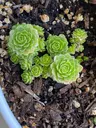
Rosularia platyphylla

Stomatium acutifolium

Betel