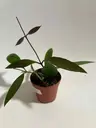
Mimosa polycephala
Taxonomy

Mimosa polycephala
Mimosa
Fabaceae
Fabales

How to care for Mimosa polycephala
How often to water your Mimosa polycephala

every 9
Mimosa polycephala needs 0.5 cups of water every 9 when it doesn’t get direct sunlight and is potted in a 5" pot.
Use our water calculator to personalize watering recommendations to your environment or download Greg for more advanced recommendations for all of your plants.
Water 0.5 cups every
9
Finding light for Mimosa polycephala in your home

a window
Mimosa polycephala love being close to bright, sunny windows 😎.
Place it less than 1ft from a south-facing window to maximize the potential for growth.
Mimosa polycephala does not tolerate low-light 🚫.
Select your region to see how the current weather in your area affects the placement of Mimosa polycephala in your home 🏡.
How to fertilize Mimosa polycephala

Most potting soils come with ample nutrients which plants use to produce new growth.
By the time your plant has depleted the nutrients in its soil it’s likely grown enough to need a larger pot anyway.
To replenish this plant's nutrients, repot your Mimosa polycephala after it doubles in size or once a year—whichever comes first.
-
I've had a few of these die after just a few days without being watered. The app is recommending water every 10 days. What has your experience been? #SensitivePlant
-
My sensitive plant has improved immensely after being relocated to brighter light.! Also—and I don’t know why I didn’t think of this before—they have been renamed because “no touchy.”
-
What happened!!!??? #SensitivePlant #GregGang #GregPlantShop #PlantsMakePeopleHappy #TheThread I just got this my DREAM PLANT (sensitive plant) and it’s already dyeing on me, can someone tell me what’s wrong with it??
-
Love my sensitive plant, and she has some new growth coming in; but she’s also yellowing in places and looks pretty sparse. She definitely isn’t being overwatered, and I don’t think she’s being underwatered. How can I help her? #SensitivePlant
-
Just curious if anyone else is growing any of these dudes #TickleMePlant #SensitivePlant #HappPlants #HappyPlants Also I could use name suggestions I don’t know how I feel about Peter Parker, that is what Greg named them.
-
Super excited to see my first flower on my sensitive plant! I missed the other one's before they faded. #happyplants #plantsmakepeoplehappy #newgrowth
-
Mimosa plant. Hi guys, I bought this mimosa plant a week ago and i kept it in my window where i have no direct sun. And today i noticed that the leafs were looking like they are burning. So I repoted it in a little bigger pot and kept it inside next to my window. I hope it will work but I would like to have some suggestions, I don't want to kill this plant.
-
I repotted my plant a couple weeks ago and it seem to be doing ok except for some of the leaves. Does this look ok to everyone? Any tips? It’s over a year old and hasn’t bloomed yet, but I also didn’t have it in direct sunlight until recently. #SensitivePlant
-
My new little shy plant has been extra droopy and some of the leaves look like they might be wilting. I think it may have not got enough light? So I moved it. Will it survive? Should I trim the dead branches? #SensitivePlant #NewPlantMom #wiltedplant #SadPlant
-
Sensitive plant? I grew this guy from seed, and recently I'm seeing this popping up- is it part of the plant, or do I have an interloper #happyplants #plantsmakepeoplehappy #plantaddict #newgrowth #weirdplants


Care Summary for Mimosa polycephala
Mimosa polycephala
 Greg recommends:
 Water
Water
0.5 cups every 9 days
 Placement
< 1ft from a window
 Nutrients
Repot after 2x growth
Based on the 4” pot your plant is in, and that it doesn’t get direct sunlight.
 Trending in your area









 Similar to Mimosa polycephala

✨ Discover rare plants

Betel

Ace of Spades

Aeonium 'Blushing Bea…

Sedum 'White Diamond'

Sarcochilus fitzgeral…

Crassula 'Calico Kitt…

Thelocactus macdowell…

Electric Blue Gecko
Philodendron 'Rio'

Anthurium Fingers

Black Monkey Thorn Tr…
Carolina Reaper

Aglaonema 'Green Bowl'

Chinese Evergreen 'Go…

Crassula 'Purple Drag…
Stanhopea tigrina