Hastate-Leaved Jatropha
Taxonomy

Jatropha hastifolia
Jatropha
Euphorbiaceae
Malpighiales

How to care for Hastate-Leaved Jatropha
How often to water your Hastate-Leaved Jatropha

every 9
Hastate-Leaved Jatropha needs 0.5 cups of water every 9 when it doesn’t get direct sunlight and is potted in a 5" pot.
Use our water calculator to personalize watering recommendations to your environment or download Greg for more advanced recommendations for all of your plants.
Water 0.5 cups every
9
Finding light for Hastate-Leaved Jatropha in your home

a window
Hastate-Leaved Jatropha love being close to bright, sunny windows 😎.
Place it less than 1ft from a south-facing window to maximize the potential for growth.
Hastate-Leaved Jatropha does not tolerate low-light 🚫.
Select your region to see how the current weather in your area affects the placement of Hastate-Leaved Jatropha in your home 🏡.
How to fertilize Hastate-Leaved Jatropha

Most potting soils come with ample nutrients which plants use to produce new growth.
By the time your plant has depleted the nutrients in its soil it’s likely grown enough to need a larger pot anyway.
To replenish this plant's nutrients, repot your Hastate-Leaved Jatropha after it doubles in size or once a year—whichever comes first.
-
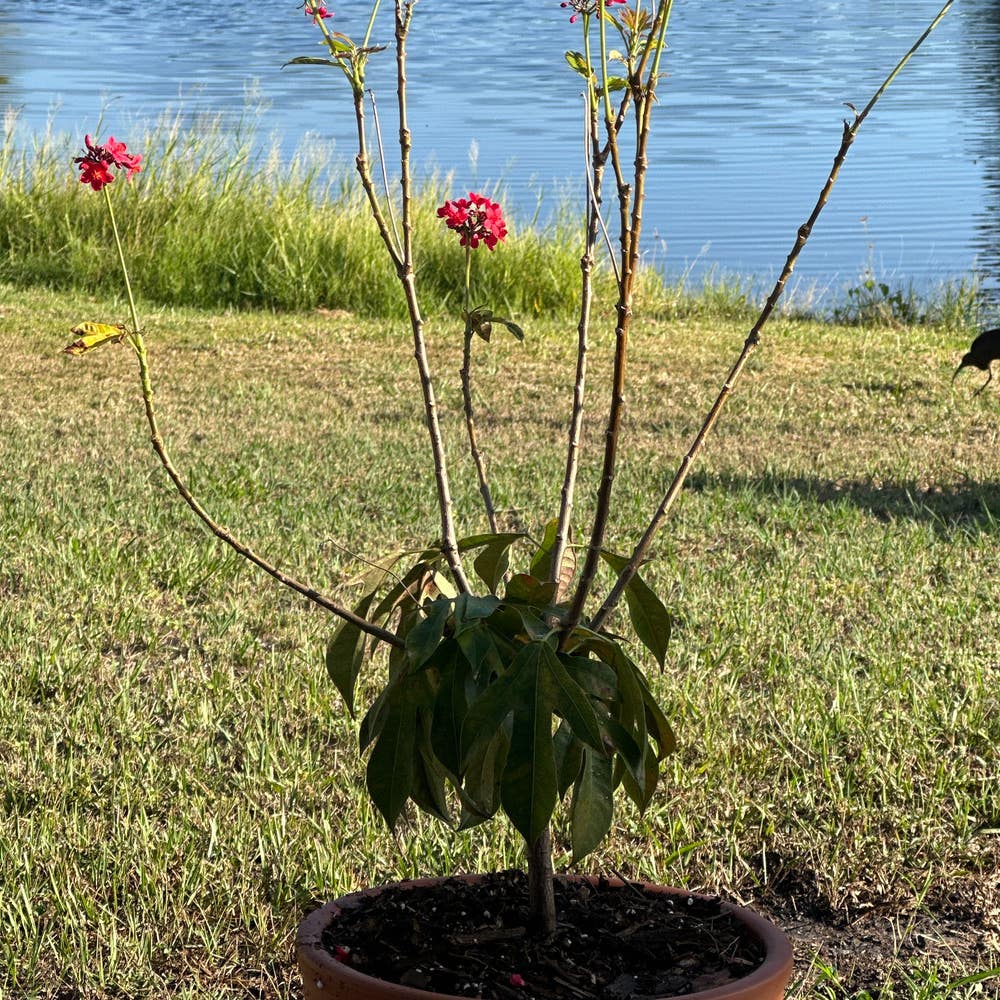
Jatropha Multifida (coral plant) seeds and germination My coral plant has grown fruit this year and I want to try to germinate the seeds. Anyone have any experience with this plant or just growing from seeds in general? I've only ever done vegetables from seed and alocasia from corms. I just love this plant. Its such a trooper and unique looking. Plus, the hummingbirds love her. I'd love to raise it's progeny. #happyplants #plantsmakepeoplehappy #plantaddict #newgrowth #propagationstation #newplantmom #plantcorner #jatrophamultifida
-
How big can they expect to get? #BellyacheBush
-
Is my bottle plant going dormant? This happens every winter when I bring him in. Leaves pop back out in the spring when I put him outside #BottlePlant
-
what am i doing wrong? #SpicyJatropha What am I doing wrong?
-
Full picture of Ulysses the bottle plant!
-
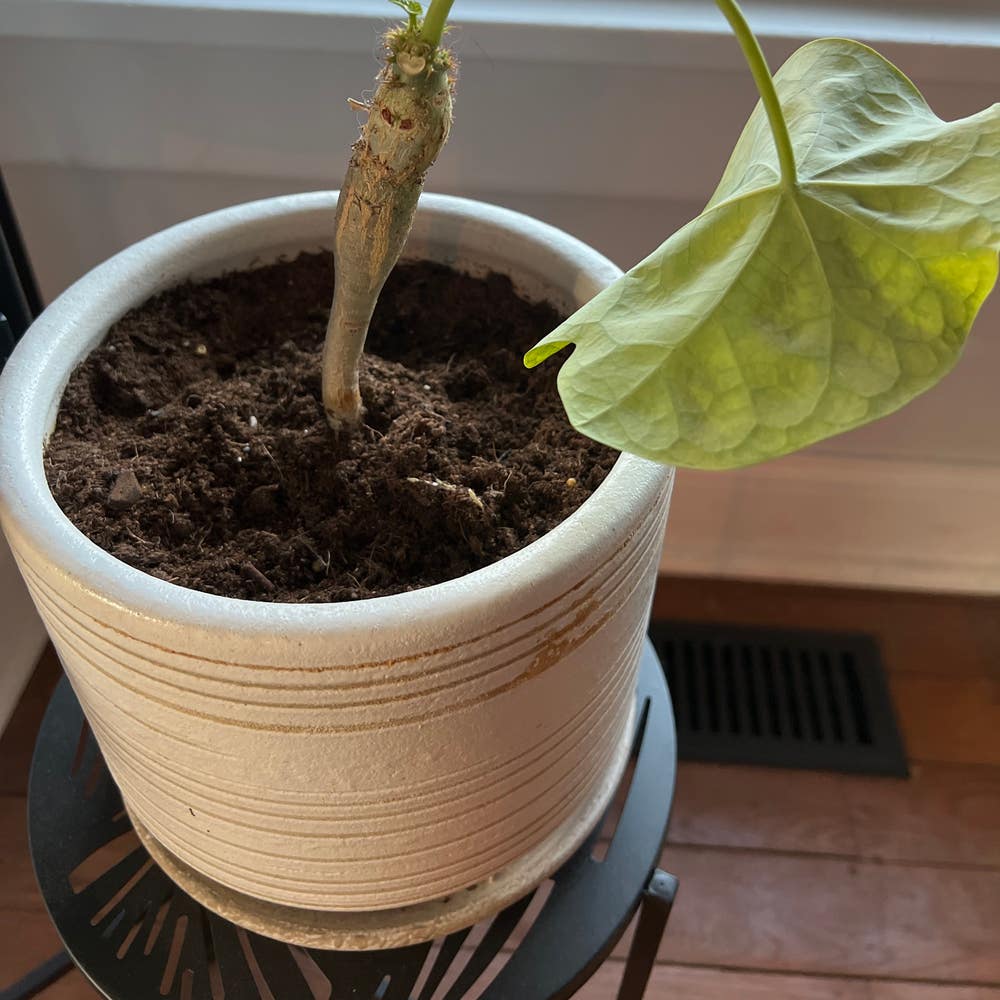
Can someone tell me about this plant, not sure what it is. #BellyacheBush
-
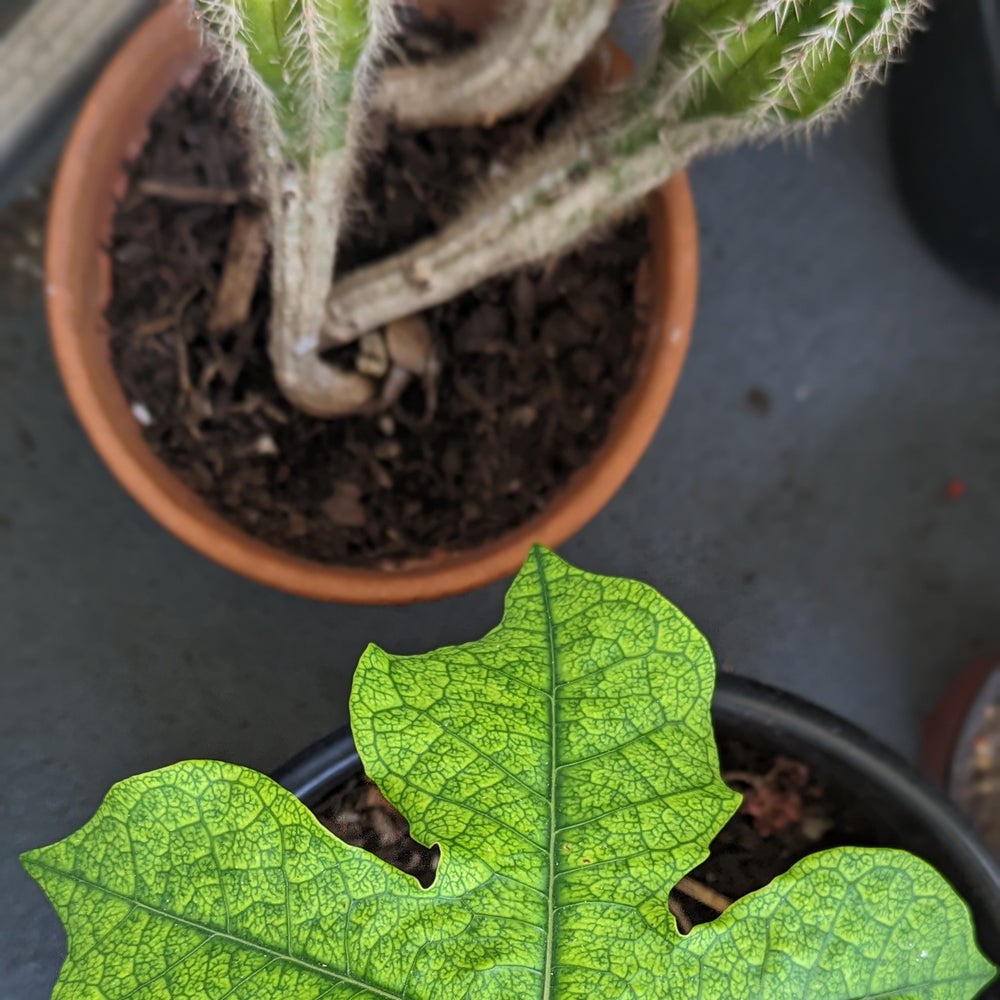
Is this plant also called a rubber plant? #Jatropha
-
My new favorite plant
-
Oh yeah, and #WhatTheSuccWednesday

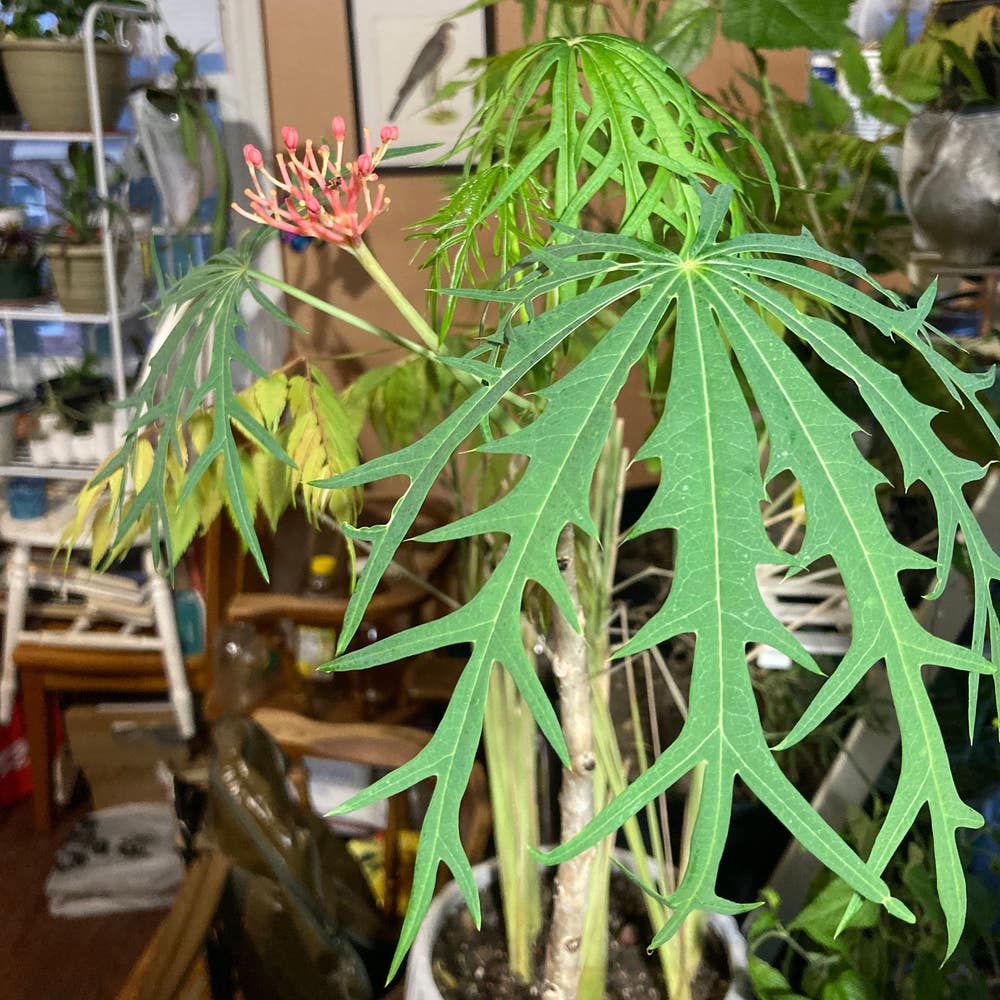
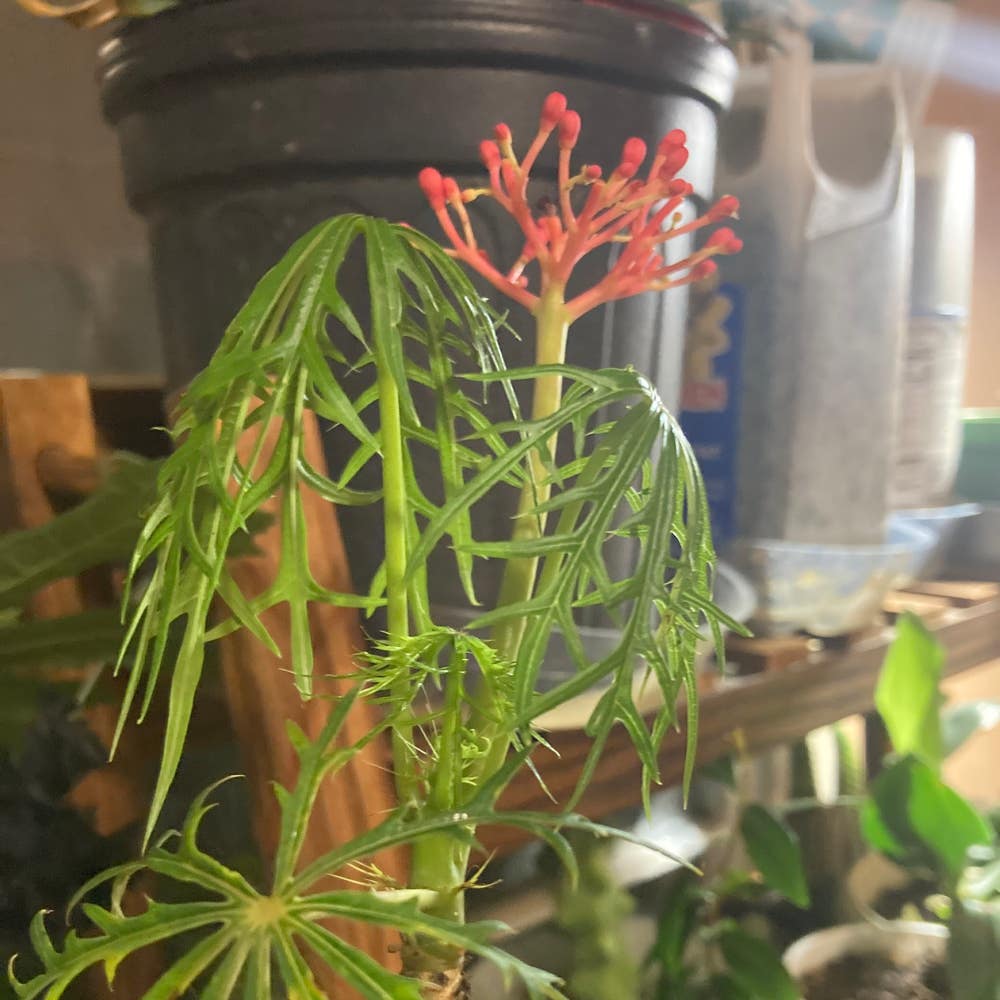
Care Summary for Hastate-Leaved Jatropha
Hastate-Leaved Jatropha
 Greg recommends:
 Water
Water
0.5 cups every 9 days
 Placement
< 1ft from a window
 Nutrients
Repot after 2x growth
Based on the 4” pot your plant is in, and that it doesn’t get direct sunlight.
 Trending in your area













 Similar to Hastate-Leaved Jatropha
✨ Discover rare plants

Echeveria Esther

Large Leaf Elephant B…

Pink Ruby Sedevaria

Anthurium Fingers

Blue Moon Wisteria

Burro's Tail
Hoya 'Memoria'

Anastasia Weeping Fig
Philodendron 'Gabby'

Pseudorphipsalis 'Blu…

Eden Climbing Rose

Lithops

Ceropegia simoneae

Vatricania guentheri

Hoya pottsii 'Khao Ya…
Philodendron 'Rio'

Hoya sipitangensis