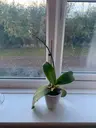
Ipomoea beninensis
Taxonomy

Ipomoea beninensis
Ipomoea
Convolvulaceae
Solanales

How to care for Ipomoea beninensis
How often to water your Ipomoea beninensis

every 9
Ipomoea beninensis needs 0.5 cups of water every 9 when it doesn’t get direct sunlight and is potted in a 5" pot.
Use our water calculator to personalize watering recommendations to your environment or download Greg for more advanced recommendations for all of your plants.
Water 0.5 cups every
9
Finding light for Ipomoea beninensis in your home

a window
Ipomoea beninensis love being close to bright, sunny windows 😎.
Place it less than 1ft from a south-facing window to maximize the potential for growth.
Ipomoea beninensis does not tolerate low-light 🚫.
Select your region to see how the current weather in your area affects the placement of Ipomoea beninensis in your home 🏡.
How to fertilize Ipomoea beninensis

Most potting soils come with ample nutrients which plants use to produce new growth.
By the time your plant has depleted the nutrients in its soil it’s likely grown enough to need a larger pot anyway.
To replenish this plant's nutrients, repot your Ipomoea beninensis after it doubles in size or once a year—whichever comes first.
-
how long does the morning glory take to bloom. mine just keep creeping up and growing it is 2x bigger than this recent pic down below #CommonMorningglory
-
When to harvest? #SweetPotatoVine
-
Surprise Guest I reused the soil from a pot I was trying to germinate locust seeds in and apparently one of them was hiding. Finally decided to pop out all of a sudden. Odd fella 🤷♂️
-
I was just needing to make sure that this is just a sign that it got too cold and I needed to bring it in the house, and not that something worse is going on #SweetPotatoVine
-
Why are a few of my leaves yellow# #BeachMoningGlory
-
Good morning all. Can anyone tell me what might be eating on my sweet potato vines?
-
#happyplants #newgrowth #newplantmom #freshleaffriday #freshfeaturedfriday MY SWEET POTATER PLANT IS GROWING TOOO
-
What’s up with my potato? I recently trimmed the new growth and leaves have begun to turn yellow. What is going on?
-
What is this white stuff on some of my potato vine leaves? How do I get rid of it? #SweetPotatoVine
-
My sweet potato vine was thriving and growing until a couple days ago when leaves started to shrink, dry and fall off. I don't see pests. Any other ideas? #SweetPotatoVine


Care Summary for Ipomoea beninensis
Ipomoea beninensis
 Greg recommends:
 Water
Water
0.5 cups every 9 days
 Placement
< 1ft from a window
 Nutrients
Repot after 2x growth
Based on the 4” pot your plant is in, and that it doesn’t get direct sunlight.
 Trending in your area












 Similar to Ipomoea beninensis


✨ Discover rare plants

Vatricania guentheri
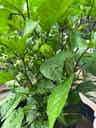
Carolina Reaper

Hoya sipitangensis

Scotch Moss

Philodendron eximium

Graptoveria 'Douglas …

Christmas Candle
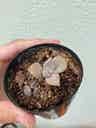
Graptopetalum 'Marqui…

Maroon Pitcher Plant

Echeveria Esther

Philodendron 'Glorius'

Begonia hydrocotylifo…

Tuber Fleeceflower
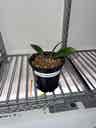
Hoya crassipetiolata

Hoya 'Millie'

Sedum 'White Diamond'

Chinese Evergreen 'Go…