


Longevity Spinach
Also known as
Longevity Greens
Taxonomy

Gynura procumbens
Gynura
Asteraceae
Asterales

How to care for Longevity Spinach
How often to water your Longevity Spinach

every 9
Longevity Spinach needs 0.5 cups of water every 9 when it doesn’t get direct sunlight and is potted in a 5" pot.
Use our water calculator to personalize watering recommendations to your environment or download Greg for more advanced recommendations for all of your plants.

Water 0.5 cups every
9
Finding light for Longevity Spinach in your home

a window
Longevity Spinach may have difficulty thriving, and will drop leaves 🍃, without ample sunlight.
Place it less than 3 feet from a south-facing window to maximize the potential for growth.
Select your region to see how the current weather in your area affects the placement of Longevity Spinach in your home 🏡.
How to fertilize Longevity Spinach

Most potting soils come with ample nutrients which plants use to produce new growth.
By the time your plant has depleted the nutrients in its soil it’s likely grown enough to need a larger pot anyway.
To replenish this plant's nutrients, repot your Longevity Spinach after it doubles in size or once a year—whichever comes first.
-
Any ideas how to propagate? Middle@of the plant is dying and trying to salvage! #PurpleVelvetPlant
-
Looking to see if it’s salvageable. New to caring for plants and don’t know what is going wrong. #PurpleVelvetPlant
-
I wanted to share my purple velvet plant success. Prince is growing like crazy. I started out with this tiny plant and it's growing like crazy!! 💚❇️💜 It finally started to bloom. I heard the flowers smell awful but I have not noticed.
-
I repotted my Purple Velvet Plant and it looks so sad! 😞 Does anybody know what I’m doing wrong?
-
Replanting When do you replant a plant and put it in a bigger pot? Please get back to me. 😁🪴 #PurpleVelvetPlant #HappyPlants #PlantsMakePeopleHappy #PlantAddict #PlantTherapy #PlantLove
-
Wish me luck yall... I just got them today and Im hoping they'll grow healthy and strong.
-
A little droopy My purple velvet is looking a little sad. I know they can be dramatic but I don’t have a great track record with keeping plants. Help!
-
So I got this on Wednesday, and left it outside in my garage to repot , I just did tonight and it’s super droopy and the soil was dry- will she perk up again in a few days or did I damage her?? #PurpleVelvetPlant
-
Cleopatra is a happy plant! Happy purple velvet plant! 🌼 #HappyPlants #purplevelvetflower
-
When is it best to change pots? Its very hot in country at the moment so I’m not sure if its the right season. Thank youu! 💕 #PurpleVelvetPlant


Care Summary for Longevity Spinach

Longevity Spinach
 Greg recommends:
 Water
Water
0.5 cups every 9 days
 Placement
< 3ft from a window
 Nutrients
Repot after 2x growth
Based on the 4” pot your plant is in, and that it doesn’t get direct sunlight.
 Trending in your area
















 Similar to Longevity Spinach
✨ Discover rare plants

Vatricania guentheri

Radiator Plant

Rosularia platyphylla

Hoya 'Millie'

Crassula 'Calico Kitt…

Philodendron 'Glorius'

Variegated Arrowhead …

Orange Lipstick Plant

Anastasia Weeping Fig

Thelocactus macdowell…

Stomatium acutifolium
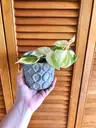
Philodendron 'Gabby'

Chandelier Plant

Large Leaf Elephant B…
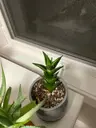
Astroloba congesta

Stanhopea tigrina
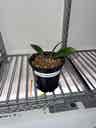
Hoya crassipetiolata
